
How Are the November 1, 1966, Loop Fire El Cariso Hot Shot Crew Fatalities and Other Fatality Fires Tied Into the Overall Fire Shelter Movement and Concealing those Truths? Pt. 2
Dec 4, 2025
83 min read
Restating the post title due to Wix space constraints: How are the November 1, 1966, Loop Fire (CA) El Cariso Hot Shot Crew Fatalities Tied Into the Overall Fire Shelter Movement to Conceal the Truth, Which Also Includes the 1976 Battlement Creek Fire (CO), 1985 Lake Mountain (ID), 1985 Butte Fire (ID), 1990 Dude Fire (AZ), 1994 South Canyon Fire (CO), and the renowned 2013 Yarnell Hill Fire? Pt. 2
"Throughout history, the concept of truth and perception has been a central theme in philosophy, science, and art, often leading individuals and societies to grapple with the notion that their understanding of reality may not be as straightforward as it appears. This struggle is exemplified by famous figures and movements that have challenged conventional wisdom and revealed uncomfortable truths, often leading to profound shifts in understanding and belief." Plato and Galileo
“History is not there for you to like or dislike; it’s there for you to learn from ... And if it offends you, even better, because then you are less likely to repeat it. It’s not yours to erase; it belongs to all of us.” U.S. Army Ret. Lt. Col. Allen West
Here are the relevant Wildland Fire Lessons Learned Center (WLF LLC) links for each of these fatal wildfires utilized in this post. Loop (CA, 1966), Battlement Creek (CO, 1976), Lake Mountain (ID, 1985), Butte (ID, 1985), Dude (AZ, 1990), South Canyon (CO, 1994), and the historical (AZ, 2013) Yarnell Hill debacle. Here are several little, virtually unknown, yet germane, shelter deployments. Salmon NF, (ID) July 1985 Lake Mountain Fire, four Crews and two Fallers deployed fire shelters in two locations. And here are three other, little-known, obscure shelter deployments (CO, 1994): Hourglass 3 on the CO Arapaho and Roosevelt NFs.
Authors Fred J. Schoeffler, Gary L. Olson, and other contributing authors
Views expressed to "the public at large” and "of public concern."
DISCLAIMERS to follow: Please fully read the front page of the website (link below) before reading any of the posts. This includes that you must be at least 18 years of age or older to view this website and these posts.
Consult an attorney. This is short of advice—just our view.
The authors and the blog deny responsibility for misuse, reuse, recycled, and cited, and/or uncited copies of content within this blog by others. The content, even though we are presenting it publicly, if being reused, must get written permission in doing so, due to copyrighted material. Thank you.
Abbreviations used: Wildland Firefighters (WFs), Firefighters (FFs), Escape Routes (ER). Safety Zones (SZ), Yarnell Hill Fire (YH Fire), Granite Mountain Hot Shots (GMHS, GMIHC), Hot Shots (HS).
All emphasis is added unless otherwise noted.
oral disclaimer: https://youtube.com/live/uVIvSrEwP4E?feature=share
For if the trumpet makes an uncertain sound,
who will prepare for battle? So likewise you, unless
you utter by the tongue words easy to understand,
how will it be known what is spoken?
For you will be speaking into the air.
1 Corinthians 14:8-9 (NKJV)
“There is no evil under the sun but what is to be dreaded from men, who may do what they please with impunity: They seldom or never stop at certain degrees of mischief when they have power to go farther; but hurry on from wickedness to wickedness, as far and as fast as human malice can prompt human power. … It is nothing strange, that men, who think themselves unaccountable, should act unaccountably.”
Thomas Gordon, Cato’s Letters No. 33 (1721)
This is yet another compelling wildland fire story that deserves to be told. It will come from two former Hot Shots and/or Crew Bosses and/or Superintendents; the former Happy Jack Hot Shots Second Saw Gary Olson and Payson Hot Shot Crew Boss and/or Superintendents Fred Schoeffler (FJS) themselves, primarily from the renowned Happy Jack Second Saw Gary Olson himself. A stew of hypertoxic rhetoric has cumulatively and progressively surged forth from these events since the 1966 Loop Fire, when the "Large Fire Organization" was in effect! In addition to their respective relevant "official" Serious Accident Investigation Team (SAIT) - Serious Accident Investigation Reports (SAIR), Staff Rides, Human Factors, psychological revelations, archive wildland fire weather, fire behavior records, etc. This post is about several wildland fires that most knowledgeable FFs and WFs consider historical near-death wildland fires, several skirting near Biblical proportions. The time has finally come to reveal more of the facts and truths about them and their respective collective threads after all these years, toward our chosen goal of revealing truthful and accurate lessons learned. From our individual and collective professional opinions with Olson’s at times seemingly more personal, and definitely unfiltered respective emails, Facebook threads, and archived data and links, etc., on the subject(s) at hand. We are far from the all-knowing experts looking down from a pedestal. Like the ancient Stoics, fellow students, half a step ahead, walking the same path, doing our best to learn and grow together.
A short story is in order to explain this author’s strong sense of duty and doing what is right, integrity, and truth-telling regarding leadership in life and death WF situations. This author’s Father (RiP) was a non-combat WWII Navy Veteran as an Aviation Machinist Mate stationed in Pensacola, FL, with a collateral duty as a machine-gunner on a torpedo dive bomber. He shared with me that the pilots would be performing dive bomb training, and you could hear these pilots screaming on the radio because they were unable to pull out of their dives and repeatedly crashed and burned, killing the pilots. The Base Commander (BC) discovered that these aluminum and/or wood-framed planes with a canvas-type skin, and during their construction phase, those building the planes had inadvertently and unknowingly sewn through the Horizontal Stabilizer control cables, fatally preventing the pilots from pulling out of their dives. The BC contacted the Washington, DC, Naval Commanders (DC BC), explained the problem, and his ingenious, forthright solution to “Ground the Fleet.” These DC BCs sternly disagreed with his life-saving solution, and yet, they told him to continue with their dive-bombing training. My Father stated that the exasperated BC went out at night with a K-bar knife and slashed through all the dive bombers’ horizontal stabilizers, effectively grounding the fleet and daringly saving scores of lives. The Washington, DC, BCs, who evidently had forgotten their roots, court-martialed him for, among other things, his failure to follow orders! Therefore, this author has been guided by this BC’s duty and ethics-bound heroic and unselfish acts throughout his entire leadership career.
Here is some historical context that validates and complements the author’s WWII story above. "Brigadier General William "Billy" Mitchell. In 1925, multiple military aircraft crashed during routine missions. Mitchell inspected the scenes himself. His anger turned into a public statement accusing Army and Navy leadership of “almost criminal neglect.” ... It also triggered charges. During the court-martial, Mitchell entered the hearing room carrying a binder packed with crash reports, training deficiencies, and procurement delays. Witnesses testified that he could recite pilot names, aircraft numbers, and mechanical failures from memory. The verdict found him guilty, and his rank was suspended. Instead of retreating, he resigned and continued advocating for air power as a civilian. History vindicated him. Documents from the 1941 Pearl Harbor hearings cite his predictions almost line for line. He had warned of a surprise air attack on the Pacific Fleet, the vulnerability of battleships, and the rise of carrier-based warfare. Every warning proved accurate. He did not fight for recognition. He fought for a nation to see the future clearly, long before the world realized that air power would define modern war. He stared at a court-martial summons in Oct. 1925, a document accusing him of “insubordination” for criticizing the government’s neglect of air power, even though he had just returned from inspecting wreckage that proved American pilots were dying because military leaders refused to modernize. Officials wanted silence. Mitchell chose truth. ... A fierce advocate for air power, he was court-martialed for insubordination after publicly criticizing military leaders for their perceived neglect of air forces. ... He was posthumously honored with a promotion to Major General." The B-25 bomber was also named in his honor. (Natl. Museum of the US Air Force, Brigadier General William "Billy" Mitchell)
"Pray for the dead, and fight like hell for the living."
Mary Harris Jones - nicknamed "Mother Jones," a powerful American labor movement figure
Consider looking into the comprehensive Fire weather and fire behavior in the 1966 Loop Fire, (USFS, 1968) C.M. Countryman, M.A. Fosberg, R.C. Rothermel, M.J. Schroeder, PSW Research Station. "In a reconstruction of the air flow in this area during the afternoon of November 1, the flow is depicted for a peak, rather than a lull, in the variable wind flow .... Eddies produced in the mouth of the canyon could have resulted in upslope air movement in the area of the tragedy. And turbulence over the spur ridge, which formed the final fire line in this area, could have further complicated the air flow. We found no evidence that the general wind flow shifted. The sea breeze penetrated only portions of the immediate coast by late afternoon. After the tragedy, during the time the area to the east burned out, the general wind flow remained northeasterly, according to helicopter personnel making drops on the fire. In the chute in which the men were burned, and in other similar chutes to the east which burned later, convection alone could have accounted for rapid movement of the fire up the slope. However, the eddy motion envisioned here, resulting in a flow against the south-facing slope, could well have helped the fire climb quickly up the chutes. ... A northeasterly wind would tend to be funneled down Pacoima Canyon because of its orientation."

Figure 1. Nov. 1, 1966, Loop Fire idealized image Source: WLF FF

Figure 2. Nov. 1, 1966, Loop Fire map Source: NWCG, Source: WFT

Figure 3. Southern CA Loop Fire area map Source: WLF LLC

Figure 4. Satellite image of Decker Cyn. & Loop Fire Source: WLF LLC
Pay close attention to the downslope/upslope terrain funneling and potentially deadly chimneys and chutes, topographical contour line causal factors in Fig. 4a. below. The Loop Fire's deadly behavior was described as a sudden, explosive upslope run after an initial downhill push by Santa Ana winds. As the strong northeast winds slackened, the fire rapidly transitioned, with a hot spot at the base of a chimney canyon flaring up and the fire advancing explosively and fatally upslope!

Figure 4a. Nov. 1 PM airflow Pacoima Cyn. Contour map Source: US WX Bureau
Clearly a hopelessly inescapable bastard steep Death Trap! Once ignited at the base of the slope, the fire flashed through the approximately 2,200-foot-long chimney in less than one minute. Temperatures were estimated to reach 2,500 degrees Fahrenheit! See also Figs. 11. &14.
The Loop Fire started on Nov. 1, 1966, in a canyon near the boundary of the Angeles NF in CA. The fire spread rapidly by Santa Ana winds. At 1500, the El Cariso HS hiked to the fire's edge to begin direct attack through handline construction and cold-trailing. At 1535, the direction of fire spread changed, and it swept up a chimney canyon, entrapping and burning over the crew. In total, 12 members of the El Cariso HS perished, and 11 others were seriously burned. Those El Cariso HS lost on the Loop Fire were: Kenneth Barnhill, Raymond Chee, Fred Danner, John Figlo, Joel Hill, Daniel Moore, James Moreland, Carl Shilcutt, John Verdugo, William Waller, Michael White, and Stephen White" (RiP). Wildland Lessons Learned Center (WLF LLC).
"Loop Fire (California) – Nov. 1, 1966. In learning from our shared history, we have the opportunity for a second chance. We ask that, as you and your team read and study our wildland fire history, you carefully: (1) consider the facts as they are presented to you, (2) apply all the knowledge of fire behavior and firefighting principles at your command, and (3) add the benefit of hindsight of knowing what happened when arriving at your conclusions. In this way, we will each gain the advantage of a second chance in making these vital decisions." (NWCG Day of Remembrance) Collection of Historical Photographs, Loop Fire (NWCG)
Utilize the Closed Caption option on each of the following YouTube videos.
Figure 5. Loop & Glen Allen Fires Case Study Source: WLF LLC, YouTube
Very heartfelt, worthwhile Loop Fire comment from Goldielocksg7208 on the above YouTube video: "@goldielocksg7208 6 years ago I am the only bystander witness of the loop fire and saw what happened, not as explained. I was at the base of the ravine where a street ran out, walking home from high school, a teen girl who ran those mountains about a block away from the bottom of the ravine. I saw no trucks at the bottom. At the top of the ravine, I heard loud popping sounds, almost like charges. When I looked up at where it was coming from, I then saw a ball of fire coming down the ravine like a jet. It got to me too a below away on the ground, fire was started next to a tree. I heard the screams of the men above. I ran like the wind home, but just when I got there, the news said 10 men were dead before I could get to a phone. The fire came down on a bout a second or second in a half, no time to react. I could hear one last person yelling sounded in pain, sounded like he was trying to run up the ravine out of the fire. I was in shock emotionally to not wanting to talk about it then, Bit..I was also told by a friend, after wanting to know why they were in that death trap allowed to go, and the daughter of a fire higher up said they were told not to go down there. The young and I was too have this invincible thing going on. They were trying to fight the fire, then the wind changed. They had no chance, it went too fast, sounded like a jet, and moved as fast as one. Went up in the air like a ball of fire, I'll never forget them, and saw what they were up against. I go over and over in my head what I could have done to help them, even though I know there was nothing I could do, as even one step forward it was over that fast, and knew they needed rescue medical, later that's what I became." This former El Cariso Hot Shot testimony is most impressive and insightful, as if you’re vicariously experiencing all he went through!
Figure 6. El Cariso HS Survivors talk Source: Fillmore Fuels, YouTube
Figure 8. Loop Fire: 58th Anniversary Source: USFS Landmark 717, YouTube
Figure 9. Loop Fire slideshow Source: Scott Gorman, YouTube
Consider watching this somewhat unimpressive Wildfire Disaster WLF LLC YouTube video, supposedly featuring El Cariso's Hot Chuck Hartley, who is merely mentioned but never seen or heard speaking during the video. The El Cariso Hot Shot survivor, comments are well worth reading because he claimed that Hartley saved his life: @smokey1255 "It is great to see a film featuring Chuck Hartley. I worked for him on the Dalton IHC in the mid-1960s. He is my hero and the best fire manager I have ever know. There are several examples I could cite but the most important one for me occurred on November 1, 1966. The Dalton Hot Shots were dispatched to the Loop Fire. There was a point where the ridge started down a very steep slope. Chuck went down the ridge to review safety. When he reached us, he told his boss he declined the assignment, and we cut fire line in a different location. Later, the El Cariso Hot Shots showed up and took the assignment. Down the fireline was a chimney, and the fire blew up on them, killing 12 young men. Like I said, Chuck saved my life." ... Extreme Speed and Intensity: Once ignited at the base of the slope, the fire flashed through the approximately 2,200-foot-long chimney in less than one minute. Temperatures were estimated to reach 2,500 degrees Fahrenheit! A hopelessly inescapable bastard steep Death Trap! See also Figs. 11. & 14.

Figure 10. Loop Fire locations map Source: NWCG

Figure 11. Loop Fire El Cariso Hot Shots movements map Source: NWCG

Figure 12. Loop Fire Final control line map Source: NWCG

Figure 13. The El Cariso Hotshots were cold-trailing down a chimney in steep and rocky terrain. A hot spot at the base of the chimney, fueled by high winds and low RHs, raced up and overtook the crew. Source: NWCG

Figure 14. View from Moore's escape point down the bastard steep chute, where several El Cariso Hot Shots burned. Source: NWCG
Consider now former WF and current US Fish & Wildlife Service FMO Matthew Holte’s (2022) linked Univ. of Nebraska-Lincoln paper, well worth reading, titled: The Evolution of Wildland Fire Risk Management, which discusses the “The Loop Fire. 1966. … from this fire came many of our Standard Operating Orders and Guides for example from the Loop Fire we developed the Downhill Line Construction Checklist, the number and type of radios per crew, providing Personal Protective Equipment (PPE) and making it mandatory to wear, continue development of fire shelters and make them standard PPE, and do more pre-suppression work (i.e. hazardous fuels reduction and prescribed burning). This fire also was a perfect example of why we teach [FFs] to not fight fire in chimneys and box canyons …” [This author takes some issue with his ostensibly absolute restriction regarding fighting fire in chimneys and box canyons statement. To be sure, these are deadly historic topographic features; however, during benign fire weather conditions, while assuring required safety protocols, we can and should, at times, utilize these as control features.] Holte accurately and boldly concludes: “Once we start managing fires like we are fighting a war and stop believing that we are invincible and start fighting fire in a manner commensurate with the risk involved and make decisions commensurate with the values at risk, can pat ourselves on the back for a job well done, until then we need to do better.”
Consider now the El Cariso HS Captain Rich Leak's informative, elaborate, emotional, near-death, epic experiences testimony of his Nov. 1, 1966, Loop Fire, most impressive and insightful, as if you’re vicariously experiencing all he went through! It is edited with Grammarly for punctuation and some spelling. "Loop Fire - Angeles NF – Nov. 1, 1966. Personal Accounts of Events by Rich Leak, El Cariso HS. I am a survivor of the Loop Fire, where 12 [FFs] lost their lives. I suffered third-degree burns to both arms, fourth-degree burns to both hands, and lost two fingers on each hand. I also suffered second-degree burns to both legs. The following is my personal account and my observations on the fire line, my actions, and my detailed explanation of the factors which caused the explosive fatal flare-up, and explain why this fire resulted with fatalities. Just a real brief summary of my FD background: At age 18, I joined the USFS, El Cariso HS, Cleveland NF. I spent two seasons with them in 1965 & 1966. In 1966, I was hired on as a Crewboss and in the middle of the fire season, I was promoted Captain of Crew 2. ... After recovery from burns suffered on the Loop Fire, I had a 30-year career with the City of Vista FD and retired as their Senior Fire Inspector / Senior Fire Investigator. ... My account of the Loop Fire is not my intention to make you a WF expert, but it is my goal to provide you with some lessons learned and to provide you information to add to your arsenal of knowledge of Wildland Fire Behavior. The most important advice I can give you is to learn as much as possible about Wildland Fire Behavior. Knowledge of Wildland Fire Behavior is the key to predicting what a fire will do, and allow you to develop strategies and tactics in safely combating fire. One of the biggest factors that influence Wildland Fire Behavior is the weather. The 1966 fire season was so severe because of a few factors. 1. The winter rainfall for the 1965 & 1966 seasons were well below average. The lack of rainfall contributes to the reduced vegetation fuel moisture. The fuel moisture on the Loop Fire was at 60%. Any less fuel moisture, the vegetation would not survive. 2. In CA, we have what is called Santa Ana winds. These winds occur when there is a high pressure over the four corners of UT, CO, AZ, and NM. This high pressure forces very strong, dry hot winds from the East across the deserts into California. These winds can reach 60-65 miles per hour, which increases temperatures and reduces relative humidity. 3. There were six Santa Ana wind events during Sept. and Oct., just prior to the Loop Fire. Santa Ana winds usually last an average of 3 days, then the normal westerly winds return. It is important to note that the Loop Fire occurred on the third day of the Santa Ana wind event. On Nov. 1, 1966, at 05:19, a fire started on the Angeles NF on the ridge line above the head of Loop Canyon. A Fire Weather Forecaster issued a warning of Santa Ana conditions in the fire area. Winds from the NE at 30-40 MPH with temperatures of 95 degrees and relative humidity of 10%. After learning we had been dispatched to the Angeles Forest, I had some real concerns. Not only because of the hot, dry conditions along with Santa Winds, but after having been assigned on several fires in the Angeles, I knew the topography is extremely steep with rocky terrain. Very dangerous mountains. At 14:30 hrs., we arrived at Contractors Point, located at the top of Loop Canyon. Our Supt. Gordon King made contact with the Line Boss. The Line Boss told Gordon that the fire's progression had stopped along the West side of the ridge line that continued down to the river bottom. Gordon was also informed that Chilao, Dalton, and Del Rosa HS were already on scene and had been constructing line. The Line Boss assigned Gordon to leap frog ahead of Del Rosa HS and cold trail the fire’s edge down the ridge line to the river bottom and tie into the County Crews working at the bottom. Gordon was advised there were no radios available. Del Rosa was given the last radio. We had no communications with the crews we leaped frogged or with the County Crews we were to tie into below. To my knowledge, there were a few things that the Line Boss did not relay to Gordon: 1. No mention of any kind of micro-climate in the area. 2. No mention of any typical wind patterns in the canyons. 3. No mention that the assignment had previously been turned down. That might have been valuable information why the assignment had been turned down. Gordon accepted the assignment and gathered the crew together. Gordon relayed to us our assignment was to cold trail the fire’s edge down the ridge line and tie into the County Crews at the bottom."
[In former Hot Shots Olson’s and this author’s respective professional opinions, because there were three Hot Shot Crew Bosses (Chilao, Dalton, and El Cariso) who were offered the Loop Fire assignment that day, the two local Angeles NF HS Crews (Chilao and Dalton) refused the assignment because they determined it was too unsafe, while the El Cariso Crew Boss Gordon unwisely accepted the assignment despite their respective refusals, because they were "Unfamiliar with weather and local factors influencing fire behavior," i.e., Watch Out No. 4, that were offered the Loop Fire assignment that day. The two other HS Crews had wisely determined it was too unsafe, while the El Cariso Crew Boss Gordon unwisely accepted the assignment despite their refusals, and most of the El Cariso Hot Shot Crew literally walked into their deaths!]
This author worked on the Angeles NF Oak Grove HS in 1973, working for Crew Boss Chet Cash (RiP). We went to two fires on the San Bernardino NF; he turned down similar unsafe assignments both times when the Overhead kept asking Crews to accept unsafe assignments. The fatal and near-fatal wildfires mentioned here would eventually lead to the official NWCG Turn Down Protocol and then to the eventual "How To Properly Refuse Risk" protocols, i.e., the YH Fire and GMHS debacle, ironically listed in the IRPG, p. 19. Have you ever been relegated to Division Siberia (an area mopped up and out!) for refusing an unsafe assignment?
Consider IM poster Martininsocal’s relevant comment (March 24, 2016). "Unfortunately, this is not the first time something like this has happened. It is a replay of something very similar in 1966. The crew dynamics that played a part in the Loop Fire seem like a ghost from the past here. Just missing the berets."
"We normally had two 15-man crews, but were short-handed that day, and the decision was made to combine both crews into one. I was assigned to the front of the crew, and John Moore, Captain on Crew 1, was assigned to the rear. One of the first things that I noticed when we arrived at Contractors Point was that the Santa Ana winds had died down to just a breeze. I was really relieved the winds had died down, but I knew they could return at any time. The next thing I observed (which was a Red Flag to me) that we were going to construct line downhill. The slope was very steep in this area, around 60 degrees. Even though we were to construct line downhill, I felt since the fire on the ridge line had gone out, we would be cold trailing the fire’s edge, and we would have one foot in the burn, which would allow us a safety zone, that it would be a reasonable risk to take. After constructing line down the steep slope, the ridge line flattened out, which led us to a ridge point where it dropped off into a steep chimney chute. We came to an area where we had to cross over a slide area at the top of the chimney chute. Gordon observed rocks falling down from the vertical cliff at the top of the chimney. Gordon decided to have one man cross at a time and have the next man in line be the lookout for falling rocks. At this time, falling rocks were our main safety concern and not the fire. The fire at this point was still over the West side of the ridge into a large canyon known as Deep Canyon. At this point, I observed no fire or smoke within the chimney chute and very little smoke from Deep Canyon. ... The chimney chute was approximately 2200 feet in length. Most of the chute was a 60-degree slope. The width of the chute varied from 25 feet wide at the top and 100 feet at the bottom. The depth of the chute varied from 10 to 15 feet. The bottom of the chute was shale rock 25 to 30 in wide. The chute was devoid of vegetation except for very sparse grassy vegetation on the sidewall of the chute. At one point in the chute, there was some sparse small chamise and chaparral brush where the fire had slopped over into the chute. This brush was taken out to tie the line into the rocky chute. ... At the bottom of the chute where it widened and flattened out, it connected to a ravine from the Deep Canyon and continued out to the river bottom. At this point, we could see the County Crews along with a dozer. We were approximately 500 feet away. This ravine was approximately 30 feet across and 50 to 75 feet deep with vertical walls. (This ravine would play a critical role in the fire behavior.) ... At the bottom of the chute, there was an increase in the amount of vegetation. There were larger bushes of chamise and sumac, but still fairly sparse. When Gordon got to the ravine, he made the decision not to follow the fire’s edge into the ravine because it was too steep and not a safe place to construct line. Gordon made the decision to cut an indirect line and tie into the dozer line at a different location. ... It would have taken approximately 15 to 20 minutes for us to construct line and connect to the dozer line. Around 15:50, a spot fire started in the ravine below us, and all hell broke loose. We heard the command, Reverse Tool Order. [RTO] This meant to haul ass out to the safety zone, which was up slope to the slide area. Most of the crew were in the slide area, but 10 members were constructing the indirect line out of the slide area. I took approx. 10 or so steps, and I heard a really loud boom. Sounded like a bomb exploding. I turned and looked over my shoulder to see what happened, and all I could see was a solid wall of orange flames. I had to look straight up to see blue sky. ... (Important to note the heat lasted only for that short period of time). I remember thinking that I don’t know how much more heat I could stand. I remember thinking to myself that this is it. I am going to die. Suddenly, I remembered I was not hearing any noise, just total silence. I thought maybe I was dead. It was like I was in my own little world. Then all of a sudden it got real cool. It really felt good. I finally realized that I was still alive, but I could not figure out what the hell had just happened. ... I want to stop at this point and take you back just before the RTO was given and explain what had just happened. According to the official fire investigation report, (USDA, CFC links), the following factors contributed to the cause of the flare-up: Normal fire spread into the canyon bottom under moderate Santa Ana conditions. Localized convection currents increased the fire movement into the gully. The helicopter in dropping water could possibly have fanned the fire. A contributing cause to the explosiveness of the flare-up was the radiation of heat from the spot fire that started in the ravine and spread to the brush at the bottom of the chute. ... One factor that was not reported was a sudden, strong shift of wind from the West. (Note: At the end of a Santa Ana wind event, the wind changes and blows from the West). I personally did not feel the wind change because I was sheltered in the chimney chute. John Moore was at the top of the chimney chute, and he confirmed to me he felt the strong shift in the wind which happen suddenly. (It is important to note that all the above factors came together at about the same time.) ... My only question is what caused the “shock wave”? Let me take you back again, prior to the Reverse Tool order, and tell you what I observed. About 10-15 seconds before the reverse tool order was given, I observed something that I hope I never see again or anyone else would ever see. The best way to describe it is: What I observed was it looked like seeing heat waves from a mirage or seeing gasoline vapors coming out of a gas can on a hot day. ... I knew it was not heat waves because there was no increase in temperature from the waves. I knew these waves were not from a mirage because heat waves from a mirage are off in the distance. The waves I was seeing was all around me. The waves were so close I could reach out and touch them. As a matter of fact, I raised my hand up and I could still see the waves between me and my hand. Also, there was no smell associated with the waves. ... John Moore was the only other person I know that also observed these waves. I did not understand what I was seeing at the time, but I knew something was not right. That’s when the fire blew up."

Figure 15. Idealized image as a proxy Flame-zone buoyancy created stream-wise vortex pairs, as possibly witnessed by El Cariso HS Captain Leak. Source: Missoula, MT Fire Sciences Lab (USFS). Dept. of Fire Protection Eng. (Univ. of MD), Dept. of Mech. Eng. (Univ. of KY)
El Cariso HS Captain Leak continues: "To understand what I had seen, it is important to understand the components of fire. A simple explanation of the components of fire is: Fuel, Heat, and Oxygen, which we call the Fire Triangle. ... Actually, there is another component of fire which we call a Tetrahedron. ... It’s the gases that burn and not directly the fuel. There are basically three stages of Fire: The “Incipient” stage, ... preheating ... “Smoldering” stage, ... includes the initial stage of combustion without flaming. The “Flaming” stage is where the ignition temperature is reached to produce flame and continues to a fully developed fire. All three stages of fire generate gases, ... After the gases have been generated, they are transported away from the source by convection movements and or air movement. The chemical chain reaction generating these gases was exactly what was happening in this fire. Large quantities of gases were being produced. The explosive fire flare-up occurred when you add up all the following contributing factors: Normal fire spread into the canyon bottom under moderate Santa Ana conditions. Localized convection currents increased the fire's movement into the ravine. Build-up of gases in the Deep Canyon and the ravine. The helicopter's rotor wash probably added instant wind, forcing wind movement from the Deep Canyon, pushing the gases down the ravine and adding oxygen to the area, causing the spot fire. The sudden strong shift of wind from the West, forcing the wind up the ravine from the river bottom to below the chimney chute. ... The radiation of heat from the spot fire in the gully. All of the above factors came together in a sequence at the same time, [i.e., CPS Alignment]. The radiation of heat from the spot fire in the ravine and the sparse brush that was burning at the beginning of the chimney chute, in my opinion, would have burned longer than 30-60 seconds with the flare-up. The normal burning of brush uphill would not have caused a “Shock Wave.” ... In my opinion, the cause of this explosive flare-up (which only lasted 30-60 seconds) was all the above contributing factors, but the main factor was the buildup of gases, which was ignited by the spot fire in the ravine below the chimney chute. The only reason the fire burned for only 30-60 seconds was because all the gases were consumed [in] that time period." [In this author’s experience and professional opinion, with the spot fire and its own associated spotting and gases, it sounds like what is being described is the NWCG defined Area Ignition: Ignition of several individual fires throughout an area, either simultaneously or in rapid succession, and so spaced that they add to and influence the main body of the fire to produce a hot, fast-spreading fire condition.] ... When the gases were ignited by the spot fire, that is what caused the explosion. Explosions cause “Shock Waves.” ... I thought to myself, that doesn’t look good. I don’t think,... I fully understood what I was seeing. I was not feeling any pain. ... I remember trying to help several other guys and putting the fire out on them. I didn’t realize at the time these guys had perished. I started to hear voices, and I thought I recognized Ed Cosgrove’s voice. (Ed has been one of my best friends since our first year together in 1965 with the El Cariso Hotshots.) We worked our way toward one another along with a few other guys. Ed and I talked and agreed that we were going to quit this job because it was too dangerous. This is how you think when in shock. Wasn’t too much longer, we heard a helicopter. It was trying to land below us. To this day, I really can’t remember where I ended up in the line-up or how we got down to the helicopter. I remember the helicopter trying to land, and the rotor wash blew dirt into my eyes. I thought to myself, crap, now I can’t even see. I finally got my eyes cleared. The slope was so steep the helicopter pilot had to balance one skid on the rock and just hover there. I started helping guys onto the copter. I believe I was the last one off the hill. I like to fly in helicopters, and that was the best copter ride I have ever had. It was cool getting off from the heat of the mountain. It was a quiet ride down the hill; I didn’t even hear the rotor. After the copter landed, a County [FF] put water on my arms. This was the first time I felt pain. It felt like they were pouring sand onto my arms. The reason was my arms were still burning and cooking like a piece of meat on a grill. We were all transported to the hospital, but I won’t go on about all our trials and tribulations of our recovery. Out of all tragedies, some good comes. Some of the Lessons Learned: Need specific directions on safe practices on downhill fire line operations. Need fire line intelligence, such as lookouts and aerial observations, all with radio communications. Make crystal clear in firefighting training that a “chimney”, “narrow box canyon” is a hazard area even if devoid of fuel. ... Need for light-weight fire protective clothing, including face masks and gloves, and mandatory use on the fire line. Need for light-weight radios. The Fire Service has come a long way in providing training skills to protect [FFs], along with the best fire protective clothing and equipment available. All this has come from all the lessons learned over the past years from [FFs] who paid the ultimate price with their lives. I pray every day, not another [FF] will lose his life, but in reality, I know it will happen again. The [FF’s] duties are inherently dangerous, but fires need to be fought aggressively but must be accomplished safely. There are so many variables we need to be aware of in Wildland Fires, but the key to minimizing the risk we take in Wildland Firefighting is the knowledge of Fire Behavior. God Bless." Rich Leak, Captain, El Cariso HS 1966."
"Risk is an ever-present challenge for fire agencies, fire managers, and [FFs], who must ensure that risks are managed at a level that is as low as reasonably practicable. This challenge provides a significant dilemma as there is no one prescriptive method for—or consensus on—defining “acceptable risk” in the field of firefighting. Risk assessment and determining what is the best course of action for dealing with risk are often weighed based on the potential benefits versus the potential costs or losses. It can be argued that it is impractical to define acceptable firefighting risks in many scenarios due to the unique and constantly changing environment." (Clancy, Proceedings of the Second Conference
on the Human Dimensions of Wildland Fire, April 2010, San Antonio, TX)
Taber et al. (2013). Decision Making for Wildfires: A Guide For Applying a Risk Management Process at the Incident Level. Gen. Tech. Rep. RMRS-GTR-298 WWW. Ft. Collins, CO. USDA, USFS Rocky Mtn. Research Station.
“From that day to where we are today, a lot of [Loop Fire] lessons were learned,” said L A County Fire Chief Daryl Osby, Los Angeles Daily News, Nov. 13, 2025 .“For those who lost their lives, they will never be forgotten.”

Figure 16. Loop Fire Memorial Source: Bear Divide Hot Shots
The 1985 fire season proved especially active for the many FFs, WFs, and the world-renowned "Superior Skill and Daring" Payson Hot Shots, in particular, nationwide. Drought and adverse weather combined to set the stage for extreme fire behavior. After working on the July 1985 Los Padres NF (CA) Wheeler Fire that burned 118,000 acres and destroyed 19 homes and 37 outbuildings. And then the Salmon NF (ID) August 1985 Butte Fire sustained a crown fire run, when 118 FFs and WFs disengaged from the fireline and made their way to so-called SZs, where 73 FFs and WFs deployed fire shelters. The world-renowned Payson Hot Shots, Flagstaff Hot Shots, a Lolo NF Engine Strike Team, a Dozer Boss and Operator, a Water Tender Operator, and their respective equipment safely took refuge in the large clear-cut, which was always our intended Safety Zone, without deploying fire shelters, we then developed Watch Out No. 19 Death From Above - e.g. Overhead, because they were often inexperienced, unsafe, and/or dangerous which resulted in inferior decisions, Gravity Hazards (Trees, Hazard Trees, Widow-makers, Rocks and Other Rolling Debris), Powerlines, Lightning, Aerial Ignition, Weather Modification, and Aircraft. (Visit Sheff LLC, AZ Sky Watch, 2009; Fireline Leadership in the Brave New World of Weather Modification).
Secrets of the Successful Firefighter - Campbell (RiP) writes, "In 1966, the Loop Fire (Angeles NF, CA) burned over the El Cariso HS crew. The superintendent in charge had years of experience and was, in my opinion, a very knowledgeable [FF]. I came to the conclusion that if he [Gordon King] could be caught in a burnover situation, then anyone could. That accident started my search for what was missing in our training. I wanted to find out what the successful leaders who worked on fires for years and avoided entrapments knew that others did not. That may be the secret. ... I sought to discover the secrets of the successful [FF]. My curiosity began with asking, 'How did you know what was going to happen?' No one could explain to me how he or she knew what the fire was going to do in the near future. Asking my mentors the same question over the years, I failed to get the answers that I sought. Apparently, the knowledge was intuitive and did not lend itself to a simple set of spoken words and phrases to explain the situation or the cause of the change. I set out to discover how the experienced [FFs] came to conclusions. I would have to explain, show, and prove how one could view the scene and arrive at a reliable prediction and tactic. Examining the training programs and literature over a period of years, I centered on the primary causes of fire behavior variations."
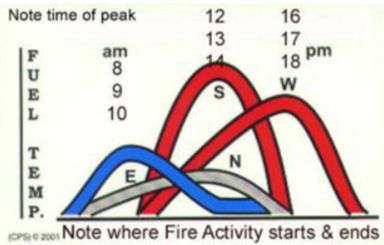
Figure 17. Campbell Prediction System (CPS) Alignment of Forces and his Flammability Card Source: CPS
Campbell (RiP) continues, the Fig. 17. "CPS Flammability Card is most useful in topography and fuel-dominated fires. This graph illustrates the fuel/aspect temperature variation on the four primary aspects. Reading a Wildland Fire - There are three primary forces causing variations in fire behavior. They are wind, slope, and pre-heat. When these forces align, the fire is going to be at its maximum intensity. When these forces are not in alignment, the intensity is lower than the maximum. This is the alignment of forces concept. Each side of a fire, the head, flanks, and heel, has a different alignment and intensity. ... Each of these alignment sets produces a fire signature, which is the observed fire behavior within the current alignment of forces. The fire signature is the ground truth. It is how the fire will behave in similar conditions." [In this author’s professional opinion, the alignment of forces concept is an Old School construct well worthy of enduring.] (EMXYS)
Campbell (RiP) continues: "WFs face variations in fire behavior that can be predictable, but unfortunately, too many [FFs] lack the training and knowledge to foresee these changes, resulting in unsafe and/or ineffective tactics that can lead to burnover accidents and/or the inefficient use of resources. The development of a reliable prediction system that would mitigate these problems included drawing upon the first-hand experiences of seasoned [FFs], investigating the commonalities in burnover accident reports, analyzing and challenging fire weather and fuel moisture concepts, developing and field testing prediction and tactics on wildland fires and prescribed burns. The Campbell Prediction System has been developed to explain how [FFs] can make predictions of fire behavior changes that may occur at any time, and make these predictions while on the fireline. This prediction system has been field-tested and validated on wildland fires and has prevented deaths and injuries of [FFs] from burnovers."
Researchers Gleason & Robinson warn us about wildland fire fatalities lessons learned: “... failing to learn the lessons of the past dooms us to reliving those lessons, then we must either impress indelibly into the minds of [ffs[ the lessons of the South Canyon Fire or we will again experience its tragic outcome” (Morrison P.H. and Wooten, G.: Analysis and Comments on the [YH Fire] in [AZ] and the Current Fire Situation in the United States. Pacific Biodiversity Inst., Winthrop, WA (2013).
Ironically, "Student of Fire" commenter No. 19 Matt bravely and accurately noted the following YH Fire and GMHS (in)actions: “It is unforgivable that we allow sentiment and tradition [to] prevent us from learning anything from ... Yarnell because we continue to be blinkered ... in our eagerness to ‘not speak ill’ of the dead. It is nothing short of astonishing that the official conclusion was that everybody involved in the YH Fire did everything right. ... Covering up facts because they make us uncomfortable dishonors the dead, and ensures the same mistakes will be made in the future.” (Woodbridge, 2014) The Woodbridge “Student of Fire” website is no longer valid online, nor available on the amazing Internet Archive Way-Back Machine.
(In)Complete and (Un)True Lessons Learned - Which One? False, contrived defensive claims thrive. Their [Honor the Fallen] goal was to make sure Yarnell Hill, the most publicized event in wildland firefighting history, forced some much-needed changes to the job’s outdated culture." And further classically weasel-worded their way to this inexplicable, brown-nosed conclusion: “We could see ourselves making the same decision they’d made …” Former Santa Fe Hot Shot Kyle Dickman, author of the first book about the YH Fire, titled “The Burning Edge,” stated in Outside online (2018). “Lessons from Yarnell continue to echo throughout the wildland [FF] community,” and “The [YHF] remains part of an ongoing discussion on wildland firefighting safety,” Prescott FD FF (Lingle, Coffee or Die, 2020). And the Honor the Fallen YouTube video. [Really? What YH Fire lessons are we really learning? And where are those lessons published to learn from them?]
"Everyone searches for opportunities while running from problems, missing that they're the same thing. Problems are far from being obstacles to opportunity; they are the opportunity. This is our history. Learn from it today. Use it." (tomorrow.co)
"If they call you 'crazy' or 'paranoid' when you ask questions, that’s gaslighting. They want you doubting your reality so that they can shape it with their narrative. Gaslighting is one of a narcissist’s most powerful weapons - it’s psychological warfare disguised as conversation. The moment you start noticing inconsistencies or asking for clarity, they don’t explain - they deflect. They turn your curiosity into “accusation,” your intuition into 'insecurity,' and your logic into 'lunacy.' It’s not because they misunderstand you; it’s because they need you to mistrust yourself. ... Suddenly, you’re apologizing for things they did, just to keep the peace. You begin walking on eggshells, editing your questions, and second-guessing your feelings. ... they win ... by being right, ... by making you feel wrong for even noticing. Over time, you stop confronting them altogether. You silence your instincts to avoid being labeled 'dramatic' or 'jealous.' You shrink yourself just to keep the connection alive. ... that’s exactly what they want - a version of you that no longer trusts your truth, only their version of it. Real love ... welcomes questions. It wants transparency, not control. So if every time you speak up, you’re made to feel insane, remember: that’s ... manipulation. The moment you stop explaining what they already know they’ve done, you break their illusion of power. Because you were never crazy - you were simply catching on. They are abusing you." (Threads). Familiar to us Truth Tellers. And you?
Some things are believed because they are demonstrably true …
others because they are repeated.
Thomas Sowell
Consider this highly contributive, historical, informative, and worthwhile linked (CFS) Report of The Fire Safety Review Team, March 1967. A Plan To Further Reduce The Chances of Men Being Burned While Fighting Fires USDA USFS Washington, D.C.
Consider now the tried-and-true Wildland Fire Orders & Watch Outs (Rules of Engagement & Entrapment Avoidance Principles) listed on the back page of the NWCG Incident Response Pocket Guide (IRPG).

Figure 18. Wildland Fire Orders & Watch Outs Source: NWCG IRPG

Figure 18a. 1977 Standard Fire Fighting Orders Source: NMFSH
Regarding Fig. 18. above and comparing it to Fig. 18a., you should readily note that in 1977, Fire Order No. 4. "officially" listed only ERs and no SZs. So then, it was understood that you would simply go somewhere safe!
Consider this informative, historical research by Dr. J.A. Ziegler (2007). The Story Behind an Organizational List: A Genealogy of Wildland Firefighters' 10 Standard Fire Orders. Communication Monographs, 74 (4).
According to wildland fire researcher Carl Wilson's original (1977) 'Common Denominators of Fatal and Near Fatal Wildfires, incidents occurring on small fires or quiet parts of large fires, light fuels like grass and brush, unexpected wind shifts, and fires running uphill in specific topographic features like chimneys and gullies.' He later added this: some suppression tools, such as helicopters or airtankers, can adversely affect fire behavior. The blasts of air from low-flying helicopters and airtankers have been known to cause flare-ups. Wilson, Carl C. (1977). Fatal and near-fatal forest fires: the common denominators. The International Fire Chief 43(9): 9-15 is cited often but virtually impossible to find.
The 1985 fire season proved especially active for FFs and WFs nationwide. Drought and adverse weather combined to set the stage for the insanely extreme Watch Out No. 4 local factors, Sundowner Winds fire behavior! (UC Santa Barbara), (AMS, 2018). After the July 1985 Wheeler Fire on the Los Padres NF burned an estimated 118,000-120,000 acres, and arson-caused. The fire threatened the city of Ojai and destroyed 19 to 26 homes, along with numerous outbuildings. The Butte Fire on the Salmon NF (ID) August 29, 1985. Butte Fire sustained a crown fire run, when 118 FFs and WFs disengaged from the fireline and made their way to so-called SZs, where 73 FFs and WFs deployed fire shelters. The world-renowned Payson Hot Shots developed Watch Out No. 19 Death From Above. This covered Overhead, all the gravity hazards (trees, hazard trees, rocks, etc., aircraft, airtankers, aerial ignition, powerlines, etc.).
Origin of the 10 Standard Fire Orders: The orders were developed in 1957 by a linked USDA Forest Service Task Force studying several tragic wildfires from 1937 to 1956. The goal was to prevent future FF & WF injuries and fatalities. Impact of the Loop Fire: The 1966 Loop Fire, which resulted in the deaths of 12 [FFs], highlighted specific dangers in "chimney canyons" and led to a review of safety protocols. The official report from the fire prompted recommendations for many safety changes, such as the mandatory use of fire shelters and the development of a checklist for downhill operations. ... Relationship between the two: The 10 Standard Fire Orders and the lessons learned from the Loop Fire are both critical components of wildland fire safety. The Loop Fire's aftermath led to the creation of additional safety guidelines and the mandatory use of safety equipment, which supplemented and enhanced the original 10 orders."
There will never be a Fire Shelter light enough to be carried by FFs and WFs on the firelines, worthy to withstand the extremely deadly flame and heat intensities of the historical fatal and near-fatal wildfires. The only man-made structure that would have saved the GMHS on June 30, 2013, would be a literal shipping container made of aircraft black box material!
Aikido instructor George Leonard (West of the Sun): “It’s possible that one of the reasons you got on the path of mastery was to look good. But to learn something new of any significance, you have to be willing to look foolish."

Figure 19. 12 ways for staying f**king sane Source: Threads
Regarding the tried-and-true Ten Standard Fire Orders and Rules of Engagement and Entrapment Avoidance principles, this author has a strong preference for this well-respected, former, somewhat controversial USFS Fire Director's viewpoints. In 2002, Jerry Williams, the former Director of Fire and Aviation Management, USDA Forest Service, Washington Office, Washington, DC, wrote an article for Fire Management Today (FMT Issue 62, pp. 31-25) that specifically addresses the value of the Fire Orders. What follows is based on remarks made by him at the National Fire and Aviation Management Meeting from February 25 to March 1, 2002, in Scottsdale, AZ. 2002 Fire Management Today (FMT): "Firm Rules of Engagement. The Ten Standard Firefighting Orders must be firm rules of engagement. They cannot be simple guidelines, and they cannot be “bargained.” They are the result of hard-learned lessons. Compromising one or more of them is a common denominator of all tragedy fires. On the Dude, South Canyon, and Thirtymile Fires, the Fire Orders were ignored, overlooked, or otherwise compromised. ... The Fire Orders mean little after we are in trouble. That is why we must routinely observe them and rely on them before we get into trouble. We know that no fire shelter can ensure survival all of the time under all circumstances. Entrapment avoidance must be our primary emphasis and our measure of professional operational success. ... We must embrace the Fire Orders because we owe it to one another. In that sense, the Fire Orders must become a shared obligation, where the leader’s situational awareness depends on participation by the entire crew and where the crew’s participation is tempered with respect for the leader’s responsibility. Borrowing from the aviation community’s model of Cockpit / Crew Resource Management [Findings From the Wildland Firefighters Human Factors Workshop. (MTDC, 2019)], we must focus fireline operations more on what is right than on who is right." However, we must not adhere to the Fire Orders for fear of punishment. We must embrace the Fire Orders because we owe it to one another. In that sense, the Fire Orders must become a shared obligation, where the leader’s situational awareness depends on participation by the entire crew and where the crew’s participation is tempered with respect for the leader’s responsibility. Borrowing from the aviation community’s model of Cockpit / Crew Resource Management [CRM], we must focus fireline operations more on what is right than on who is right." [In this author’s and others' professional opinions, it is unfortunate that so many in the wildland firefighting culture have strayed far and wide from this sage counsel. These germane wildland fire valued lessons learned that Williams offered in 2002 were clearly available to ALL FFs and WFs engaged in wildland firefighting in 2013, including the GMHS. Evidently, all others on the YH Fire that day followed William's sage advice without deploying fire shelters, getting burned over, being entrapped, dying, or staying alive. And literally tens of thousands of FFs and WFs engaged in wildland firefighting effectively and safely utilize them every single fire season! This is factual, and far from hindsight bias! Fire always signals its intentions - ALWAYS! Fire is an inanimate entity; however, it always tells you what it’s going to do, e.g., Fire Orders No. 1. and No. 3! And always following the scientific principles of Fluid Dynamics, so it flows like water. (USDA, USFS). We also hear about all the alleged wildfires where FFs and WFs followed all the Rules of Engagement, and they were still burned over, deployed fire shelters, or died. Really? First off, if someone deploys their fire shelter, then someone really screwed up, because the fire signals to us what it is going to do every single time! All we and/or our lookout(s) and supervisors must do is pay attention and act accordingly. This author challenges any of you to search the WLF LLC and provide me the name of one fire where a FF or WF followed all the Rules and was burned over, deployed a fire shelter, or died. You will find none! First off, if someone deploys their fire shelter, then someone has really screwed up, because the fire signaled to you its intentions. All we and/or our lookout(s) must do is pay attention and act accordingly. Moreover, it’s fairly common knowledge in the wildland fire world that if you have to deploy your fire shelter or rely on air support to survive, then you’ve really f**ked up! You are challenged to search the WLF LLC Incident Reviews and provide the name of one fire where a FF or WF followed all the Rules and was burned over, deployed a fire shelter, or died. You will find none! It is this author’s professional opinion that when you hear that FFs and WFs were “forced to deploy their fire shelters,” it's because they failed to recognize the readily observable changing wildland fire weather and fire behavior. We often hear of FFs and WFs on fatal wildland fires who allegedly “willingly gave their lives.” Really? That is untainted “Bovine Feculence!” In reality, their lives were most likely taken from them and/or by their dangerous (in)actions, and/or by their inept, incompetent, inexperienced supervisors!].
"After years of delay, the GMHS autopsy records are released. IM" (2015). These are well worth looking into during your yearly RT-130 Refresher Training, revealing what can and will likely occur when one fails to follow and heed the tried-and-true Rules of Engagement and Entrapment Avoidance Principles! Caution is advised due to the graphic details. The GMHS Lookout McDid-Not (Olson's Sad Sack) was assigned that position because he was the most hungover of the bunch. He was never tested as a “control” to determine his BAC. The SAIT asked him about the Fire Orders; he stated he took issue with No. 10 Fight fire aggressively, having provided for safety first. "It’s – it’s hillbilly. It’s what it is. It’s old. It’s, uh, no offense to whoever came up with that, um, I mean no disrespect to anybody, but, I mean, it is the way they fight wildland fires today is, I mean… Oh, it’s… We’re smart. We’re a lot smarter." A Third-year GMHS Crewman would have never come up with that on his own; he would've been coached! Is it another of the many YH Fire & GMHS debacle mysteries or what? Does it help us understand the undergirding safety attitude and actions of the GMHS leading up to June 30, 2013?
Part 1 of 2 - Why Were Vital Human Factors Influencing the June 30, 2013, YH Fire GMHS Fatalities Never Revealed? (YHFR, 2023)
“The search for truth implies a duty.
One must not conceal any part of what one has recognized to be true.”
Albert Einstein

Figure 20. Wildland Fire Orders, Watch Outs, Guidelines distortion Source: NWCG, NFES, FJS
In this author’s professional opinion, many mistakenly believe that the Watch Out Situations can be violated … they cannot. Only the Ten Standard FF Orders and the principles of LCES can be violated. The Watch Outs are Guidelines. And deadly if unknown, unrecognized, unmitigated, etc., but never violated. These are things we experience on every fire, every time, and they determine whether or not we remain engaged in our current and/or expected fire suppression efforts when they decrease, increase, and/or cease altogether.
Citing former Wildfire Today author and former El Cariso HS Bill Gabbert (RiP): Wilson, C. C. Fatal and Near-Fatal Forest Fires, the Common Denominators. 1988. About forty years ago, Carl Wilson, one of the early wildland fire researchers, developed his list of four “Common Denominators of Fire Behavior on Tragedy Fires,' which are the fatal and near-fatal fires. Entrapments are the fourth leading cause of deaths on wildland fires. 1. Relatively small fires or deceptively quiet areas of large fires. 2. In relatively light fuels, such as grass, herbs, and light brush. 3. When there is an unexpected shift in wind direction or wind speed. 4. When fire responds to topographic conditions and runs uphill. Alignment of topography and wind during the burning period should always be considered a trigger point to re-evaluate strategy and tactics."
Matt Holmstrom, former Lewis and Clark HS Supt. and current PNW Regional Risk Management Officer, recent Wildfire Magazine article. Wilson’s Common Denominators only address fire behavior. Holmstrom explored eight human factors that he believes merit consideration. Generously paraphrasing, here are the areas he mentioned: 1. Number of years of experience. 2. Time of day (especially between 2:48 p.m. and 4:42 p.m.). 3. Poorly defined leadership or organization. 4. Transition from Initial Attack to Extended Attack. 5. Earlier close calls or near misses on the same fire. 6. Personality conflicts. 7. Using an escape route that is inadequate. 8. Communication failures. He goes into detail for each item, citing numerous historical wildfires as examples.
"Attack when your enemy is lax."
Sun Tzu
WLF LLC, Kelly Woods, and USFS PNF (R5) WF Eric Apland Podcast.
In their "official" “Reading, Reflecting, and Changing Behavior” Sept. 10, 2021, podcast (link provided above) by the WLF LLC Center Manager, Kelly Woods, and the Plumas NF Graduate Degree WF Erik Apland talk about his WLF LLC Incident Review Database task to read all of their archived entrapment reports. Woods, in a calculated, condescending statement, says: "focusing on this, this huge deep dive you've done in these kinds of events ...." Deep dive? Really? Regarding her expected and presumed neutral, objective research, she instead provided a very narrow-minded insight into those literally hundreds of investigative reports to match the YH Fire SAIT-SAIR conclusion of no wrongdoing when stating their own conclusions and findings. It is rather significant and telling that both of them, unequivocally, and without hesitation, totally dodged the subject of the 2013 YH Fire (AZ)! And yet they had plenty to say about the 1949 Mann Gulch Fire (MT), the 1964 Sundance Fire (ID), the 1979 Ship Island Fire (ID) the 1985 Lake Mountain and Butte Fires (ID), the 1994 South Canyon Fire (CO), the 2002 Price Canyon Fire (UT), and the 2016 Pagami Creek Fire (MN)! This is what he had to say about the historic 1933 Griffith Park Fire: "There's been things like I've heard of Griffith Park, right, that's it, that's about it. I'd heard it, it, that it had happened but I didn't know really anything about it at all, and there are fires in there that I didn't even know that happened, never heard their name before you know pretty major fires, ..." One of my favorites in the podcast (35:17) was this use of a fire shelter: "... if you can improve your conditions, and, you know, prevent some sunburns, or get better air ..." Prevent some sunburns? Are you friggin kidding me? Sunburns! You really can't make this s**t up! Consider delving into our relevant YHFR post titled: Why Has the Wildland Fire LLC Lost Its Ethical Compass Defending The YH Fire SAIT-SAIR? (2022) Schoeffler and other contributing authors.
And ever-so-expectedly, there is absolutely no mention in that WLF LLC podcast of the world-renowned June 2013 YH Fire or the GMHS debacle or how effective the tried-and-true Ten Standard Fire Orders and the 18 Watch Out Situations (10 & 18) are toward the goal of Entrapment Avoidance. The fact that they obviously completely avoided mentioning even once, in the long arc of wildland fire fatality history, the most tragic wildfire (YH Fire) is rather significant, disturbing, fully supporting our contention that the WLF LLC has clearly lost its ethically objective compass; misusing our Federal tax dollars, and straying far from its mandated roots: "the LLC operates as a national, interagency, federally-funded organization with interagency staffing. The LLC’s primary goal continues to be striving to improve safe work performance and organizational learning for all [WFs]." The WLF LLC (2023) "Painful Progress" post states: "From the perspective of the WLF LLC, a single element of the post-Yarnell climate is most concerning: The notion that nothing was learned. The prevalence of that perspective is disheartening. It’s also not accurate. Learning in the aftermath of tragedy is guaranteed—at least at the individual level. ... This level of learning is not what is meant when people say, “We didn’t learn anything from Yarnell.' In most cases, the learning they feel is missing is at the organizational level - as evidenced by the conspicuous absence of new policy, programs, checklists, courses, or equipment." [We need NO “new policy, programs, checklists, courses, or equipment” because the so-called "Powers to Be" and we Truth Seekers and Truth Tellers already have all these items "officially" and elsewhere in place as posted here and other previous YHFR posts! Remember that statements like this one fall squarely within the infamous "Three Big Lies" category, i.e., "Trust us, we work for the Government and we're here to help you."]

Figure 21. Decisions and Outcomes matrix Source: YHFR
Oct. 2013 SWA Hot Shot Crew After Action Review, YH Fire Site Visit
Integration Phase: “This was the final, fatal link in a long chain of bad decisions with good outcomes, we saw this coming for years” (Schoeffler, 2016). Or Willis' “just one of those things that happened, you can call it an accident" ... Structures first – WF safety as a “last resort,” and "they picked the best possible place in this bowl to deploy shelters.” Former PFD Wildland BC Darrell Willis, July 2013 GMHS Deployment Zone News Conference (YouTube, Dougherty - 2013 Pt. 1.) And (Part 2). What Fatality and "Prescott Way" Causal Factors Does PFD Wildland BC Willis Reveal in the July 2013 GMHS Deployment Zone News Conference? (Otter.ai transcribed YHFR, 2023) Being able to actually read what is being said is most informative and enlightening, giving you a new perspective on this watershed event and how it was imaginarily, in his own mind, recounted by PFD Willis. Are you f**king kidding me? “They picked the best possible place in this bowl to deploy shelters.” Willis, where, in any training manual or fatal or near-fatal wildland fire SAIT-SAIR recommendation, does it suggest or tell us to deploy fire shelters in deadly bowls? NOWHERE! Many of us criticized the YH Fire and all other fatal or near-fatal wildland fires' SAIT-SAIRs for covering up and whitewashing the tragedy and failing to recognize the FFs and WFs who deserve to increase their knowledge of how to avoid similar disasters in the future. Countless lessons learned occasions were missed.
"The El Cariso Hot Shot Crew was constructing fireline downhill into a chimney canyon and were within 200 feet of completing their assignment when a sudden shift of winds caused a spot fire directly below where they were working. Within seconds, flames raced uphill, engulfing the [FFs] in temperatures estimated to reach 2500 degrees F. The fire flashed through the 2,200-foot-long chimney canyon in less than one minute, catching the crew while they attempted to reach their safety zones." A race that could never be won based on these findings!
Always learning and never able to come to the knowledge of the truth
2 Timothy 3:7 (NKJV)
Wildfire Today (Nov. 30, 2013): "The person who led the 54-person team that investigated the June 30 deaths of 19 members of the [GMHS] talked to a reporter for the Florida Current about the results of their investigation and how they track [FFs] in his agency. “It would be real easy to say, 'This is exactly what happened and these are why decisions were made and this is something to blame,'” Karels said. “But all 19 are gone. So we reconstructed an event based on the best knowledge we had.” ... [he] ... also talked about tracking the location of [FFs], since no one on the [YH] Fire knew where the [GMHS] were at the time of the fatal entrapment or previously that they were hiking through unburned vegetation near the fire, which changed direction and burned over their location due to a passing thunderstorm." [Really? No one? The GMHS and many others listening to the radio knew exactly where they were the whole time! - The alleged Shrine-Sesame Street Corridor rogue firing operations were adversely influenced and exponentially increased by a clearly visible, noted causal factor "passing thunderstorm" from the North, seen by many, including the GMHS, as one of the predetermined causes.]
He who asks a question is a fool for five minutes.
He who does not ask a question remains a fool forever.
Stay Curious
WLF LLC YouTube - Honor the Fallen Group – Nov. 2014 - Former USFS Apprenticeship Project Manager Heath Cota stated: "And the truth is that we try to put it into these little boxes and these rules of the 10 and 18s that cannot ... they're not going to keep us safe. ... you know, these rules, whatever they are ... this environment is way too complex ... the whole luck decision conversation ... It was good until it wasn’t.” He would also tell a former Los Padres NF HS and at-the-time El Dorado NF Engine Captain, teaching about the YH Fire extreme fire behavior in an Apprenticeship Academy S-290 Intermediate Fire Behavior Course, that he needed to get “prior Regional and Washington Office approval” whenever talking about the YH Fire and GMHS debacle!

Figure 22. June 30, 2013, GMHS actions, radio txs. AZ Rule 803 Source: FJS
In this FMT (FMT Issue 62, 4) issue is Human Factors Professor of Organizational Behavior and Psychology, School of Business Administration, Univ. of MI, Ann Arbor, MI. Karl E. Weicks’ highly insightful article titled: Human Factors in Fire Behavior Analysis: Reconstructing the Dude Fire "Naked Truths here are no easy answers. One thing we can be pretty sure of is that moments of learning are short-lived. A perfect example comes from battlefields. According to Cohen and Gooch (1990), 'In the chaos of the battlefield, there is the tendency of all ranks to combine and recast the story of their achievements into a shape which shall satisfy the susceptibilities of national and regimental vainglory. … On the actual day of battle, naked truths may be picked up for the asking; by the following morning they have already begun to get into their uniforms.' If all goes well on the staff ride, we’ll be able to recapture enough of the actual day of the tragedy to learn some naked truths. In doing so, hopefully we’ll get scared enough to have the lessons stick, but not so scared that we miss details. In those details lie the truths that belie the simplistic conclusion.”
Sometimes, the answers we need are far from being hidden - they're just waiting for those of us learning and seeking the truths to look a little closer. According to Human Factors Nerd Stephen Crockett, in his proposed paper titled "Human Factors Loss of Situational Awareness, decision makers are constantly faced with balancing safety with the effectiveness of carrying out their mission. Consequently, in the mind of decision makers, trying to balance safety with effectiveness often creates Cognitive Dissonance: “The psychological tension that occurs when one holds mutually exclusive beliefs or attitudes and that often motivates people to modify their thoughts or behaviors in order to reduce the tension.”
The inherent risks of wildland firefighting conflict with the belief that safety protocols will prevent all tragedies. The YH Fire forced many within and outside the wildland fire service to confront this dissonance. One commentator noted "the mistakes made are nothing new," indicating a conflict between what is known about wildland fire weather and wildland fire behavior and the outcomes that can occur. In all workgroups, there is literally no way to prevent all fatalities for a variety of reasons, so in reality, all we can do is our best to reduce them.

Figure 23. Fire weather factors and outcomes Source: Intl. Fire Chief
Please consider the following extensive wildland fire researchers' work.
A review of US wildland firefighter entrapments: trends, important environmental factors, and research needs. Special Collection: Celebrating 30 Years of Wildland Fire Science Publication. Wesley G. Page, Patrick H. Freeborn, Bret W. Butler, and W. Matt Jolly.
"[WFs] in the [US] are exposed to a variety of hazards while performing their jobs. Although vehicle accidents and aircraft mishaps claim the most lives, situations where [FFs] are caught in a life-threatening, fire behaviour-related event (i.e. an entrapment) constitute a considerable danger because each instance can affect many individuals. In an attempt to advance our understanding of the causes of [FF] entrapments, a review of the pertinent literature and a synthesis of existing data were undertaken. Examination of the historical literature indicated that entrapment potential peaks when fire behaviour rapidly deviates from an assumed trajectory, becomes extreme, and compromises the use of [ERs, SZs] or both." (Page et al)
Relative to the 1966 Loop Fire, specific comments follow: What are the best examples you've seen of rare or extreme fire behavior? The Supe's Handbook: Leadership Lessons From America's Hot Shot Crews. Desert Rat Press (2021), authored by former Payson Hot Shot Angie Tom: "Under Santa Ana conditions. When you’ve got battling winds – [This is what] caught the guys on the Loop Fire. “You really need to pay attention when you’ve had an offshore wind that’s pushing down into the coast in the morning, and it’s getting to be about ten o’clock, and you’re still chasing it down this way. The wind is going to take a change, and you need to be heads up for that change.” Mark Linane – Los Prietos/Los Padres Hot Shots (1973-2001). Considered a leading spokesperson for the HS community, involved with safety and training issues for years. What do you teach your people about fatality fires? “I guess it would be really good if everybody could hear what Gordon King said today [Region 5 Hot Shot Workshop, March 2005]: … He wasn’t really saying what went on with the fire – just to see the effect it can have, what can happen if you screw up, if you’re not paying attention for whatever reason, the aftereffects it’s going to have on you. I think that’s the key thing, actually putting some names with some faces, so it’s real - That just ruined Gordon King’s life. I can’t imagine how anybody could go 40 years without talking to anybody about it. That’s pretty gnarly. That’s a pretty heavy message he has to deal with forever.” Stan Stewart (RiP) Los Padres (2000-2009). Tell me about a time you made when a change you made on a fire prevented something bad from happening. Richard Aguilar El Cariso (1974) Wolf Creek (1975-1997) Hot Shot Supt. recounted the 1975 Southern CA Pacoima wildfire with one of the 1966 Loop Fire El Cariso’s HS survivors as a Crewmember, feeling and then voicing how uncomfortable he was about a fire situation, which eventually manifested in extreme fire behavior that would have overrun and killed them had he failed to voice his concerns, and if the HS Supt. would have failed to judiciously act on it. [ALWAYS heed your gut feelings, The Holy Spirit, and/or intuition! And inquire from others if they have them, because more-than-likely someone else will as well]. [CFC South Cyn. Fire interview statements that may still contain these originally redacted discussions]. Switching from wildland fire weather to human factors here: Scientists say the human body has a 'hidden' SIXTH sense. UK Daily Mail (2025). "Scientists from Scripps Research say the human body has a 'hidden sixth sense', called 'interoception'. ... an 'understudied process', by which your nervous system continuously receives and interprets your body's physiological signals to keep vital functions running smoothly." J. Murphy from Royal Holloway, Univ. of London, and F. Prentice, from UCL, ... 'It contributes to many psychological processes – including decision making, social ability and emotional wellbeing.'"
“Escape Routes [ERs] are the path the [FF] takes from their current locations, exposed to the danger, to an area free from danger. ... Unlike the other components, there always must be more than one [ER] available to the [FF]." Paul Gleason (RiP) 1991 Original LCES post-1990 Dude Fire. During his career, he was front and center on three well-known fires of the modern era - the Loop Fire in 1966, the Dude Fire in 1990, and the Cerro Grande Fire (Los Alamos Escaped RX Burn) in 2000. His role on these three touchstone fires gave rise to his passion for [FF] safety and the “student-of-fire” philosophy that he crusaded for. He was a leader of [FFs] and a leader for the wildland fire service." [This author encourages you to first become a “Student of Weather“ and then a “Student of Fire’ because it is our first Fire Order, and wildland fire weather always influences fire behavior!].

Figure 24. Dude Fire Perryville WF Fire Shirt with heavy charring in the face and head areas. Source: Putnam
This is merely one of several Dude Fire Perryville WF Fire Shirts with heavy charring in the head and neck areas, indicating they were standing up, attempting to deploy their fire shelters when the burnover occurred. Fatally funneling deadly hot gases into their airways. Dude Fire Investigator Ted Putnam stated that they would have survived, albeit with some burns, if they had layed down and protected their airways!
Happy Jack HS Olson comments: "Now I realize that if you don’t know all of the facts to the story, it would be an obvious assumption to think that they went to so much trouble and expense because I was one of the two WFs who ignited the deadly burn out that overran the Mormon Lake HS Burn Out Team. But I don’t think that is why, because those fuckin’ people just don’t usually give a fuck about doing the right thing. ... But here is what I think happened. I think my former best FIRE friend for several decades and the father of the [GMHS], Ed Hollenshead, called in some favors from his fellow Regional Directors of Fire & Aviation Management to make sure I was there because Ed was trying to do me a buddy favor by helping me to find some closure because of my role in that disaster. I am at peace with my role in that event so that was not needed, but it was a very sweet thing to do. ... And that was because Ed and I met for lunch in Phoenix shortly after I resigned from the committee and of course Ed is carrying around his own baggage because he was the Incident Commander on the Dude Disaster of 1990, and we have discussed those things in the past, as you probably can imagine. I think Ed is the reason they worked so hard to get me on that staff ride, and it cost him some juice because I was not well-liked by them at that point, if I ever was." [Yes indeed, this author alleges that Mr. Ed is carrying around his own baggage because, among other things, he was the Type ll IC that unilaterally chose Walk Moore Cyn. - a horizontal chute - as a primary control feature on the fatal Dude Fire, and years later, hiked miles out on the fireline of an Idaho wildfire to question this author about it; and along with the Type l IC were both witnessed and confronted in the Tonto Supervisor’s Office by the Lead Dispatcher/Center Mgr., selectively shredding key Dude Fire package documents from it! He stated that the Investigation Team would need them for their investigation. He was told, "If you don't like it, you can just leave."].
Fire Weather and Fire Behavior in the 1966 Loop Fire. C. M. Countryman, M. A. Fosberg, and R. C. Rothermel. Forest Service~ U.S. Department of Agriculture. M. J. Schroeder. (U.S. Weather Bureau)
(Begin AI excerpts) "Meteorological Analysis of Southern California Conditions on November 1, 1966, in Relation to the Loop Fire. Archival analyses indicate the Los Angeles-Tonopah (NV) sea-level pressure differential peaked at 1:00 p.m. PST, far exceeding the threshold for sustained Santa Ana conditions. This gradient facilitated northeasterly winds channeling through mountain passes, desiccating fuels, and promoting rapid fire propagation. The event was the culmination of a multi-day pattern, with the Santa Ana commencing on Oct. 28, 1966, amid a two-year regional drought that had reduced precipitation to 20% of normal in coastal Southern CA. Pacoima Dam, proximate to the fire origin, recorded only 1.44 in. of precipitation from March to Oct. 1966. ... Atmospheric stability was weakly stable, with a lapse rate marginally sub-adiabatic, minimizing surface heating effects due to vigorous mixing from high winds. Upper-air flow exhibited meridional patterns, with Pacific-polar air masses in the Great Basin and a deepening coastal trough amplifying the gradient. Vorticity advection analyses revealed downward vertical motion over the fire area in the early forenoon, consistent with lee-slope subsidence, though no meso-scale descent of stronger aloft winds occurred. By late afternoon, the kinetic energy integral of the wind field indicated an abrupt weakening, signaling the Santa Ana's elevation above the surface, though residual northeasterly flow persisted. ... These conditions directly contravened safe fire suppression thresholds under NWCG guidelines, fostering extreme fire behavior including rapid upslope runs, spotting, and convective flare-ups. Notably, a localized wind shift from northeasterly to westerly around 3:50 p.m. PST, coinciding with the onset of an onshore pattern, contributed to the fatal entrapment of the El Cariso HS in a chimney chute. Potentially augmented by helicopter rotor wash and accumulated combustible gases, precipitated an explosive ignition event with temperatures exceeding 2,500°F and a shock wave."
Parameter AM (Pre-Noon) Values, PM Values, Forecast/Notes
-----------------------------------------------------------------
Temperature: 70s–80s (low elevations); 60s (higher elevations), 90s (low); 70s–80s (higher); Peak 101°F in Los Angeles, High: 87–95°F; Record November heat fanned by Santa Ana winds
Relative Humidity: 9–22% ; Critically low, enhancing desiccation
Wind Speed: (mph) 24–50 (gusts to 60–65); 30–40 sustained NE, 10–20 (decreasing); Gusts 12–25; Shift to westerly late. Channeling in canyons; Eddies 5–10 miles across; Turbulence at canyon mouths.
Wind Direction: Northeast (general); Northerly/Northwest in southern valleys/saddles. Residual NE with westerly shift. Santa Ana-driven.
Fuel Moisture: Dead fuels: 3–4%; Live fuels: 59.9–60% (chamise foliage). Critically low due to drought; Near minimum for vegetation survival.
Precipitation: Regional drought (1.44 inches March–October at Pacoima) Sub-normal (20% of average).
Fire Load Index: 26–100 (extreme at higher stations). Spotting susceptibility high.
Atmospheric Stability: Weakly stable; Sub-adiabatic lapse rate. Weakening kinetic energy post-4:00 p.m. Downward motion over fire area; Wave patterns in vorticity.
"These metrics align with extreme fire danger ratings under the National Fire Danger Rating System (NFDRS), where wind speeds exceeding 20 mph, RH below 20%, and fuel moistures under 5% for dead fuels constitute conditions conducive to uncontrollable fire spread. The interplay of these variables precipitated violent fire dynamics, including downwind spread via flame contact and spotting, up-canyon propagation against prevailing winds due to convective currents, and chimney effects in steep topography amplifying heat flux. Fuels (chamise, sage, sumac) released energy rapidly under low moisture, with Santa Ana-induced turbulence causing 180-degree wind shifts in seconds, obscuring visibility with ground-clinging smoke. The fatal flare-up at approximately 3:50 p.m. in Pacoima Canyon's chimney chute was attributable to gas accumulation from incipient combustion stages, ignited by oxygen influx from wind shifts and possible rotor wash, yielding explosion-like conditions. Post-incident reviews led to the establishment of the '10 Standard Firefighting Orders' to mitigate similar weather-induced risks." (End of AI excerpts)
Historical synoptic weather maps for Nov. 1, 1966, are archived by NOAA but not digitally accessible in high resolution via public interfaces for that precise date.“early in the morning … the temperature was 73° F” (Incident Summary Page for the 100 Fires Project) and "When the accident occurred, temperatures at lower elevations were in the 90’s and at higher elevations in the high 70’s or low 80’s.” (CFC). This author holds that it is a permissible inference that these “early morning" temperatures mentioned in these “official documents” would squarely qualify for Robert Bates’ 1962 instructive and noteworthy paper regarding high nighttime temperatures, which induced critical to explosive fire behavior cited below.
High critical nighttime temperatures, indicating Critical to Blow-up condition thresholds based on former TNF PRD Ranger Robert Bates' informative and instructive 1962 research paper titled: A Key to Blow-up Conditions in the Southwest? This author has found that the midnight to 0800 nighttime temperatures are critical. (Fire Management. Today, 63, 3 Wildland Fire Case Studies and Analyses (Summer, 2003). “This study seems to indicate that a deadly one-two combination of an unusually warm night followed by a warm day may be key. Nighttime temperatures above 45º F are critical, and with those above 55º F, blow-up conditions exist.” [0800 ] High nighttime temperatures are necessary but not sufficient for aggressive fire behavior potential. The day following the highest nighttime temperature, followed by warm to hot days, have the most aggressive to extreme fire behavior potential. Once solar heating begins, the lifting is already in place because the dry ground provides no heat sink." And it is generally accurate and verified in every Region except the Southeast, with some exceptions, because of their high RHs.
Whole Armor of God
Put on the whole armor of God, that you may be able to stand against the wiles of the devil. For we do not wrestle against flesh and blood, but against principalities, against powers, against the rulers of the darkness of this age, against spiritual hosts of wickedness in the heavenly places. Therefore, take up the whole armor of God, that you may be able to withstand in the evil day, and having done all, to stand. Stand therefore, having girded your waist with truth, having put on the breastplate of righteousness, ... above all, taking the shield of faith with which you will be able to quench all the fiery darts of the wicked one. And take the helmet of salvation, and the sword of the Spirit, which is the word of God; praying always with all prayer and supplication in the Spirit, being watchful to this end with all perseverance and supplication for all the saints. Ephesians 6:10-18 (NKJV)phesians 6:10-18 (NKJV)

Figure 26. Prepare to Be Challenged Emotion Wheel Source: FJS
NWCG Staff Ride (NWCG, link). "A Staff Ride should avoid being a recital of a single investigation report, as it rarely addresses the human factors that affect individual decision-making." Given the recurring documented pattern of cover-ups, lies, and whitewashes on all the historical wildland fire burnovers, deployments, and fatalities SAIT-SAIRs, that precise statement is particularly worthy, especially regarding the more recent allegedly “truthful” SAIT-SAIRs, e.g., Dude, Butte, South Canyon, and especially the June 30, 2013, YH Fire, the biggest cover-up, lie, and whitewash in wildland fire history!
Most definitely take note of and follow the precepts of the Israeli Defense Force (IDF). The Tenth Man Rule: How to Take Devil’s Advocacy to a New Level. (The Mind Collection) To avoid the NWCG IRPG (P. xi) deadly Hazardous Attitude of Groupthink, the IDF utilizes the Tenth Man Rule, suggesting that, if nine people in a group of ten agree on an issue, like Wildland Fire Crews, the tenth member must take a contrarian viewpoint and assume the other nine are wrong." So, it is important to apply this principle in the Municipal, Structural, and especially Wildland Fire realms to assign at least one person (preferably two, including women, because the IDF, like Wildland Fire Crews, also have women in their ranks). Notwithstanding the “Tenth Man Rule” as it applies to women, ALWAYS ask for the women’s advice, comments, concerns, and questions based on a mere sample of a plethora of highly relevant human factors and psychologically credible scientific and quasi-scientific avalanche research, readily available in any of these and other internet searches! (BackCountry magazine, 2018) and (Mountain Lessons, 2022).
Consider now Fig. 27. GMHS's alleged steady drift into failure below from this author’s and experienced, informed, and knowledgeable others' professional perspectives.

Figure 27. GMHS's alleged steady drift into failure Source: Schoeffler
"El Cariso IHC (1966 WF) Jerry Smith at the California Wildland Firefighter Memorial, El Cariso. Jerry survived the Loop Fire and became a registered nurse before retiring. He makes us proud to this day. He makes us proud to this day." John Hawkins (Facebook)
Figure 29. El Cariso Hot Shot Loop Fire survivor Gerald Smith sharing his story on the Loop Fire Staff Ride in 2012. Source: WLF LLC, YouTube
"Today, we commemorate the victims and survivors of the Loop Fire. Its echoes can still be heard today through reformed policies and the Angeles NF's annual "staff ride," where survivors share lessons with the current fire staff." (WLF LLC, YouTube)
“I think the [YH Fire] staff ride is an insult to all of their loved ones because it hasn’t yet told the truth, ...
The biggest tribute we should do for these firefighters is to tell the truth.”
Ted Putnam - retired wildfire fatality investigator
Please consider our linked Otter. ai-generated paper YHFR 2018 post, always best viewed on a laptop or PC, titled: What Fatality and "Prescott Way" Causal Factors Does PFD Wildland BC Willis Reveal in the July 2013 GMHS Deployment Zone News Conference? It details the contrasts between the two and the major causal factors, virtually wiping out the entire Crew. Thus, it will be shown that a lack of mental clarity and poor decision-making areas literally contributed to their untimely, predictable, and preventable deaths. Mark van Appen, a California FF and training officer, wrote: “Aggressive fire companies do not make mistakes in the heat of battle - they make decisions.” [In this author’s professional opinion, summing it all up regarding the oft-debated, contentious Municipal/Structural/Wildland FD dichotomy. We should make our leadership decisions in good faith, using our best judgment based on what we know. Or you will have to live with those decisions, because it's always your sacred and solemn responsibility as leaders to do so.]
Whenever you do a thing,
act as if the whole world were watching.
Thomas Jefferson
Happy Jack Hot Shot Olson continues tying the numerous germane fatal wildfires together: "I believe that if 'they' would have told the truth after the Loop Disaster of 1966, there is a chance that the Battlement Creek Disaster never would have happened. And as I have already written several times, the truth is that Gordon King killed 12 members of his crew and burned most of the survivors of the El Cariso Hot Shots very badly on that fire in order to further his own reckless ambition to become a Fire God himself, was rewarded for the remainder of his life for his inexcusable decisions and actions on the Loop Fire, which made it the Loop Disaster. There wasn’t any accountability for anyone for those WF deaths and serious injuries. Accountability is usually what keeps people from doing the wrong thing in the first place, and it often keeps people from doing the wrong thing again. And without accountability, there really isn’t much of an incentive for people to stay on the righteous path because people are basically bad at their core. And although there are exceptions to that rule, I haven’t met very many good people in my life. And although there are differences between what Eric Marsh, King, and Czak did, what Marsh did was essentially the same thing, except it was off the charts in terms of the complexity of the facts and the extreme damage done, Marsh did what he did for the same reasons King and Czak killed and injured some of the Hot Shots they were responsible for."
Happy Jack Hot Shot Olson continues: "And so, this is my working hypothesis. If I turn into a rat snitch on King, Czak, and Marsh, is there a chance that someone will read my work in this area and think to themselves, “It’s just not worth it, I’m going to do the right thing rather than try to further my own selfish career goals and keep my crew safe.” Maybe, maybe not, but I am going to at least try. And as usual, there aren’t any obvious lessons for me to point out what went wrong on the South Canyon Disaster because I do think that was a Black Swan Event, except to say that fire was so FUBAR, it’s hard to make sense of what happened there, even for me and you know how clever I am. And so with that being said, I will leave you for now with a quote from one of my favorite philosophers, George Santayana, who famously said, "Those who cannot remember the past are condemned to repeat it." In response to Olson's statement, please consider this author's AHFE, ResearchGate, and Google Scholar papers, as well as YHFR posts, titled: "Similar known and later discovered wildland fire human, psychological, and fire weather causal relationships saved lives on two separate wildfires 23 years apart," which debunk Santayana's maxim. The YHFR posts are always best viewed on a laptop or PC. (YHFR 2025, Pt. 1 & Pt. 2), (AHFE, 2025), (Research Gate, 2025), and (Google Scholar, 2025).
Former USFS Hot Shot Supt., Fire Management Officer (FMO), Human Factors, and Fire Behavior Expert Doug Campbell, 1991, (RiP). He also instituted the Alignment of Forces Principle into his renowned Campbell Prediction System (CPS, 2010). He describes it as when “fire that is moving across the variations of topography will change speed and direction as dictated by the combination of steepness of slope, wind speed and direction, and fuel preheat/flammability. Predictions of fire behavior changes can be made by observing the alignment and strength of these forces in the fire's path. Where the forces are more aligned, the fire intensity will increase. Where the forces are less agreeably aligned, the fire intensity will decrease," (CPS, 2010). The Australians follow a somewhat similar CPS model and refer to it as “terrain-fire interactions,” referenced in the Sharples, McCrae, and Wilkes research citation: 2011 Research Gate (Atypical bushfire spread driven by the interaction of terrain and extreme fire weather). Consider also this discussion, including laboratory and numerical studies in fluid dynamics, applying to all wildland fires. (Physics Today, 2019). meaning that wildland fire behavior on the whole flows like water.
Definitely consider this extensive and highly informative (2014) article by Billie Stanton titled: "20 Years After the South Canyon Fire" article beginning with references to the GMHS and PFD Wildand BC Willis's 2012 noted pilgrimage one year prior to the predictable and preventable deadly June 2013 YH Fire and GMHS debacle: "The [GMHS] of Prescott, Ariz., made the pilgrimage there two years ago to pay their respects, recalled Darrell Willis, wildland division chief for the Prescott Fire Department. “We hiked Storm King Mountain with this (20-member hotshot) crew, and we all said, ‘This will never happen to us.’” All but one of those hotshots died June 30 during the [YH] Fire in Arizona, where shifting winds, canyon topography, and an apparent lack of situational awareness eerily echoed the South Canyon tragedy. The 19 deaths in Arizona shocked [FFs] and civilians alike. They occurred 19 years after South Canyon. “I never thought we’d wipe out a whole crew,” said Randy Skelton, deputy fire staff officer on the Payette NF." None of us did!
Seriously? You've got to be kidding me! Ask yourselves at this juncture about the barefaced arrogance, ignorance, irony, and incongruity of PFD BC Willis' comments when he and the GMHS were on a 2012 South Canyon Fire pilgrimage, stating that ‘This will never happen to us’ 19 years after the South Canyon Fire, where 19 GMHS would eventually die horrible, predictable and preventable deaths a year later! In addition, the factual irony that P. 19 of the IRPG is How To Properly Refuse Risk! As the old saying goes: "you can't make this s**t up."
This will never happen to us.
PFD WF BC Willis
19 years after South Canyon
And now consider the one-and-only Dr. Ted Putnam references and quotes: "Human Factors - Experts interviewed over the past six months cited one primary key to wildfire deaths: human factors. Psychologist Ted Putnam, Ph.D., is the 'father of human factors,' said Hipke, who makes safety training videos in Boise for the Wildfire Safety Training Annual Renewal." (Stanton, 20 Years After the South Canyon Fire, (Magic Valley).
Dr. Ted Putnam refused to sign the fatal 1994 (CO) South Canyon Fire SAIR because he “found it inaccurate and incomplete, ignoring too many pertinent human factors, ... Historically, wildland fire fatality investigations focus on external factors like fire behavior, fuels, weather, and equipment. Human and organizational failures are seldom discussed. When individual [FFs] and support personnel are singled out, it's often to fix blame in the same way we blame fire behavior or fuels. This is wrong-headed and dangerous, because it ignores … an underlying cause of [FF] deaths - the difficulty individuals have to consistently make good decisions under stress.” Putnam, T. (1996)
Psychologist Ted Putnam, Ph.D., is the “father of human factors.” ... “I think it was honorable that Ted Putnam didn’t sign that report. I don’t think it told the whole story,” said Joe Brinkley, manager of the McCall Smokejumper Base, brother of Josh Brinkley and a triplet brother of Levi, who died in the fire. Please consider our YHFR 2018 post, and as always, best viewed on a laptop or titled: May I Introduce Wildland Fire's Top Notch Person ... Dr. Ted Putnam ... His Life Example Inspires Others To Become More ... Wouldn't You Agree?
“God bless (Putnam),” said John MacLean, author of “Fire on the Mountain” and three other non-fiction books on wildfires. [This author vouches for MacLean's own admissions that his works were allegedly “historical fiction.”] “He’s done a great, great service on human factors.” Putnam joined the U.S. Forest Service in 1963 and was a smokejumper from 1966-76, with three years as a squad leader. On July 17, 1976, he fought the Battlement Creek Fire, which killed three men — from Idaho, Arizona, and Wisconsin — about 40 miles west of Storm King Mountain. A fourth man survived; he had lain face down, and the fire passed over him. Putnam warned other bosses 15 minutes before and again three minutes before the fire roared up the hill." One victim’s clothes were undamaged, another’s were burnt off, and the third victim's and the survivor’s clothes were burned across the back only. The discrepancies intrigued Putnam, who moved to the Missoula Technology and Development Center (MTDC) at once to help research and design better protective fire gear. He studied statistics and mathematics for six years while working on his doctorate in research psychology. A workshop he held on Human Factors on the South Canyon Fire led to deeper scrutiny of human factors inherent in decision-making, situational awareness, and leadership, and a push by Putnam for a national study on [FF] safety, launched a month later. While earlier investigative reports cited the facts of people’s actions on wildfires, Putnam consistently pursues the “why” behind those actions. Situational Awareness - In the chaos, confusion, and frenzy that arise when battling a wildfire, people develop tunnel vision. ... They need to step back, cooly gaze across the landscape, and mindfully note all the changes occurring. Instead, they cling to whatever idea or plan they already made, shutting out new developments, said Putnam, a Missoula resident who winters in Prescott. ... Stress, fear, and panic predictably lead to the collapse of clear thinking and organizational structure,” Putnam wrote in his 1995 paper for the MTDC, titled: Findings From the Wildland Firefighters Human Factors Workshop. Improving Wildland Firefighter Performance Under Stressful, Risky Conditions: Toward Better Decisions on the Fireline and More Resilient Organizations. F&AM Nov. 1995. 9551-2855-MTDC. Putnam's extensive and highly informative benchmark work is a must to read, research, debate, discuss, and share with others regularly.
"While these psychological and social processes have been well studied by the military and the aircraft industry, the wildland fire community has not supported similar research for the fireline. The fatal wildland fire entrapments of recent memory have a tragic common denominator: human error. ... One such error was a dispatcher’s failure to transmit to [FFs] a Red Flag Warning of a cold front bringing high winds to Storm King Mountain. ... Chris Cuoco, a National Weather Service meteorologist in Grand Junction, CO., had worked nonstop to ensure that the latest weather updates got to the fire crews. He wept when he learned that they never received that news. The military trains its people in mindfulness and situational awareness, said Cuoco, an Air Force veteran. ... They teach pilots this, airline pilots in particular. They have to take in a great deal of information very fast. They put them through hell in training. It reinforces ... how stress and exhaustion can affect the brain,” Cuoco said. ... Putnam is“pretty academic, but human factors are a huge part of what’s going on out there,” said Winslow Robertson, who held the No. 2 position for the BLM in Grand Junction when the South Canyon Fire erupted. ... "I’m a survivor, too, and I rehash this thing over and over and over. We use the word ‘mindfulness’ out there; I’m a big believer in that,” he said during a Sept. 27 interview in Palisade, CO. “We want everybody to come home at night; we want everybody to stay safe. We want mindfulness, a hard word to describe. ... Mindfulness,” said Hipke, “in whatever terms, is just being aware, being in the now. You get on autopilot.” ... "The question is how to inject mindfulness and situational awareness into a culture of tough, brave, can-do workaholics — the wildfire crews and their leaders. ... Putnam’s approach draws some skepticism. The longtime student of eastern Zen meditation swears by that practice to gain control of one’s mind. ... Putnam held meditation workshops with wildland [FFs] and, by all reports, many found it useful. The psychologist himself tries to meditate twice a day. When he doesn’t, his wife, Gay, gently remonstrates him: “Ted, you’ve gone off your meditation. ... [Larry] Edwards, the old-school hotshot who retired in Helena, took some Putnam workshops and modified the approach for his hotshot crews. ... "We would do a breathing exercise to clear all the clutter out of your head and have a blank slate so, when you get the briefing, you could get it in (your head),” he said. “No questions were to be asked. Just be there and listen. Then we would go into a visualization period — put yourself in the situation described, the weather, what to expect. Then we would open it up to questions. ... On the fire front, “whenever we had a change of plan, the protocol was: We’d go through the whole process again and recognize things had changed. ... "We had a really good safety record, and we had a really good crew, too,” Edwards said. “I think people felt they were part of something. ... Smart people on the crew gave me feedback. I’d ask, Did it help? Yeah, it helped a lot. ... Many fire leaders endorse Putnam’s concept but recommend it be pitched with more emphasis on visualization and mindfulness to make it palatable to the fire community."
“I think Ted’s onto something,” Cook said. “There are all different ways mindfulness could be integrated (into training). ... It already is a central focus in much wildfire leadership training. And that training has come a long way since South Canyon. Leaders not prepared well enough, soon enough. ... The Wildland Fire Leadership Development Program has drawn from best practices taught at the U.S. Marine Corps University, the NASA Astronaut Development Center, and the U.S. Air Force Human Factors Research Lab, to name a few. ... In the U.S. Forest Service today, everyone fighting wildland fires must take certain courses, and every promotion requires completion of higher-level classes. ... But while the Forest Service has formalized its requirements for leadership education and advancement, Cook said, that hasn’t happened among its NIFC partners — the BLM, National Park Service, Bureau of Indian Affairs, U.S. Fish and Wildlife Service and U.S. Fire Administration System-FEMA.
Cook would like to see curriculum institutionalized by all wildfire agencies to require more than the two mandatory classes: L180, a four-hour class on Human Factors and Wildland Service, and L280, a two-day course on Followership to Leadership. [There is now an L-380 Fireline Leadership NWCG] ... “You’re talking about changing the whole culture,” he said, with effective leadership development, standardized curriculum, common shared experience and credible expert instruction. ... “We have good leaders, don’t get me wrong,” Cook said, “(But) we don’t prepare our leaders well enough, soon enough, to put them into these situations. You’re talking about flawed humans in a hazardous environment.” ... While such an education overhaul would require infusions of time and money, it also could ameliorate problems that inevitably occur when mixed crews from varied agencies suddenly are thrown together on large fires, where good leadership is imperative. ... “Let’s wait ‘til 25 years into their careers and teach ‘em what they need to know,” joked Randy Skelton, deputy fire staff officer on the Payette National Forest. “I agree with (Cook); it needs to be a lot more structured. We don’t have any systematic way of working through the ranks. ... I would throw everything we have (except leadership curriculum) out the window and start from scratch. People who write and hold classes — that’s collateral duty. The courses don’t evolve very well,” Skelton added. ... Hotshot superintendents are well-trained and work with their “students” at all times, Joe Brinkley said. ... “FMOs (Fire Management Officers) have training and qualifications,” he said. “But then they’re not there (working the fire) to mentor those [FFs]. When it’s Game Day — OK, good luck out there.”... Still, Joe Brinkley notes, “The [FF] of today are light years ahead of where we were.”... Staff Rides Drive Home Decision-making - The most riveting education model for wildfire personnel today, hands down, is the staff ride, a learning tool used by the U.S. Marine Corps and Army since the 1970s. ... On fire staff rides, students ... [visit] a fatality fire and actively participate in group exercises that help them develop decision-making skills. Put in the shoes of their predecessors, they’re guided to question: “What would I have done in this person’s place? How detailed should the guidance from a superior to a subordinate be? Can a senior leader make use of a competent but overzealous subordinate? What explains repeated organizational success or failure?” The study of leadership aspects in a staff ride transcends time and place, says the Staff Ride Library of the Wildland Fire Leadership Development Program. (WLFLDP) ... [former Arrowhead, Boise Hot Shot Supt., and Natl. USFS Training Coordinator Jim] Cook and Larry Sutton, a BLM training unit leader at NIFC, are credited for developing the South Canyon Staff Ride, which often reduces participants to tears as they see how easily they could have made the same failed decisions under the same circumstances. ... “I have never had any training that relayed messages as vividly as this did. I have never had training that left me both excited about what I learned — as well as awestruck by what I learned,” one participant comments ... It’s a far cry from simply hiking the mountain and observing the terrain, as the [GMHS] did. ... “Visiting a site is so much different from a Staff Ride,” Skelton said. “You put people in today’s situation. As a facilitator, you try to guide them into decisions. It has to be engaging and interactive. You can’t script it ... One of the main focuses ... became instilling more tools to promote intuitive — rather than analytical — thinking,” Robert Holt says in training documents. Holt is supt. of California’s Redding ... Hotshot Crew, which leads a South Canyon Staff Ride each spring."
Always learning and never able to come to the knowledge of the truth
2 Timothy 3:7 (NKJV)
Cook and Sutton continue: "Many Staff Rides now are available, on Mann Gulch, the Thirtymile Fire, or the notorious Idaho Fire of 1910, in which forest ranger Ed Pulaski, who invented the standard firefighting tool named for him, saved a ragtag group of foresters, miners, and others fighting a fire on the Coeur d’Alene NF. It burned 3 million acres across ID and into MT, killing about 85 people and burning several towns. ... Another effective educational tool is the safety training videos, such as those Hipke produces, used in annual spring refresher training [RT-130] to further underscore safe practices and good decision-making before the wildfire season gets underway. ... The videos, available for public viewing on YouTube, dissect fire and human behavior on a given fire, reliving every element the crews faced, from weather patterns to tough terrain to a fire blowup. People who fought the fire often narrate, reviewing their mistakes and good decisions, and the lessons learned are carefully and dramatically chronicled so students learn from others’ experiences."
Over the years, this author and others have learned that the valuable lessons of leadership are far afield of rank, title, or sphere of work - it’s about the decisions you make when it matters most. Those split-second choices can define your Crew, your safety, and your legacy. "Although the technologies of war will always change, the insights of great leaders are timeless. And at no time are those lessons more important than in the heat of combat with lives on the line. The key is in preparation before a conflict. Battle Leadership helps you be prepared by teaching such essential skills as: How to handle different personalities under extreme stress. How to prepare your troops psychologically for combat. Insight into proven battlefield tactics (even if some of those tactics are only still relevant for their historical insights). How to instill confidence in those following you. While military tactics change, the wisdom of true leadership invariably holds. These lessons can even be applied to running a business, non-profit, or government department, but they are crucial to every military commander or aspiring officer." (Battle Leadership. Adolph von Shell, Amazon). Check out these Human Factors, Leadership & Team Building sources: "Raising the Bar: The Alma Richards Story" (Angel, 2025). And Mel Gibson's "The Patriot." (IMDb) and a more critical, more detailed, and a more clarifying view (The American Revolution Institute). Leadership Now 140: November 2025 Compilation.
Our long-time mentor and trusted friend, former CDF and Riverside Fire Chief John Hawkins, reshared a post from his LinkedIn account, which would absolutely identify the remarkable leadership qualities of men like former Yarnell FD FF Dr. LeRoy Anderson (RiP) (YHFR, 2023): "One of the most important attributes of a leader is their ability to admit their mistakes. Leaders are called upon to make countless decisions, and sometimes things inevitably go wrong. Unfortunately, many people may see admitting a mistake as a sign of weakness, but the opposite is true in many instances. Remember that mistakes are vital to our growth; we often put way too much pressure on ourselves to seek some unrealistic ideal of perfection. ... As the leader, let your team know that there’s no shame in making mistakes, and most importantly, you have their back when they happen. ... I have seen people in leadership positions duck and throw their people under the bus when mistakes happen, and this leads to mistrust, lack of inspiration, and the fear to try anything new. However, admitting your errors has the potential to strengthen your relationships with your team. Admitting your mistakes communicates in a powerful way that you believe in the relationships you’ve developed. The most extraordinary people in their fields have made countless mistakes; they didn’t give up. Instead, they persevered and inspired many people to follow their example; as Albert Einstein puts it, a person who never made a mistake never tried anything new, and according to Steve Adubato, Ph.D., the sign of a superior leader is not that they avoid making mistakes; it’s that when they do, they are humble enough to admit it and learn from them. ... 'We don't rise to the level of our expectations, we fall to the level of our training' is a quote by Archilochus, a poet who lived in 680 BC. The quote suggests that the amount of effort and practice put into something is a major factor in determining success or failure. This often suggests that the harder you work or train at something, the better you'll get at it. Navy SEALs are known to use a similar phrase, 'Under pressure, you don't rise to the occasion, you sink to the level of your training'." (U.S. Navy SEALS and Work Management Insights).em."
The Loop, South Canyon, & notable other fatal & near-fatal wildfires are mentioned several times in the NWCG Time of Blowup (1530), Time of Burnover (1535/1612), and Blowup to Burnover (Only Minutes) (5/9 minutes) images in Fig. 34. below, as well as the Dude and YH Fires.

Figure 34. Loop Fire Blowup Time, Burnover, & Blowup to Burnover images. Source: NWCG
Consider this worthy innovative research on "[FF] tenability" from a uniquely Australian perspective. "There are several definitions of the word tenability, but the one we are interested in refers to something being capable of enduring or tolerated. In situations of fire, humans react in various ways that are influenced by the conditions present. Our ability to perform cognitive and motor functions is what defines a tenable environment. 'Each year, [FFs] from career and volunteer agencies throughout the world respond to siege wildfires of significant scale in forest and woodland vegetation structures that require vast resources and extended suppression efforts over days or weeks. In doing so, they expose themselves to a large number of hazards, including heat illness, smoke inhalation, significant burns, and even death [FN]. Perhaps the most frightening prospect a [FF] can face is a ‘burnover’ whereby personnel and/or equipment are caught in the direct path and overrun by the fire [FN]. When such an event occurs during a period of intense fire behaviour the environmental conditions are often unsurvivable for people caught in the open or seeking refuge in a vehicle [FN]. This places [FF] in precarious situations and, in addition to [FFs] being fit, appropriately trained, and equipped, requires the careful and informed selection of appropriate suppression strategies in order to minimise the potential for such an event. Firefighter tenability and its influence on wildfire suppression. … Validation of predictive modelling of large-scale, chaotic, and turbulent wildfire is inherently problematic … This will inherently place firefighters attempting to suppress the head of a siege wildfire in grave danger in almost all circumstances and represents a significantly greater 'Dead Man Zone' than is considered in current literature. It is important to note that while these findings apply to all fires, small urban wildfires do not usually achieve the same Heat Release Rates, active flame depths or produce the same behaviour outputs as large established wildfires [FN] which may facilitate more aggressive offensive suppression strategies and tactics within the urban environment. … It is suggested offensive strategies involving personnel and appliances should be employed with caution after detailed analysis of fuel structure and continuity, secondary to the increased use of aerial firefighting suppression. Early adoption of this approach will assist prevent[ing] crews being inappropriately tasked to potential[ly] dangerous ‘Dead Man Zones’ where they will not only be at great risk, but will have little if any impact on the fire. Further, it will clearly articulate the severity of the approaching head fire and will assist to prevent unrealistic community expectations of fire services intervention during catastrophic wildfire events.” Penneya, Habibia, & Cattani. Fire Safety Journal. Northern Rockies Fire Science Network (NRFSN 2019). And the NRFSN further notes its value here: "This paper provides analysis of international fire service siege wildfire suppression thresholds and reports on the effect of forest fuel structure, fire weather condition, and terrain on the suitability of suppression strategies. Further, this study applies a fire engineering approach whereby siege wildfire behaviour is deterministically assessed against [FF] tenability thresholds. This research is significant as it is the first study to consider human tenability as a factor in determining [the] appropriateness of wildfire suppression strategies and tactics. The results clearly demonstrate offensive siege wildfire suppression involving direct head fire attacks by personnel and appliances exposes [FFs] to untenable conditions well in advance of the head fire edge. Accordingly fire services may need to consider earlier instigation of defensive strategies and increased reliance on aerial wildfire suppression." Interestingly and predictably, Australian bushfires take precedent with the YH Fire mentioned only once in this paper in their footnote (80) related to “the scale of wildfires combined with the ethical implications of human experimentation facilitates little if any available, reliable and relevant data.”
Consider now this newly mentioned, novel to many of you, Australian "Dead Man Zone" term and concept: The Dead-Man Zone—a neglected area of firefighter safety. (Cheney, Gould, McCaw, 2001). "Firefighters must be competent in fire behaviour assessment and entrapment risk avoidance, being ever vigilant on the fireline. Wind changes will occur without warning despite the best efforts to forecast them. When the change occurs, [FFs] downwind engaged in indirect attack must abandon their task in “The Dead-Man Zone” and go immediately to a safe area without waiting to see what the fire is going to do. ... wind change can sneak up on the [FFs] and resulting in potentially unsafe distances where they are not able to defend themselves. This can be a life-or-death situation if not approached properly, and there have been examples of [FFs] that became trapped and ultimately killed in Australia. Project Vesta (2020), headed by scientist Phil Cheney, found that when the wind changes direction, the line of fire will move out at its maximum rate of spread almost immediately, and that the spread speed was nearly three times what was previously thought." [Upon further examination, you will readily note that the AU Dead Man Zone is essentially Watch Out No. 11.]
Olson continues here: "It's not that fire shelters can't work, it's just that there are so many variables in the equation, I don't believe the average WF will ever be able to figure out the right thing to do without a super computer on hand that will give the correct answer in just a few seconds. It's kinda like a 'Shoot...Don't Shoot' scenario with a lot less training (which is in itself a huge understatement) for a situation that is far more complex with far more variables and law enforcement officers get that wrong on a regular basis when they end up shooting the wrong person for the wrong reasons and at the wrong time. ... You know, the math tells us that that GMIHC needed 16.5 acres in order to survive the [YH] Fire Disaster INSIDE their fire shelters. You know me, I liked to talk big (and Go Big or Go Home I always used to like to say), but if I had been entrapped on the [YH] Fire and you showed me 16.5 acres where I could have safely deployed my fire shelter, I'm pretty sure that I would have just ran to the far side of those 16.5 acres and then walked (or hitchhiked) back to Yarnell to have lunch at the Ranch House Restaurant in Yarnell because I hear they have great food and because that was the rally point for everyone who didn't want to take a chance on being burned to death by the Yarnell Hill Disaster."
Olson continues here: "IF Eric Marsh or Jesse Steed would have had the presence of mind, in other words if they hadn't been on auto pilot as they followed their fire shelter training to their deaths, Captain Steed would have led his men to where Marsh waited in safety for them at the Helms' Ranchette rather than allowing Marsh to run to them so he could burn to death with his crew. The only place the GMIHC were entrapped...was in their own minds. ... Author's Note. This letter actually confused me because well, maybe it's just because I get easily confused but, if you are wondering who the fuck the housewife is who almost died on the [YH] Fire, I think it must be Joy Collura and if you want to [know] more about Joy, well, you are just going to have to go to their website. Joy is like the bratty little sister I never had, and she is also like the Energizer Bunny because she just keeps going, and going, and going to infinity and beyond." ... Author's Note. Chief Garcia is only one of many of what are really called Forest Fire Management Officers, as in a specific administrative area and in Chief Garcia's case, that is just the Angeles National Forest and although that is a very important FIRE area because of all of the chapparal and people's homes and businesses that have been built up surrounded by SoCal chapparal, which is a very similar fuel type to what was present on the [YH] Fire and the Battlement Creek Fire, it is just one Forest. ... Chief Garcia is in charge of what is really a very small area and so he doesn't have that much power except the Angeles and the Cleveland National Forests are the Cradle of Hot Shot Civilization and all of us Hot Shots (even though I am not currently employed as a Hot Shot and I will never be so employed again, but I can self-identify however the fuck I want to, although by using that same logic, I guess that I could self-identify as an Astronaut, I would just be an astronaut who has never had any training and who will never pilot a space ship, but...) trace our roots back to these legendry Hot Shot Forests in 1947 or 1948. Except we are so fucked up that we don't even know which Hot Shot Crews were the first and what year they actually began, and so we just kinda take a guess at it. ... And so Fire Management Officers (except after the hostile takeover of the Wildland Firefighting Industrial Complex by the Structural Firemen, we started calling FMO's "Chiefs" so the firemen could follow the music, but not everywhere, confused yet because I am) don't have complete power, but Chief Garcia still has enough power to "Stop It." That will cost Chief Garcia his career, and he will never be the national U.S. Forest Service Director of FIRE Management and Aviation, but who the fuck cares? ... But with that being stated, we are pretty sure of a couple of things, Hot Shot Crews were started in either 1947 or 1948 or maybe even 1946 on the Angeles or Cleveland (they are SoCal next door neighbors) National Forests or maybe it was on both the Angeles and Cleveland National Forests or maybe it was on the Los Padres just up the coast a little ways or it could have even been on the San Bernadino in some other year. Nobody really knows, and everybody is just guessing." ... Olson continues here: "The power to stop the travesty of falsifying disaster wildfire investigations is in somebody's hands, I just don't know who the fuck that person is because the system is so bifurcated with so many branches it is now more like the Lernaean Hydra or Hydra of Lerna in Greek and Roman mythology than it is anything else. (BOOM goes the dynamite, I managed to slip in another Wikipedia historical reference, who's your daddy now pilgrim?) ... And IF the truth would have been told after the Yarnell Hill Disaster INCIDENT (not ACCIDENT), I don't see how anyone could have justified issuing fire shelters to anyone for the 2014 Fire Season. That is just ONE (1) thing that is wrong with falsifying wildfire investigations ... so STOP IT. ... Okay...just one more for today. You don't need a fuckin' rally point for WF refugees on wildfires unless the Fire Team grossly underestimates the potential of a fuckin' wildfire, or in the case of the [YH] Fire Team, they (fuck...I can't remember how they characterized their Royal Cluster Fuck Five Alarm Dumpster Fire Inside a Train Wreck...but I will). So...don't do that. ... Got it...I told you that I would remember it. The [YH] Fire Team said the [YH]Fire "outperformed their expectations." Really? I love government euphemisms because that doesn't sound like you got 19 Wildland [FFs] burned to death (the hard way without asphyxiation from the Dragon's Breath). It sounds like something kinda innocuous and even forgettable happened. The [YH] Fire Disaster didn't happen a long time ago to people like me. It is a current event to us and one that we will never be able to forget because we don't want to forget, and you shouldn't either. ... "Oh ... and just remember. "Wildfires don't kill Hot Shots ... Hot Shots kill Hot Shots." So...don't do that. (Wildfires are HOW Hot Shots die [other than those fuckin' tree strikes], but not WHY they die.) ... Author's Note. There isn't one canned solution for every entrapment, but I believe the historical "Evade & Escape (evade the flames and escape the area, Copyright G. Olson, 2025, not the concept, just the title) is going to always be a better solution for entrapped Wildland [FFs] over those fuckin' fire shelters which have become the go to solution since the Battlement Creek Fire of 1976. But they got it all wrong. ... And this author responded to one of Gary Olson's Facebook posts: "The Ranch House Restaurant in Yarnell, AZ (Douglas Fir) Good morning, and renowned, fatal f**kup Dude Fire (June 26, 1990) and [YH] Fire (June 30, 2013) anniversaries Gary. And to be correct, "women Fire Gods" would actually be "women Fire Goddesses," right? Just saying ..."
Connecting the mirroring Loop Fire to the YH Fire, from the Colorado Fire Camp website and InvestigativeMEDIA (IM) WTKTT's comments (March 25, 2016): Conclusions section of the official Loop Fire report … "From all that can be determined at this time, there was no evidence of negligence, disobedience or carelessness in the Loop Fire control operation based on present standards and practices." And now from PDF page 8 of the [YH] Fire SAIT report …The [YH] Fire Serious Accident Investigation Team generated the following conclusions: "The [GMIHC] … crew followed all standards and guidelines as stated in the Standards for Interagency Hotshot Crew Operations and the Arizona State Forestry Division’s Standard Operational Guideline 804. ... The judgments and decisions of the incident management organizations managing this fire were reasonable. [FFs] performed within their scope of duty, as defined by their respective organizations. The [SAIT] found no indication of negligence, reckless actions, or violations of policy or protocol."
Check this out from a former Dalton Hot Shot on the Loop Fire; IM poster Smokey307 (June 8, 2016) "I will comment because I was on the Dalton IHC on that sector of line when the chimney blew up. The El Cariso Superintendent, Gordon King, knew that hot shots worked harder and in the more dangerous parts of a fire than many others. He establish[ed] some incentives for his men. After a crewman worked a shift of hot line he was awarded a black beret. The crewmen had pulaski handles which were totems that recorded that crewman’s fire history for that particular fire season. Most IHC had “hotshot attitudes” and believed we (all hotshots) were the best. My experience was that the El Cariso guys wore those berets in camp and lorded it over other hotshot crews. The berets were subsequently banned because it was said they created an invincible attitude. The Dalton Super, Chuck Hartley, turned down the same assignment for us because he believed the assignment was too dangerous after scouting the line. Unfortunately, the Line Boss did tell Gordon that Chuck turned down the assignment. I think there were many things that contributed to the Loop tragedy. The big one was poor communication. Line Boss did not tell Gordon that one of his peers did not consider the assignment safe, and that El Cariso did not have a radio that communicated with anyone else on the fire. I think they believed their sense of invincibility stressed by the crew culture."
It is both interesting and somewhat predictable that this would be history repeating itself for all the fatal and near-fatal wildfires after the eventual historical trend-setting Loop Fire mentioned in this post and in the WLF LLC Incident Reviews for several reasons. Watch Out No. 4 should readily come to mind: "Unfamiliar with weather and local factors influencing fire behavior." And we have what is known as "Incomplete Lessons Learned" based on Challenger and Columbia space shuttle disaster author and researcher Dianne Vaughn's 'Normalization of Deviance' research (Theorizing Disaster, 2004). Why was it that the GMHS's failure on June 30, 2013, to recognize and heed and mitigate the local YH Fire's aggressive transitioning to extreme fire behavior should have been - and would have been - their own turf, their own piece of ground, and should have been discussed in their annual refreshers and seasonal training? typically, many of the wildland fire tragedies are the result of failure to learn from our historical mistakes. And this author has come to distrust the WLF LLC based on this linked 2022, YHFR post: Why Has the Wildland Fire LLC Lost Its Ethical Compass Defending the YH Fire SAIT-SAIR?
Definitely consider watching this America Burning: The Yarnell Hill Tragedy and the Nation's Wildfire Crisis YouTube (2013), discussing the YH Fire and the Brit Rosso spew about the South Canyon and YH Fires.
And to finally address and answer the post title question: How are the November 1, 1966, Loop Fire (CA) El Cariso Hot Shot Crew Fatalities Tied Into the Overall Fire Shelter Movement to Conceal the Truth, Which Also Includes the 1976 Battlement Creek Fire (CO), 1985 Lake Mountain (ID), 1985 Butte Fire (ID), 1990 Dude Fire (AZ), 1994 South Canyon Fire (CO), and the renowned 2013 Yarnell Hill Fire? Pt. 2
The answer will be short due to the length of this post and Wix website space limitations: Nov. 1, 1966, Loop Fire (CA), El Cariso HS Crew Fatalities are intricately tied into the overall Fire Shelter Movement to conceal the truth about the CA Loop Fire being the genesis of that movement, according to Olson and "official" documents. And the several virtually unknown, yet germane, shelter deployments were also addressed. The July 1985 Lake Mountain Fire, a month later, on the Butte Fire. And three other, little-known, obscure shelter deployments on the Hourglass 3 on the CO Arapaho and Roosevelt NFs, where two deployment incidents and one near entrapment occurred. The LCES historical June 1990 Dude Fire. The historical South Canyon Fire and its unique connection to the renowned 2013 YH Fire, allegedly the biggest cover-up, lie, and whitewash in wildland fire history.
Figure 1e. Wildland Fire Orders & Watch Outs Source: NWCG IRPG
Ten Standard Fire Orders and Rules of Engagement and Entrapment Avoidance principles, this author has a strong preference for this well-respected, former USFS Fire Director's viewpoints. In 2002, Jerry Williams (FMT Issue 62, 4, pp. 31-35) specifically addressed the strong value of the Fire Orders. Natl. Fire and Aviation Mgmt. Meeting, Feb. 25 to March 1, 2002, in Scottsdale, AZ. "Firm Rules of Engagement: The Ten Standard Firefighting Orders must be firm rules of engagement. ... They are the result of hard-learned lessons."

Figure 1e. Wildland Fire Orders & Watch Outs Source: NWCG
The sage counsel and valued 2002 lessons learned of USFS Williams, clearly available to ALL FFs and WFs engaged in wildland firefighting in 2013, including the GMHS. Apparently, all others on the YH Fire that day followed Mr. William's sage advice. And literally tens of thousands of WFs and FFs engaged in wildland firefighting effectively and safely utilize them every single fire season. This is factual and far from hindsight bias!
Olson: "And although there are differences between what Eric Marsh, King, and Czak did, what Marsh did was essentially the same thing, except it was off the charts in terms of the complexity of the facts and the extreme damage done, Marsh did what he did for the same reasons King and Czak killed and injured some of the Hot Shots they were responsible for." Olson continues: "The [GMHS] of Prescott, Ariz., made the pilgrimage there two years ago to pay their respects, recalled Darrell Willis, wildland division chief for the Prescott Fire Department. “We hiked Storm King Mountain with this (20-member hotshot) crew, and we all said, ‘This will never happen to us.’” All but one of those hotshots died June 30 during the [YH] Fire in Arizona, where shifting winds, canyon topography, and an apparent lack of situational awareness eerily echoed the South Canyon tragedy. The 19 deaths in Arizona shocked [FFs] and civilians alike. They occurred 19 years after South Canyon. ... In addition, the factual, fatal GMHS irony that P. 19 of the IRPG is How To Properly Refuse Risk! As the old saying goes: "you can't make this s**t up."

Figure 3v. Loop, Battlement Creek, South Canyon, Yarnell Hill Fire Blowup Time, Burnover, & Blowup to Burnover images. Source: NWCG
All of the many one-and-only Dr. Ted Putnam references and quotes! Putnam refused to sign the fatal 1994 (CO) South Canyon Fire SAIR because he “found it inaccurate and incomplete, ignoring too many pertinent human factors, ... Historically, wildland fire fatality investigations focus on external factors like fire behavior, fuels, weather, and equipment. Human and organizational failures are seldom discussed. When individual [FFs] and support personnel are singled out, it's often to fix blame in the same way we blame fire behavior or fuels. This is wrong-headed and dangerous, because it ignores … an underlying cause of [FF] deaths - the difficulty individuals have to consistently make good decisions under stress.” Putnam, T. (1996)
A KEY TO BLOWUP CONDITIONS IN THE SOUTHWEST? Robert Bates. District Ranger, TNF (FCN, link) (FMT, link). All the specific Loop Fire and associated other fatal and near-fatal wildland fire weather-related documents websites, links, and such.
PFD BC Willis' bizarre comment when he and the GMHS were on a 2012 South Canyon Fire pilgrimage, stating: ‘This will never happen to us,’ occurred 19 years after the South Canyon Fire, where 19 GMHS would eventually die horrible, predictable, and preventable deaths a year later! And the fatal irony that P. 19 of the IRPG is How To Properly Refuse Risk!
Israeli Defense Force (IDF) The Tenth Man Rule: How to Take Devil’s Advocacy to a New Level. (The Mind Collection) Avoiding the deadly Hazardous Attitude of Groupthink.
Learning from past successes and errors will often produce a wealth of knowledge. "Similar known and later discovered wildland fire human, psychological, and fire weather causal relationships saved lives on two separate wildfires 23 years apart," debunking Santayana's maxim.
America Burning: The Yarnell Hill Tragedy and the Nation's Wildfire Crisis, YouTube (2013), Rosso's spew on the South Canyon and YH Fires.


Comments