
How and Why Were the June 1990 Dude Fire, the July 1994 South Cyn. Fire, and 2013 YH Fire, Ultimately, Adversely, and Fatally Influenced by the Lack of LCES?
- Jul 3
- 53 min read

Figure 1. Dude (1990), South Canyon (1994), YH (2013) Fires collage Sources: FB, NWCG, CFC, New Times, PICYRL, ResearchGate, USFS, Wildfire Today
Authors Fred J. Schoeffler, Gary Olson, and contributing authors
IMPORTANT DISCLAIMER
JOY A. COLLURA HAS NO AFFILIATION WITH THIS SITE, POST OR CONTENT SINCE APRIL 2025. NOR THE POST AUTHOR, NOR ENDORSEMENT, NOR READ IT, NOR RESPONSIBILITY, NOR LIABILITY FOR THIS SPECIFIC POST OR ANY CURRENTLY ON THIS SITE, ITS CONTENT, ITS AUTHORS (FRED J. SCHOEFFLER AND GARY OLSON), OR POSTS, ARTICLES, MATERIALS, OR CONTENT
Views expressed to "the public at large” and "of public concern."
Consider now the Ninth Circuit ruling on a First Amendment issue concerning the Crystal Cox vs. Obsidian Finance Group case on the rights of free speech in a "matter of public concern." They vindicated Ms. Cox and allowed her the same free speech protections as journalists.
Obsidian Finance Group vs. Crystal Cox
DISCLAIMERS to follow: Please fully read the front page of the website (link below) before reading any of the posts. This includes that you must be at least 18 years of age or older to view this website and these posts.
Consult an attorney. This is short of advice—just our view.
https://www.yarnellhillfirerevelations.com/privacy-policy / https://www.yarnellhillfirerevelations.com/terms-conditions
This post is based on professional opinion/analysis language, citing and/or paraphrasing linked sources. The official investigations may have reached different conclusions, and readers should consult primary sources (SAIRs, Staff Rides, NWCG materials) independently
The authors and the blog deny responsibility for misuse, reuse, recycled, and, cited, and/or uncited copies of content within this blog by others. The content, even though we are presenting it publicly, if being reused, must get written permission in doing so, due to copyrighted material. Thank you.
Abbreviations: Wildland Firefighters (WFs), Firefighters (FFs), US Forest Service (USFS), Bureau of Land Management (BLM), Smoke Jumpers (SJs), Escape Routes (ER). Safety Zones (SZ), Yarnell Hill Fire (YH Fire), Serious Accident Investigation Team (SAIT) & Serious Accident Investigation Report (SAIR), Boulder Springs Ranch (BSR), Facebook (FB), Wildland Fire Lessons Learned Center (WLF LLC). Colorado Fire Camp (CFC), National Wildfire Coordinating Group (NWCG), Southwest Area (SWA), Wildland Fire Safety Training Annual Refresher (WFSTAR), Rim Country Museum (RCM), Northern Gila County Historical Society (NGCHS), Missoula Technology and Development Center (MTDC), Calif. Division of Forestry/CalFire (CDF), Fire Management Today (FMT).
All emphasis is added unless otherwise noted.
(oral disclaimer: https://youtube.com/live/uVIvSrEwP4E?feature=share)
But the Lord is with me as a mighty, awesome One. Therefore, my persecutors will stumble and will not prevail. They will be greatly ashamed, for they will not prosper. Their everlasting confusion will never be forgotten. ... But, O Lord of hosts, You who test the righteous, And see the mind and heart, Let me see Your vengeance on them; For I have pleaded my cause before You.
Jeremiah 20:11-12
The people who chase being "the most interesting person in the room" are rarely the most useful. Anyone can put attention on themselves, but only the most useful can listen, connect, and solve problems.
Being interesting entertains, but being useful adds value.
Farnum Street
Since 1985 and the world-renowned Payson Hot Shots establishment of Watch Out No. 19, Death From Above, this author has consistently been and will remain committed to helping to improve others in the legally-defined "inherently dangerous" wildland fire realms of human factors, psyschology, safety, and the ongoing revelations of truth, lies, and cover-ups of the fatal and near-fatal wildland fires for the sake of accurate and truthful lessons learned. Serious questions remain. Apparent inconsistencies warrant further review.
Consider now these two particularly extensive, germane, and worthwhile (CSRIAC) research papers, respectively titled: (1) Beyond Human Error: Cognitive Systems, Computers, and Hindsight. Woods, PhD, et al, Ohio State Univ. ( 1994) and (2) Articulating the Differences Between Safety and Resilience: The Decision-Making Process of Professional Sea-Fishing Skippers. Morel et al. (Research Gate, 2008).
Among other things, from a narrow, wildland fire human factor-centered viewpoint, this author addresses the three fatal wildland fires in the post title related to this article by L. A. Paul, at Yale studying the decisions that remake you from the inside out - and why rational thinking fails exactly when you need it most. She deftly emphasizes the importance of our transformative experiences and transformative decisions: "It's a special class of decisions that are identity-defining decisions. You use them to define, in some sense, the kind of person that you are, or maybe even if you want to change yourself to make yourself into a new kind of person. (Why life’s biggest choices feel impossible in advance. ... In other words, replacing one way of thinking about the world, one conceptual framework, with a different conceptual framework. ... If you think of yourself as partly defined by, again, what you care about, how you judge things, how you make sense of the world, and how you make choices, and how you show who you are to other people by the choices that you make, then reconfiguring that is a way of reconfiguring your identity. And that's what I mean by replacing the self that you are with a new self, even if you're the same person." (Big Think, LA Paul, accessed 2026)
Consider now the literary invention that places you in the chaos of war. In his Pulitzer Prize-winning novel, Angel Down, Daniel Kraus uses a single unbroken sentence to convey the psychological toll of being a soldier in World War I. (Big Think, Brickhof, 2026) “I gave some thought to my overarching theme - the circularity of war, the wheel that never stops turning - and I thought that perhaps I could mirror it by writing a sentence that loops back on itself and never ends. ... stream-of-consciousness style differs from writing in ordinary, ... Reality is thick and deep, too thick and too deep, and at the same time too fluid to be cut with any convenient carving-knife. The novelist who would be close to must confine himself to this knowledge first hand." Mary Sinclair - “Reality,” the novelist who is thought to have coined the term stream of consciousness, once wrote, “[is] too fluid to be cut with any convenient carving knife.” Her writing shifted towards exploring inner reality.
"Reality cannot be ignored except at a price;
and the longer the ignorance is persisted in,
the higher and more terrible becomes the price that must be paid."
Aldous Huxley

Figure 2. June 27, 1990, Dude Fire article Source: AZ Rep
June 26, 1990, was the hottest day on record in Phoenix, with temperatures reaching 122 degrees. ... Scorching temperatures, dry conditions and thunderstorms north of Payson would lay the groundwork for what would be known as the Dude Fire, named after Dude Creek (RCM, accessed 2026). The fire overtook firefighters in Walk Moore Canyon. Six volunteers from the Perryville State Prison died--five inmates and their supervisor. Five others were injured. ... The historians noted [that] the aftermath of this tragic day led to improvements in safety gear and communication technology. The team transition mid-shift [noon] caused confusion among the crews and supervision. The Dude Fire burned 24,174 acres. See also The tragic tale of another deadly Arizona wildfire. The incredible story of a 1990 Arizona forest fire, the prison inmates who died fighting it, and the families who struggled for justice. (The Week, 2015).
Given the fact that our first Fire Order is "Keep informed on fire weather forecasts and conditions," please consider delving into and utilizing this extensive research PDF/PPT titled: Dry Slots and Dry Intrusions Visible in Water Vapor Imagery are Responsible for Rapid Surface Drying, Increased Gusty Winds, and Intensified Fire Potential, Fred J. Schoeffler, which includes the three wildland fires (Academia.edu, 2017) discussed. And most definitely consider former TNF PRD District Ranger Robert Bates' (1962) paper titled: A Key to Blowup Conditions in the Southwest? 63(3): 68–70. (FMT, 2003) The high nighttime temperatures between midnight and 0800 of 45 degrees is critical potential, and 50 degrees is blow-up potential. This applies to all the wildland fire regions except for much of the SE because of their high humidities. And you will readily discover that this is strictly a temperature-to-temperature indicator and has nothing whatsoever to do with fuel moisture recovery!

Figure 2a. Dude Fire WF noting nighttime fire behavior Source: AZ Republic
Figure 2b. Dude Fire Story by PHX News Channel 3 Source: WLF, LLC
Consider now this author's Fig. 2b. YouTube comments from 2021. "This video only tells a part of the story of the 1990 Dude Fire near Payson, Arizona. On June 27, 1990, there were several of us accomplishing independent actions in the area that attempted to save it by firing out above it as the fire swept by, however, our supervisor got cold feet and pulled us out. The Zane Grey Cabin segments reveal that the cabin was not swept away with fire as the USFS wants you to believe. If it did all the residual trees surrounding it would have been burned to black sticks. It burned from the top down from hot embers on the roof, in the eaves and vents, etc. We could here (sic) propane bottles blowing off as we left. The IC was later interviewed for the local paper and falsely stated that they had done everything they could - 'watered and foamed it down, and it burned down at about 1:30 AM.' That's a bald-faced lie! Serious questions remain. Apparent inconsistencies warrant further review. It burned down about 1:30 in the afternoon. He also falsely stated that they were able to retrieve a lot of Zane Grey's heirlooms and such. More lies. Serious questions remain. Apparent inconsistencies warrant further review. We then went over to the Tonto Fish Hatchery and continued with our independent actions. Contrary to the Narrator and the Hatchery Manager's assessment, 'fire weather gave the FFs an edge to save the Tonto Fish Hatchery.' It was all about timing. The Hatchery manager stated: "it’s actually unbelievable that the Hatchery actually survived the fire" and the Narrator said, "even though the fire passed within feet of their homes, all were still standing." It was because we ring-fired behind the three residences as we worked our way down, and only lost two outbuildings, one of which was shown. The Hatchery Manager stated, "we are real proud of the Hot Shots for saving, for honoring … we congratulate their efforts." Only one Hot Shot [was] involved, and five others doing what need[ed] to be done. We received a nice p31:30 fire weather that gave FFs and edge (sic) to save the Tonto Fish hatchery … 'it’s actually unbelievable that the Hatchery actually survived the fire … even though the fire passed within feet of their homes, all were still standing … we are real proud if (sic) the HS for saving, for honoring … we congratulate their efforts.' Six of us received a nice plaque from the AZ G&F that was covered in the Payson Roundup and is also posted on our YHFR website that covers the June 30, 2013, Yarnell Hill Fire debacle and GMHS Tragedy as well as the June 26, 1990, Dude Fire." (Fig. 2b.)

Figure 2c. Dude Fire Tonto Fish Hatchery story Source: Payson Roundup
"Whenever I am afraid, I will trust in You"
Psalm 56.3 (NKJV)
The regrets of yesterday and
the fear of tomorrow can kill you.
Liza Minnelli
Please consider our detailed, germane, linked, and insightful (YHFR, 2026) post - always best viewed on a laptop or PC - titled: Why Has The USFS Decision to Allow the Historic Zane Grey Cabin to Burn, and Yet Save The Tonto Creek Fish Hatchery During the June 27, 1990, Dude Fire, Continued to Haunt Us? This is definitely one of the alleged biggest cover-ups, lies, and whitewashes of the Dude Fire! Serious questions remain. Apparent inconsistencies warrant further review.

Figure 2d. Burnt Zane Grey Cabin showing no crown fire. Source: NGCHS

Figure 2e. Dude Fire Staff Ride Stands Source: NWCG

Figure 2f. Dude Fire Staff Ride Stands Source: FMT
"Beware of any system which discourages questioning.
Anyone who stifles questions is afraid that it could uncover
the falseness of the beliefs."
Rabbi Noach Weinberg.
Consider now the WFSTAR USA Burnovers (1933-2013) images, depicting the Blowup, Burnover, and Blow-up to Burnover times, with the historically catastrophic and fatal June 30, 2013, YH Fire being one of the most egregious! (Fig. 4.) The GMHS spent at least "52 minutes" - almost an hour - watching the YH Fire increase in intensity and chose the worst possible time to leave their safe black and hike down into the eventual Death Bowl! Consider this author's Epic Human Failure on June 30, 2013. (AHFE, 2018) "GMHS Crew Net radio ‘Discussing Our Options’ excerpts are alleged and thus hearsay dialogue, where the ‘Arizona Rule 803, Hearsay exceptions’ applies, allowing it as suggestive evidence." See also Wagner, Sanchez, Yarnell fire: new account of hotshot deaths. (AZ Republic, 2015) and Westlaw: AZ Rules of Evidence, Article VII, Rule 803. Exceptions to the Rule Against Hearsay – Regardless of Whether the Declarant is Available as a Witness. (Westlaw, AZ Court Rules, 2015).

Figure 3. Burnovers 1933-2013 Analysis Source: WFSTAR
Considering now the Zig Zag Hot Shot Crew Boss Paul Gleason's emotional, heartfelt statement that follows, this author worked on the fatal June 1990 Dude Fire as a Field Observer, where the now legendary, officially endorsed, and now required Lookouts, Communications, Escape Routes, and Safety Zones (LCES) concept was born (NWCG, LCES, 1991). Initially, consider one of the numerous officially and unofficially NWCG-sanctioned June 1990 Dude Fire Staff Ride sources (NWCG, accessed 2026), followed by the detailed July 1994 South Canyon (NWCG, accessed 2026), and the June 2013 Yarnell Hill Fire Staff Ride (NWCG, accessed 2026) sources. And the respective Dude, South Cyn., and YH Fires Staff Rides relevant to the LCES concept and YHFR post title. Consider the OMNA International list of wildland fire Staff Rides. They also occasionally offer a USFS-sponsored Dude-Yarnell Fire Round Table Staff Ride because the USFS has finally accepted the connection between these two fatal June wildfires. See also this author's detailed, insightful (2025 AHFE) paper titled: Similar known and later discovered wildland fire human, psychological, and fire weather causal relationships saved lives on two separate wildfires 23 years apart, debunking Santayana's contentious failing to learn from history maxim.

Figure 3a. OMNA International wildfire Staff Rides Source: OMNA Intl.
“The afternoon of June 26, 1990, as I knelt beside a dead Perryville firefighter, I made a promise to the best of my ability to help end the needless fatalities and alleviate the near misses, by focusing on training and operations pertinent to these goals.”
Paul Gleason (RiP)

Figure 3c. Paul Gleason Source: Wildland Fire Leadership
Leadership is built on one foundation above all others: trust. Once that trust is broken, every decision is questioned, every word is doubted, and every relationship suffers. A leader may gain a temporary advantage through deception, but the long-term cost is credibility - and credibility is nearly impossible to reclaim. (Facebook)
Gleason had used Lookouts, Communications, Escape Routes, and Safety Zones (LCES) with his crew, the Zig Zag Interagency Hot Shot Crew (IHC), for several years, but it was the Dude Fire fatalities that became the catalyst for LCES to hit the mainstream. “LCES is just a refocusing on the essential elements of the FIRE ORDERS. The systems view stresses the importance of the components working together. The LCES system is a result of analyzing fatalities and near misses for over 20 years of active fireline suppression duties. I believe that all [FFs] should be given an interconnecting view of Lookouts, Communications, Escape Routes, and Safety Zones.” (WF Leadership Blog, Paul Gleason (RiP))
"Where there is no counsel, the people fall;
But in the multitude of counselors there is safety."
Proverbs 11:14 (NKJV)
“I read once that the true mark of a pro — at anything — is that he understands, loves, and is good at even the drudgery of his profession.”
Mathematician Paul Halmos
Paul Gleason - Former Zig Zag Hotshot Superintendent - June, 1991 (Wildland Fire Leadership, 2018)
LCES and Other Thoughts - I have been asked to give input on [WF] safety to the Fire and Aviation Staff - Safety and Training, Washington Office. First, let me say I am honored to be able to contribute at this level. The afternoon of June 26, 1990, as I knelt beside a dead Perryville ]FF], I made a promise to the best of my ability to help end the needless fatalities, and alleviate the near misses, by focusing on training and operations pertinent to these goals. ... Throughout my career, I have dealt with wildland fire suppression, as a Hotshot Crew Supervisor, with only minor injuries occurring to those I have directly supervised. This is primarily because of two reasons: luck (which cannot be ignored) and basic lessons which I learned from the exceptional [FFs] I have had the opportunity to work with. Many of the really valuable suppression lessons I learned were prior to fire shelter requirements.
Subject vs. Objective Hazards - A popular mountaineering test divides the alpinists' hazards into two distinct types: subjective, which one has direct control over (e.g., condition of the equipment, the decision to turn back) and objective hazards which are inherent to the alpine environment (e.g., avalanches, rock fall). Objective hazards are a natural part of the environment. They cannot be eliminated and either one must not go into the environment where they exist or adhere to a procedure where safety from the hazard is assured. ... Similarly, the wildland firefighter's hazards are either subjective or objective. Examples of subjective hazards would be working below a dozer, constructing fireline, or the use of improper techniques while felling a tree. The fireline supervisor has direct control over these types of hazards. ... The wildland fire environment has four basic objective hazards: lightning, fire-weakened timber (standing and lying), rolling rocks and entrapment by running fires. When these hazards exist the options are to not enter the environment or to adhere to a safe procedure. I feel the key to this safe procedure is LCES. Although, the following discussion applies to all objective hazards, we will directly address fire entrapments.
LCES - LCES stands for lookout(s), communication(s), escape routes and safety zone(s). These are the same items stressed in the FIRE ORDERS and "Watch Out Situations." I prefer to look at them from a "system" point of view, that is, as being interconnected and dependent on each other. It is not only important to evaluate each one of these items individually, but also together they must be evaluated as a system. For example, the best safety zone is of no value if your escape route does not offer you timely access when needed. ... A key concept - the LCES system is identified to each firefighter prior to when it must be used. The nature of wildland fire suppression dictates continuously evaluating and, when necessary, re-establishing LCES as time and fire growth progress. I want to take a minute and briefly review each component and its interconnection with the others. ... Lookout(s) or scouts (roving lookouts) need to be in a position where both the objective hazard and the firefighter (s) can be seen. Lookouts must be trained to observe the wildland fire environment and to recognize and anticipate wildland fire behavior changes. Each situation determines the number of lookouts that are needed. Because of terrain, cover, and fire size, one lookout is normally not sufficient. The whole idea is when the objective hazard becomes a danger, the lookout relays the information to the firefighter so they can reposition to the safety zone. Actually, each firefighter has the authority to warn others when they notice an objective hazard which becomes a threat to safety. ... Communications(s) is the vehicle which delivers the message to the firefighters, alerting of the approaching hazard. As is stated in current training, communications must be prompt and clear. Radios are limited, and at some point, the warning is delivered by word of mouth. Although more difficult, it is important to maintain promptness and clearness when communication is by word of mouth. ... Incident intelligence (regarding wildland fire environment, fire behavior, and suppression operations) both to and from Incident Management (i.e. Command & General Staff) is of utmost importance. But I don't view this type of communication a normal component of the LCES system. Entrapment occurs on a fairly site-specific level. Incident intelligence is really used to alert of hazards (e.g.. "Watchout" situations) or to select strategic operations. LCES is primarily a Division function: responsibility should be here.
Escape Routes are the path the firefighter takes from their current locations, exposed to the danger, to an area free from danger. Notice that escape routes is used instead of escape route(s). Unlike the other components, there always must be more than one escape route available to the firefighter. Battlement Creek 1976 is a good example of why another route is needed between the firefighter's location and a safety zone. ... Escape routes are probably the most elusive component of LCES. Their effectiveness changes continuously. As the firefighter works along the fire perimeter, fatigue and spatial separation increases the time required to reach the safety zone. The most common escape route (or part of an escape route) is the fireline. On indirect or parallel fireline situations become compounded. Unless safety zones have been identified ahead, as well as behind, firefighters' retreat may not be possible.
Safety Zone(s) are locations where the threatened firefighter may find refuge from the danger. Unfortunately, shelter deployment sites have been incorrectly called safety zones. Safety zones should be conceptualized and planned as a location where no shelter is needed. This does not intend for the firefighter to hesitate to deploy their shelter if needed, just if a shelter is deployed[,] the location is not a tree safety zone. Fireline intensity and safety zone topographic location determine safety zone effectiveness.
Again, a key concept - the LCES system is identified prior to when it must be used. That is, lookouts must be posted with communications to each firefighter, and a minimum of two escape routes form the firefighter's work location to a safety zone (not a shelter deployment site) every time the firefighter is working around an objective hazard.
Safety and tactics should not be considered as separate entities. As with any task, safety and technique necessarily should be integrated. The LCES system should be automatic in any tactical operation where an objective hazard is or could be present. ... LCES is just a re-focusing on the essential elements of the FIRE ORDERS. The systems view stresses the importance of the components working together. The LCES system is a result of analyzing fatalities and near misses for over 20 years of active fireline suppression duties. I believe that all firefighters should be given an interconnecting view of Lookout(s), Communications(s), Escape [R]outes[,] and Safety [Z]one(s).
Division Operations - Establishing a Lookout position in the Operations function has its merits. The Lookout(s) would be assigned directly to the Division Supervisor. [ALWAYS assign your own Lookout!] They would have only one responsibility, albeit an important one. Lookouts keep one eye on the fire and the other on the Division's firefighters.
Commonly, Weather Watchers and Field Observers are incorrectly assigned lookout duties. Division Supervisors should solicit input from these sources for their decisions, but these positions are in the Planning sections, not Operations. Lookouts need to be identified prior to tactical deployment of suppression resources, and they need to give their undivided attention to the Division's objective hazards and firefighter locations. ... Ideally, each crew would establish lookouts in potentially hazardous situations. But, this requires the ability to identify these situations and to establish adequate (in amount and location) lookouts for the situation. Additionally, all too often, crew supervisors hesitate to remove a crewmember from fireline production and assign them the position of lookout. They do not realize that the assignment of lookouts is not only their authority but also their responsibility. ... Incident Management, thru Operations and Planning, would identify the operation's "Watchout Situations," divisions on which they are (or could) occur, and assign qualified lookouts to the Division Supervisor.
Span of Control - Span of control depends directly on the quality of resources and their capabilities. 3-5 subordinates to each supervisor may be sufficient for a static environment where they (sic) is direct access to each subordinate; but in the active wildland fire environment, experienced leadership is necessary on a tighter ratio. Jerry Monosmith presented solutions via the geographical breakdown of a division into "segments". ... Crucial to any solution is the definition of how would you define experienced.... Many reasons have been given for the lack of experience, including an organization's inability for employee retention and insufficient BASIC supervision skill development.
Downhill/Indirect Firelines - The two situations that firefighters traditionally have found themselves getting into trouble are downhill and indirect fireline operations. The lessons learned on the Loop Fire ('66) developed awareness and consequential guidelines for downhill fireline construction. Since then, downhill operations have been safer; everyone agrees the only one who works in a chimney is Santa Claus, and he does it in the dead of winter. Unfortunately, we still have a ways to go (i.e., Battlement Creek '76). ... [And remember to always ask yourselves this: What about the earlier several fatal November 1966 Loop Fire (CA-ANF), the later the July 1994 South Canyon and (CO, BLM), and ultimately and especially the June 2013 YH Fire (AZ- ASF) relative to our YHFR post title!?]. Indirect firelines are a different story. In the last half of the 1980's, all the entrapments have occurred during indirect operations. Extreme fire behavior with active spotting has put more reliance on indirect strategies. With indirect fireline, the [FF] finds themselves removed from the best safety zone, the burn, as well as unable to see the objective hazard.
Floating Division - A floating division is the planned division during an indirect operation that exists initially only on paper (a map). It is not anchored. Wildland fire suppression tactics stress the importance of beginning construction at an anchor point ([a] point where there is the least chance of being outflanked). To safely deploy resources on a "floating" division, it is extremely important that the division is initially anchored and that the anchor point is also a safety zone. Only then can resources begin work developing the LCES system as they progress. ... The success of the operation depends on the safety of personnel and the ability to hold the fireline. It is crucial that indirect fireline location is determined after careful analysis of wildland fire behavior possibilities, including that behavior which will result if the fire enters the third-dimension (crowning/spotting from both wind-driven and plume-dominated fires). All too often, the full possibilities are not incorporate[d] in location decisions.
Wildland/Urban Interface [WUI]- Suppression in the wildland/urban interface presents its own unique set of problems. The choice of fireline location is often influenced by the homes which stand between the fire front and a "better" option. Often, the standard tactics of anchoring at the rear (or heel) and flanking will leave improvements in the path of the wind-driven fire. ... The lack of an ideal fireline location does not in itself constitute unsafe indirect strategy. The "urgency" of the operation causes a breakdown in solid tactics. During interface suppression operations, maybe more than any operation, the LCES system must be in place. ... With the rapid spread rates reached by wind-driven fires[,] only two options are available. The traditional "anchor and flank" strategy or the unorthodox protection of improvements and resources as the wildfire spreads past. The last dictates the necessity for a "defensible space" around each improvement sufficient to serve also as a safety zone, a true safety zone. [An in-depth (2014, Pimlott) report titled: Wildland Fire Operating Principles stated: "[C]hange from the term structure protection to structure defense ... Structure defense is wildland firefighting and involves the use of standard wildland strategy and tactics. Unless this precaution has been made, the risk to defending the improvement may not be worth the operation. ... The best form of structure defense is to suppress the wildland fire prior to structure ignition. ... Therefore, psychologically, the distinction between these two concepts represents a critical shift in a firefighter's focus, emotional burden, and decision-making framework during the intense stress of a Wildland-Urban Interface (WUI) incident.].
Judgment Errors - John Dill, head rock climbing rescue ranger in Yosemite NP, recently made an analysis of errors in judgment made preceding an accident. He found three reasons which contribute to the accidents; ignorance, casualness, and distraction. After thinking about the firefighter's environment and accidents, these same reasons were found to correspond. Allow me to take a moment and help draw the correlations.
Ignorance: Unfortunately, we still have firefighters and fireline supervisors who still end up in wildland fire situations that call for skills and knowledge beyond their level of training. I know it is stressed over and over, but the BASICS, basic wildland fire behavior, basic suppression skills, need to be learned and reviewed. Yet many of the entrapments are the result of no lookouts or an insufficient safety zone, a lack of basics.
Casualness: The rock climber standing at the base of a couple thousand-foot granite walls in Yosemite is reassured in their decision to undertake a challenging ascent because of the helicopter which is poised less than a mile from the proposed ascent. We are doing the same. The situation is viewed more casually because we have an option if the tactic fails - our fire shelter. ... Another way casualness enters our environment is through the reinforcement of improper tactics since the fire does not "blowup" while we are working the fireline the first few, or several times. But then we find ourselves entrapped because the familiar situation changes, and our reliance on improper tactics just doesn't work this time.
Distraction: Often, I have been told that was it not for the on-the-job training that was given by a Division Supervisor, the hazard would not have been noticed and tactics would not have been adjusted. Distraction is a very, very real problem for firefighters. Fatigue and carbon monoxide do not help with the decision-making process either. Fireline personnel should be continually monitoring each other and remain open to communication and others evaluation of the situation at hand.
Gleason cites two types of hazards: (1) Subjective hazards are those which one has direct control over (e.g., condition of the equipment, choices and decisions). (2) Objective hazards are a natural part of the environment (e.g., lightning, fire-weakened timber, rolling rocks, entrapment). They cannot be eliminated, and one must either (1) not go into the environment where they exist, or (2) adhere to a procedure where safety from the hazard is assured. Gleason suggested that LCES is the key to safe procedures in an environment of hazards and that LCES must be established AND communicated to ALL firefighters BEFORE it is needed.
Where there is no guidance, a people falls,
but in an abundance of counselors there is safety.
Proverbs 11:14
“The impulses for all of our bad habits travel along the same path – a straight shot to immediate gratification through what I call the lower channel... Lower channel functioning is a disaster.
When the pleasure is over, were left with nothing.”
Psychiatrist Phil Stutz
The NWCG Wildland Fire Staff Ride Guide (NWCG, 2023) establishes the standards for developing and carrying out staff rides. The wildland fire community has over 20 years of experience in the planning and execution of leadership staff rides. The Wildland Fire Staff Ride Guide was originally published in 2010, following the first decade of staff ride implementation. This 2023 version of the guide has been updated to incorporate best practices learned through development of the Yarnell Hill Fire Staff Ride in Arizona, the Little Bighorn Staff Ride in Montana, the Donner Expedition Staff Ride in Nevada, and the annual National Staff Ride Workshop experiences at Shiloh National Military Park in Tennessee, and the Battle of San Pasqual Battlefield State Historic Park in California. ... The intent of this publication is to provide information that will expand the use of staff rides within the wildland fire service. Staff rides are excellent learning events, with a focus on the professional development of leaders. ... Leading in the Wildland Fire Service, PMS 494-2, and Learning in the Wildland Fire Service. It is supported by our publication on the Design and Delivery of Tactical Decision Games, PMS 468-1, which are easily transferable from Sand Table to Staff Ride events. (NWCG, 2023)
Dude Fire Staff Ride, Fire Management Today (FMT, Fall 2002). This article notes that the Dude Fire Staff Ride was the first USDA USFS Staff Ride, which this author attended in 1999 as part of an Interagency Fire Behavior Workshop held in Phoenix, Arizona, with participants from the United States, Australia, and Canada. ... "A sudden, ironic breath of cross-slope wind whirls into J.P. Mattingly as 40 people in hard hats and boots weave downhill and tighten around him. The former Alpine Hotshot superintendent surveys the scattered clumps of alligator juniper and manzanita, looks up, and holds these people in his eyes. “We are standing in one of the most significant places in my entire career in fire. This is the exact spot where I thought I had the most opportunity to.”
Death Race - The former Flathead Hotshot superintendent points downhill. ... “I was in a death race from the bottom of the canyon to right here. To this exact spot. ... t was one of those life experiences, ... I’ll never forget it. By the time I got up there to the safety zone, this was all involved. Believe me, it didn’t take long.”
Consider now Ted Putnam with the MTDC describing fire shelter and personal protective equipment impacts on the June 26, 1990, Dude Fire. And take the time to read the several YouTube comments.
Figure 3d. Dude Fire - Walkmoore Cyn. Source: WLF, LLC, YouTube
5 - Was the June 26, 1990, Dude Fire a precursor for the incomplete lessons learned on June 30, 2013? (YHFR, 2023). Definitely consider this excerpt and then - within the above post - viewing: "Figures 8. - 8b. (below) are investigator photographs of some of the Perryville Crew fire shirts of those that died. Be forewarned, these may be offensive and emotional to some. According to one of the investigators, they indicate heavy (blackened) scorch from the waist, up, and particularly just below and around the neck area. This was from direct flame contact (i.e. convective heat) when compared to clothing that was merely discolored yellow or orange, from indirect heat transfer (i.e. radiant heat). This clearly reveals that they were standing up when the deadly hot gases arrived. He stated that the front of their bodies acting just like a topographic slope would, funneling the hot gases up into their faces and lungs. ... According to this same investigator, if they had laid down on the ground, they would have very likely survived, albeit with second and third degree burns. This is supported by photographs (not shown) of many of their fire packs scattered along the fireline, on the ground, also revealed very little fire damage."

Figure 3e. June 1990 Perryville Crewmember Fatality (J-RiP) scorched fire shirt and fire pants (front & rear views). Note: heavy scorch around face and neck areas of the fire shirt. Source: Dr. Ted Putnam
Consider now this shifting to the July 6, 1994, South Canyon Fire prong of this YHFR post: "Regarding the 1994 South Canyon Fire: It is my opinion that these runs that were 150 yards from the bottom of the canyon drew our attention towards that area and not the bottom of the canyon. I don't know if the radiant heat from those runs could have started the bottom of the other side of the canyon. It is also my opinion that the fire started across the canyon 30-40 yards up the canyon from the runs on the other side. There may have already something burning in the bottom of the canyon that we didn't see." SJ Petrelli, South Cyn. Fire SAIT. (NPS, 1994)

Figure 4. July 1994 BLM Dispatcher comments Source: FB
Unknown FF/WF commenter re: their experience with an ID wildfire - "Unfortunately, I can confirm from a medical standpoint. I hauled a WF off the mountain in Idaho who had [been] caught ... in a wind shift and ran to his safety corridor. He ma9de it to his spot with the rest of his crew, but got worsening shortness of breath. I picked him up at the med tent at camp. Before we got off of the mountain, I had to intubate him because the inhalation of the superheated gases burned his lungs and throat, and he was basically drowning in plasma, even though not even a hair on his beard was singed. I don't profess to be a WF, I was a structure guy who had a large brush fire season and worked with BLM and forest service badasses a lot. That's why I am here. I hated the bullshit from the widows' page and wanted to be among those who want the safety and justice for our fallen and injured brothers and sisters."
S4 Ep2 The Power of Staff Rides: South Canyon Fire Eric Hipke and Jim Cook (Mission Critical Team Institute, 2023 - recording)

Figure 4a. South Cyn. Fire SJ Eric Hipke survivor Source: FB
"The gem cannot be polished without friction,
nor man perfected without trials."
Confucius
Wildland Firefighter Fire Line Safety and Burn Over Survivability Blog Tip of the Day. "Eric Hipke" (from former Happy Jack Hot Shot Crew Boss and later Santa Fe Hot Shot Supt. Gary Olson from his FB) - "There was a fourth jumper who made it out of that huge canyon one step ahead of the fireball on the South Mountain (sic) Disaster because it sounds like the whole canyon went up almost at once in an area ignition. (NWCG, 2026) His name is Eric Hipke, and if you haven't watched him tell his remarkable and inspiring story of survival, you should. It was a long time ago that I watched it, and I think I remember that Eric talked about looking down and seeing strips of flesh hanging from his arms."
Consider now another of former Happy Jack Hot Shot Crew Boss, later Santa Fe Hot Shot Supt., and eventual USFS Criminal Investigator Gary Olson's FB posts - Wildland Firefighter Fire Line Safety and Burn Over Survivability Blog Photo of the Day. [Several names are abbreviated for legal purposes and can be validated in their original contexts]. "T L B - BLM FIRE EXPERT" The reason I mention that I was a Hot Shot on the Battlement Creek Disaster is because I have thought a lot about what happens when a Wildland Firefighter (WF) breathes superheated gases into their lungs while running from a wildfire. But I would like to draw on your 33 years of experience as a WF for BLM FIRE to tell me what you think happens to the human body when they suck those superheated gases into their lungs. What does "asphyxiation" mean to you in that context? And I also have a follow up question as to why you think someone should have gone to prison over the South Canyon Disaster? WHO or WHOM do you think should have gone to prison because of the South Canyon Disaster? And although I was a Hot Shot for 10 years, much like you, I ended my time in FIRE working in a fire operations center. I was the Forest Dispatcher and Interagency FIRE Operations Center Coordinator on the Santa Fe National Forest after I was an Assistant District Fire Management Officer on that same forest. And so, I know a little bit about those jobs as well. I do know that fire operations centers serve a very important informal role in the FIRE world. Those places are the primary collection and dissemination points for information within their zones of influence. WF call in to BS about what they know and to hear about what everyone else knows. Fire operation centers are called “Rumor Control Central” for some good reasons. And so, I do know one thing about you, you do know what happened on the South Canyon Disaster. But why have you waited until now to start dropping hints about your knowledge about that disaster on a FIRE blogger's Facebook page after all these years. Why now? Did you share what you know about the South Canyon Disaster with the investigation team that was led by two men that I knew, one of whom I worked for, [LR[? Both of whom (along with [TA] were top-tier BLM managers and proven liars and fraudsters just like all these other scallywag FIRE managers. And even though I have my own definition of "burning to death", I would very much like to hear yours when superheated gases are sucked deep into the lungs of a WF who is running in terror in front of a raging wildfire below them or does this sentence have too much sensationalism in it for you to answer? How would you define the cause of their deaths? What would you call it? You told me that I am a liar, and you told me that WF in those circumstances don’t "burn to death" and so how do you think they die? What kills them when those superheated gases are sucked into their lungs? Please share more from your 33 years of experience as a BLM WF because now, I'm confused. Please, because I think they die from being burned to death on the inside. It’s certainly quicker that way rather than how the [GMHS] died, but I don’t know how the pain levels compare on a second-to-second comparison. Do you? Authors' note. And you obviously aren't a regular subscriber to my blog otherwise you would know that I have written extensively on the fact that almost all WF who are killed in wildfires die because of asphyxiation when they suck superheated gases into their lungs, I wrote about it in my short story called "Betrayed by Our Fire Gods - A Short Story" which is available here on this blog. And yes Tami, I put [DW], [EH], [RH], and the rest of the "Gang That Couldn't Shoot Straight" in the same category as you. You are in some bad company. NEWS FLASH...I DIDN'T HAVE A BIG LEAD ON THE CASE BECAUSE [LR] SAID, "SOMEBODY SHOULD HAVE GONE TO PRISON OVER THAT ONE." IT TURNS OUT EVERY SCALLYWAG WHO WORKS FOR THE BLM WITHIN HUNDREDS OF MILES OF GRAND JUNCTION KNOWS THE SAME @#$%ING THING. JUST LIKE YOU ALMOST CAN'T THROW A ROCK IN PRESCOTT WITHOUT HITTING SOME SORRY SCALLYWAG WHO KNOWS EXACTLY WHAT HAPPENED ON THE [YH] DISASTER AND WHY. WHAT A @#$%ED-UP WORLD! What in God's name is wrong with you people? Have you all forgotten how to do the right thing, or did you never know in the first place? Authors' note. I invoked God's name on purpose in the paragraph above because [DW], [EH], and [RH], all portray themselves as pious, deeply religious, and Godly men. Those men are all frauds. Authors' note. I would like to take this opportunity to clarify what we are dealing with here and focus everybody's mind. The issues at stake here...are the official investigations into the deaths of 33 [WFs]. I can't even list all the federal crimes that have been committed in these two fraudulent investigations, not to mention the huge waste of taxpayers’ money. And I am convinced now that this is just the tip of the iceberg. Oh…and one more thing Tami. I don’t give a @#$% about offending your sense of decorum or sensibilities because I’m all out of @#$%s. And you “personally knew some who lost their lives on that fateful day.” What a @#$%ed-up friend you were to those [WF]. You must have known some of the [SJs] from them being around the coordination center and the air tanker base at Walker Field. And I’m sure you were friends with the Helitack guys. T L B…it's not too late to do the right thing for the Storm King 14."
Consider this Effectiveology post: here are the key practical points you should know (article): Memento mori is a Latin phrase stating “remember that you will die.” It is meant to remind you of your own mortality and of the brevity and fragility of human life. ... For example, if something small bothers you needlessly, you can tell yourself “memento mori—this is too minor and temporary to be worth worrying about.” Similarly, if you struggle to decide what you should spend your time doing, you can ask yourself “memento mori—what do I really want to spend my limited time on?” ... “I only have limited time to do things today”) or ... “you only limited time to do things today”). If it still stresses you ... it’s fine to drop it entirely; not every technique works for every person.

Figure 4b. South Cyn. Fire SAIT-SAIR Source: BLM SAIT-SAIR
Consider now the Colorado Fire Camp's (CFC) contribution: Fire Behavior Associated with the 1994 South Canyon Fire on Storm King Mountain, Colorado, SAIT-SAIR, Butler et al (RMRS, RP-9, Sept. 1998). And the fatal July 1994 (CO, BLM) South Canyon Fire prong of this post: "Regarding the 1994 South Canyon Fire: It is my opinion that these runs that were 150 yards from the bottom of the canyon drew our attention towards that area and not the bottom of the canyon. I don't know if the radiant heat from those runs could have started the bottom of the other side of the canyon. It is also my opinion that the fire started across the canyon 30-40 yards up the canyon from the runs on the other side. There may have already something burning in the bottom of the canyon that we didn't see." SJ Anthony C. Petrilli.
Please note the very telling (Fig. 6b.) SJ Erickon's apprehension to go downslope with fire below - classic Watch Out No. 9, i.e., "I didn't like going down there." And definitely question the blacked-out portions because there is allegedly something there the SAIT wanted to keep secret! And surely the "we could probably get away with it" statement clearly reflecting the Normalization of Deviance statement at the bottom. (Lexipol, Bjorge, 2023)

Figure 4c. South Cyn. Fire WF Erickson statement Source: BLM SAIT-SAIR

Figure 4d-a. South Cyn. Fire WF Erickson statement Source: BLM SAIT-SAIR

Figure 4e-a. SC Fire Findings & Recommendations Source: BLM SAIT-SAIR
“The fire spotted on the west side directly below the line at the bottom of the drainage. The spot grew quickly and I could see hardhats above it. The spot moved fast. I did not feel a perceptible change in winds. I could tell that they were moving as fast as they could. At that time the lead guy and the group were 75 yards away. We were yelling at them to go faster. They looked tired and were not going fast. Thrash was in the lead and Mackey was second to the last. They were in a close group. At this time I asked Haugh to pull out my camera. I took a picture. I saw them through the viewfinder with fire everywhere behind them. As I took the picture, Haugh grabbed me and turned me around. I took one more look back and saw a wall of fire coming up hill. I ran for the top and made it over the top of the hill. I got off the back side. I heard them yell a few times. Then it was quiet except for the fire.” SJ Erickson SAIR (High Country News, Erickson, 1995)
And now, consider the germane at-the-time linchpin July 1994 South Canyon Fire analysis, and how it related to the YHFR post title and discussion regarding the dense, virtually impenetrable understory Gambel Oak fuel bed that would have existed. Please take the time to analyze and take part in this brief discussion that follows because it directly addresses and relates to the post title and the topic at hand. The 1980s-era SWA Hot Shot Crews had always used a form of LCES based on the Fire Orders, Watch Out Situations, Common Denominators, et al, years before it was officially sanctioned as such. During an officially-endorsed and sanctioned USFS Redding Hot Shot Crew-sponsored July 1994 South Canyon Fire Staff Ride (Figs. 3a., 8., 10., & 12.) (NWCG, accessed 2026), during May several years ago, this author joined in as a participating student along with other current and former FFs and WFs. At the Zero Point stand (Fig. 3.), "you get a feel for the gravity of the situation, this is where the last survivors from the west flank were literally "blown" over the ridge into the East Drainage. All the other survivors from the ridge also used the East Drainage to escape imminent death." regarding the thick impenetrable chaparral noted in (Fig. 8.), we discussed the heavy fuel loading and the Lookout prong of LCES with one of the former Prineville Hot Shots sawyers, now one of the Subject Matter Experts (SMEs). This author inquired about LCES and where the 1994 Lookout(s) were posted. He said something to the effect that the fuels were too dense at that time and that LCES was somehow a moot point. Even though it was created in 1991, he somehow inexplicably believed it never applied to those on the 1994 South Canyon Fire. This author replied something to the effect of: 'we always found a way to establish a Lookout,' and that we learned from the R-5 Hot Shot Crews supervisors carrying radios because they always also carried some manner of cutting tool, e.g., Billhooks (Fig. 4d.), Sandvick (Fig. 2c.), Swedish Brush Axe, etc., to access hard-to-get-to, valid, and worthwhile Lookout spots.

Figure 4d. Sandvick (left), various brush-cutting tools (right). Source: eBay

Figure 4e. South Cyn. Fire Staff Ride Stands Source: NWCG, WFT

Figure 4f. SC Fire Lunch Spot images Source: NWCG
Addressing the Stand 5 Lunch Spot issue here - When you stand at the Lunch Spot, you can see the double draws and the large drainage off to the west between you and the Overlook Point. It is here, after a lunch break, that a few of the smokejumpers and hotshots were instructed to work back up the west flank, looking for hotspots and improving the line. Several individuals at different locations saw that the wind speed was beginning to increase. A Line Scout was working south from the Lunch Spot, down the hill past the end of the fireline, and requested some help. The decision was made to focus on holding the existing line that was constructed while three smokejumpers tried to assist the Line Scout. Soon after that, the fire made several rapid runs within a previously underburned area just above the Line Scout. The three smokejumpers decided it was not a good idea to commit to the area where the Line Scout was located. At 1600, the fire blew up. It crossed the West Drainage at the base of the gully below the Line Scout. Within minutes, a wall of flame was racing up the opposite slope. The Incident Commander directed the Jumper-in-Charge [JIC] to bring the firefighters up from the bottom of the fireline. A smokejumper with the view of the blowup called the Jumper-in-Charge to tell him that the fire had crossed the main drainage and was "rolling." The fire was now being pushed by 30 m.p.h. winds.
This is a very serious and very deceptive, subtle safety issue worthy of delving into and understanding the nature of the "Lunch Spot" because it has occurred on several historic fatal wildfires, e.g., South Canyon, Thirtymile, and Yarnell Hill. (WLF, LLC, accessed 2026). "Recently, during a Staff Ride Round Table, my group had a discussion on the significance of “The Lunch Spot”. Lunch spots play a key role in wildland firefighting. They provide a break, a meal, time to reflect, time to analyze, and, unfortunately, they also have played pivotal roles in unintended outcomes. How often do we use “The Lunch Spot” as a place to take a tactical pause? Utilizing your lunch spot to analyze what is really going on, just before the peak burning period sets in, will help you make sound decisions. Here is one of my favorite articles that dives a little deeper into the deceptive “The Lunch Spot” by Chris Fry, Acting Asst. Director, Wildland Fire Lessons Learned Center (LLC). The Lunch Spot by Travis Dotson. Do you recognize these three photos? If you’re a student of fire, you should."

Figure 4g. South Cyn., Thirty Mile, YH Fire Lunch Spots Source: WLF, LLC
"Many have noticed it. The eerie similarity of the “Lunch Spot”: South Canyon, Thirtymile, and, now, Yarnell Hill. Those are the big ones—and there are certainly others. ... What is it? Why does it jump out to us? Why does its potential enormity make sense on some visceral level? Let’s take a look and see if there’s anything to this. ... First, what makes a lunch spot a Lunch Spot? ... Insignificant Lunch Spots - We’ve all been on innumerable insignificant Lunch Spots. It’s usually just the closest available shade at the logical breaking point for the day, nothing special. On long mop-up shifts, it’s the place we gaggle up and retell stories of blue-bird powder days and missed shots on monster bulls. It’s where we get into mischief if we’re left unattended too long. ... It’s where we earn ourselves push-ups and the crew lead decides we need to go another 100 feet in—just to keep us occupied. ... But on the shifts we live for, it’s something else entirely. ... Safe Place for Tactical Pause - When the smoke is churning and we’re slamming line, the physical location of the Lunch Spot often coincides with a decision point. It’s commonly a spot offering a safe place to take a tactical pause. ... You top out on a ridge, tie into a road, or hit a boulder patch and pause to question whether or not what you are doing is working. The time of day, progress—or lack thereof—and some physical feature spur discussion about a potential shift in focus. ... Maybe it’s going from direct to indirect, from gaining ground to “hold what you got”, or moving out to start structure protection. ... “Lunch” is often started with words along the lines of “Alright, shade-up and grab a bite while we figure out what we’re going to do with this thing”. In short, it’s often just before, during, or after one—or several—transitions. Maybe there is chatter about the next ICS level and some fussing over a complexity rating. Maybe the next level of IC was just ordered or just arrived. In an emerging fire, the midday pause is often more than just a meal stop. ... What Does It Look Like? ... So What? So what? Is this moment in time on a fire even significant? Obviously, with hindsight, we can argue it is significant. ... The Conscious Decision - The conscious decision about strategy sounds something like: “Hey, let’s gear up and head back to the trucks; looks like we are going big box on this thing.” ... Obviously, the conscious decision could come in all different forms. It could be: “Air support and dozers are 20 minutes out; let’s keep hold of that anchor point and look for potential pinch points.” Or, it might be: “Sit tight. It’s a cluster down here, and we’re just going to wait till things settle out a bit.” ... we become proof that this work environment is way more complex and dangerous than we are willing to acknowledge."
In this author's professional opinion, it was the Consequences of Inattention - Fatality Fires and ‘Lunch Spot’ Nexus Theory. Additionally, the multi-fatality South Canyon (1994), 30-Mile (2001), and YH (2013) Fires shared a common element when the WFs disengaged to a designated Lunch Spot. In this setting, due to numerous physiological and psychological circumstances ... time essentially stood still. In each of the above-noted tragic wildfires, when the WFs reengaged, they were evidently unmindful of basic wildland firefighting training and fire behavior markers that favored staying put. They were so engrossed with “discussing their options” of staying put or reengaging, they ceased observing more pressing tasks, like the rapidly changing weather. They let go of strategic management for less serious, less vital events, known as strategic omission. Credible research on attention found that when someone is otherwise engaged, at times they fail to “see” otherwise noticeable, fully visible, yet unexpected objects or events (i.e., ‘inattentional blindness’ (IB)). A likely severe result is that it can sometimes lead one to miss items that one wanted or, more importantly, needed to experience. If one’s attention is set for a certain number of primary-task items and the offered items meet their expectation, the individual may be more likely to exhibit IB for an unforeseen and yet likely critical visual event. IB was driven more by situational and task factors than by individual-differences variables. This may help explain some of why the GMHS and others faced and then reacted to this obscure, perilous occurrence." (It Could Not Be Seen Because It Could Not Be Believed on June 30, 2013. (Schoeffler, Honda, 2019). Research Gate).

Figure 4h. World-famous Payson HS (2007) Poe Cabin Fire. Source: Pool
A short digression here is in order because this author was a Safety Officer on the Poe Cabin wildfire and had continually warned these USFS R-6 Hot Shots to roll down their sleeves while on the fireline - which most of them did; however, those who were burned received first- and second-degree thermal burns through their Nomex. And their Supt. told me that my insistence prevented more of them from getting burned. And you may recall that there were similar documented Normalization of Deviance issues with the GMHS having a bad habit of rolling their sleeves up.
Schoeffler, Fred J. 2013. Fire shirts for safety, not fashion: proper use of PPE to prevent thermal heat burn injuries. (FMT, 73(1):36-40). "Case Studies Reviewing just three wildland fires will put fire intensity and heat flux, proper PPE, and worst-case scenarios into perspective. Go to the
(WLF, LLC, Incident Reviews website); FLA Guide to review the following fires: (1) Wagon Box Fire near Elko, NV, on July 22, 1999; (2) Poe Cabin Fire in Idaho [on] August 7, 2007; and (3) New York Peak Fire of July 25, 2006, near Winnemucca, NV. In every case, the firefighters received first-, second-, and third-degree burns on exposed flesh because they had their sleeves rolled up or were not wearing gloves. In two of the fires, firefighters received second- and third-degree burns through their Nomex, where they had only one layer of protection underneath. All three of these incidents were clearly sudden and short-lived worst-case scenarios. The best way to treat a burn is not to have one. Where good, sturdy PPE, for the most part, worked properly. All three fires occurred in Nevada in sagebrush fuel type, a particularly volatile fuel. Please note that these fires were not exceptionally intense and did not really exhibit any remarkable fire behavior and should, therefore, be considered as fairly common occurrences. ... Rules without enforcement are just words, so [refuse to] just choose the ones you like. Remember to watch out when “deviations” become the norm. Be part of the solution; fix the problem!
The fireline is not a fashion show
Schoeffler
Poe Cabin Fire (ID, WLF, LLC, 2007). On August 7, 2007, three Hotshots received burn injuries while participating in a burn out operation on the Poe Cabin Fire. Two crews were burning and holding along a ridgeline road and had just tied the burn out into a ridgetop meadow. Two lookouts were established and being used. The road was their pre-identified escape route with two safety zones; a series of meadows down the ridge and a large helispot up the ridge. Fire in the canopy across the road was a trigger point to stop burning and go to safety zones. Hand Crews, Entrapment, Burn Injury, Firing, Extended Attack, LCES, Burn Injury.
Returning now to the WLF, LLC Lunch Spot issues: The Request - The casual (or frantic) request for assistance could be any number of things: ...
Whether any of this is of merit is certainly up for debate. But I am convinced that using the “Lunch Spot” as an opportunity for reassessment has value. ... Because of our history, those two words have come to represent a critical decision point. It’s the small window we have to put real thought into: What we’re facing; What really matters; and What we’re willing to risk. So let’s use it. ... Are We Heading Off to Repeat History? ... After the shock of Yarnell Hill and all the other tragedies of 2013, we - as the Wildland Fire Service - are currently at the “Lunch Spot”. ... We’ve been heads down throwing dirt for quite a while and despite all our aggressive well-intentioned efforts we just got crushed. We’re sitting in the black wondering what to do now. ... A few folks are chucking rocks just waiting for the next assignment. There are those who see no reason to do anything different and want us to “just keep doing what we we’re doing and stay heads-up.” Some are looking back at what we’ve done so far and the terrain ahead and are muttering: “It’s not worth it.” ... A bold few are out scouting for a different way to do things. ... I’m terrified we’re not acknowledging the gravity of the situation, not using this pause to genuinely take stock of what we are facing. Does what we’re doing make sense? I’m afraid we’re going to gear-up with good intentions and unknowingly head off to repeat history.

Figure 4i. South Canyon Staff Ride cadre supporting Redding Interagency Hotshot Crew in May 2018. Source: NWCG Staff Ride Guide PMS 470, 2023
Leadership is often tested when things are moving
fast and everything appears to be working. The
real test, however, comes when progress suddenly stops.
Brian Dodd on Leadership, 2026
Consider now the fatal 1994 CO South Canyon Fire and how it lethally relates to the GMHS in 2012, a year before the June 2013 fatal YH Fire and GMHS tragedy. [DW], a [PFD] division chief, said he traveled with the [GMHS] a couple of years ago when they fought a fire in Colorado. On the way back, the unit stopped in Glenwood Springs and then climbed Storm King Mountain, where 14 firefighters died in 1994. "We spent the entire sunny summer afternoon evaluating, studying, talking about what happened there 19 years ago, ... They were truly committed to never letting something like this ever happen again. They were committed to returning to you after every assignment. But there was another plan." Bless my hot shot crew: Yarnell Hill fire survivor speaks at memorial service. (East Valley.com, Skoloff & Fonesca, 2013)
Hearkening back to 2012 for an alleged lesson learned on a South Canyon Fire (1994) site visit by the GMHS and their esteemed boss, PFD Wildland BC [DW]. Obviously not ... And once again, the symbolism is chilling. More of the alleged Prescott Way in action?
"'We hiked Storm King Mountain with this
(20-member hotshot) crew, and we all said,
‘This will never happen to us.’"
PFD Fire Chief [DW] (2012)
"The 19 deaths in [AZ] shocked firefighters and civilians alike. They occurred 19 years after South Canyon."
Gary Olson from his FB Wildland Firefighter Fire Line Safety and Burn Over Survivability Blog Photo of the Day post: "Storm King 14" Authors' note. I just added this paragraph down below, and I want to give everyone the opportunity to read it. And we must remember that three [SJs] and two Helitack burned to death on the South Canyon Disaster along with the nine Hot Shots. We also must remember that Smokejumper Don Mackey died trying to save the Prineville Hot Shots. [Notably, SJ Mackey was also sharpening a chainsaw rather than managing the fire and his Resources. Consider this article titled: Flocking to the Familiar under Stress. Falling back on familiar habits negatively affects performance under pressure. (Psychology Today, 2011), Moreover, "one of the former 1994 Prineville Hot Shots sawyers, one of the Subject Matter Experts (SMEs)" referred to elsewhere in this post, commented to Mackey that he would sharpen his saw for him, with Mackey stating something to the effect of 'that's okay because this calms me.'] And just because I call the South Canyon Disaster a Black Swan Incident [Britannica, accessed 2026] does not mean that it was all done according to Hoyle; it just means that I lack enough information about what went wrong to categorize it into anything else. There is one thing I do know for sure though, and those 14 deaths can't morally be blamed on the wildfire. Well, there is one more thing that I know for sure that we must not forget, and that is all of them burned to death in a Death Canyon while working above an uncontrolled wildfire. Every Hot Shot (44) killed in history by burning to death died in a Death Canyon while working above an uncontrolled wildfire. And countless other WFs died the same way. Well, now that I think about it some more, there is a third thing I know about the South Canyon Disaster that burned on the steep slope of Storm King Mountain in 1994. I know that "Someone should have gone to jail over that one", so said Arizona BLM State Director and Co-Chair of the investigative team for the South Canyon Disaster, [LR]. I just don't know who or why because [LR] and his good old boy buddies covered everything up just like they always do. [JH] has written this comment below; “Their finds was the BLM person that was the IC did not pass on that a cold front was on the way with 50+ mph winds. It was covered up.” And I replied that it sounds like he has knowledge (as do a lot of other people) of the missing puzzle piece of who should have gone to federal prison (not jail) for his reckless actions on the South Canyon Disaster. The man who should have gone to federal prison for some version of 14 counts of manslaughter (except the federal government doesn't have a law against manslaughter, but we could make one up) is [BB], a [BLM] fire management officer for the Upper Colorado River Interagency Fire Management Unit. But there are a lot of other men who should now go to federal prison (except the statute of limitations has now expired) for conspiracy and a lot of their federal crimes. There are only two choices regarding [BB's] culpability in whatever [LR] was referring to, and both are bad for [BB's] legacy, whatever that might be. The first choice is that he is the "somebody" who should have gone to jail. And I said downstream that the local engine boss knew how to fight that fire in Fuel Type X. I was wrong about that one…obviously. And the second choice is that person worked under [BB], and it's inconceivable that [LR] would come back to Arizona with that message if the Incident Commander wasn't directly involved in why somebody else should have gone to jail. And there would have to be lots of other people involved as well. It's reasonable and logical to conclude that the primary causal factor in the deaths of our 14 Wildland Firefighters was the failure to forward the severe weather warning to the fire line. And that failure was the reason why [LR] said, "Somebody should have gone to jail over that one." We have a long list of disaster wildfires going all the way back to the Great Fire of 1910, when America first started paying attention to wildfires and the havoc they wreak on both our citizens and economy, and the coverups go back that far as well since the Mann Gulch Disaster of 1949 was a coverup. Somebody needs to break these FIRE managers of suckin' eggs. Although now that I think about it a little more, we can’t break the FIRE managers of suckin’ eggs because they are just puppets following the orders, either implied or explicit, from what I call the “top tier managers who are controlling the marionette strings. And that’s not going to happen without strong Congressional oversight and even then ..."
Figure 4j. 1994 South Cyn. - Storm King Mtn. Fire Source: Hipke, YouTube

Figure 4k. South Canyon Fire site w/ key reference points. Source: Butler
Fig. 4k. Aerial photograph of the South Canyon Fire site. The perspective is looking southeast across the West Drainage toward the West Flank. The West Flank Fireline can be seen as a faint line approximately in the center of the photograph. The Lunch Spot Ridge runs from H-1 through the Lunch Spot to a point near the bottom of the drainage. The Colorado River Gorge runs east to west and is behind H-1 and the Ignition Point. H-2 is located northeast along the Main Ridge, off the left side of the picture.

Figure 4l. Topographical fire area map. Heavy dark dashed lines are West Flank firelines and Main Ridge. Constructed July 6, 1994. Source: Butler

Figure 4m. Gambel Oak at South Canyon Fire Site, July 6, 1994. Note the FFs, WFs, and/or SJs working in the thick fuels. And the significant absence of dead leaves and stems in the canopy. Source: Butler
Please be sure to note the white smudges in the Fig. 11. photograph below, because, in reality, based on the testimonies of several July 6, 1994, South Canyon Fire FFs, WFs, and/or SJs, these were clearly visible images of themselves smudged out strictly for sensitivity purposes.

Figure 4n. Photographs taken at 1611 from SJs Archuleta/Doehring Photo Point looking down (SW) toward the fireline, fire burning behind the Spur Ridge. Source: Butler

Figure 40. One of the last photos of the Prineville HS Source: Johnson, MagicValley

Figure 4p. Redding and Tahoe Hot Shots South Canyon Fire Staff Ride Zero Point Stand Source: OMNA International
Consider now the June 30, 2013, YH Fire and GMHS debacle prong of this YHFR post: Nineteen Prescott Fire Dept., Granite Mountain Hot Shot (GMHS) wildland firefighters (WF) perished in Arizona in [the] June 2013 Yarnell Hill Fire, an inexplicable wildland fire disaster. In complex wildland fires, sudden, dynamic changes in human factors and fire conditions can occur; thus, mistakes can be unfortunately fatal. Individual and organizational faults regarding the predictable, puzzling, human failures that will result in future WF deaths are addressed. The GMHS were individually, then collectively fixated with abandoning their Safety Zone to reengage, committing themselves at the worst possible time, to relocate to another Safety Zone - a form of collective tunnel vision. Our goal is to provoke meaningful discussion toward improved wildland firefighter safety with practical solutions derived from a long-established wildland firefighter expertise/performance in a fatality-prone profession. Wildfire fatalities are unavoidable; hence, these proposals, applied to ongoing training, can significantly contribute to other well-thought-out and validated measures to reduce them.
Please consider the Wildfire News and Information (FB, accessed 2026)
Please consider this alleged GMHS Marsh memorial sign statement on IM that Sonny Gilligan, one of the SAIT-SAIR "two local hikers familiar with the area," is referring to here, because this is especially critical to why the GMHS left their SZ at the worst possible time! [He] says (IM, Jan.25, 2014) I have a good question. Who wrote and put the information that is on the sign of the memorial? And [he] says (Jan. 25, 2014) "If any of you come to Yarnell and read the memorial sign- you will see it says this if you want to be a hotshot: “you must take orders and carry them out at all times.” ... Robert the Second says (IM, Jan.25, 2014), "Sonny, ... You posted this from the memorial sign as it relates to Hot Shots, not the military: “you must take orders and carry them out at all times.” I agree with this only IN PART. In the WFF world, you ‘carry out orders’ UNLESS they are UNSAFE, ILLEGAL, IMMORAL, or UNETHICAL. An order to go to Yarnell (which means you must leave your SZ) at the time and during that intensely dangerous fire behavior was clearly UNSAFE. Hence, the order should have been refused with AN OPTION, like when the fire’s made it’s run we’ll head down. ... I’m still not following how the IMT told EVERYONE else to go to Yarnell and hang out, i.e. a Tactical Pause, and yet tell the GMHS to go to Yarnell." See also Hotshot leader violated safety protocols in fatal Yarnell [F]ire. Crew chief 'broke those rules and put those people at risk' while fighting YH Fire. "The lawsuits are going to start. ... The sharks are circling." (Tucson Sentinel, Dougherty, 2013)
Consider now the edifying sign at the gateway to Yarnell boasts its attraction: “Where the desert breeze meets the mountain air.” (Fig. 13.)

Figure 5. Yarnell, AZ, motto entrance sign Source: USA Today

Figure 5a. June 30, 2013, Yarnell firing operation Source: YHFR

Figure 5b. June 30, 2013, AM, YH Fire, GMHS hiking upslope Source: YHFR

Figure 5c. June 30, 2013, YH Fire Google Earth and GMHS overlay firing operation and location images. Source: YHFR, WTKTT

Figure 5d. June 30, 2013, YH Fire firing operation idealized image (left), Google Earth overlay (right). Source: YHFR, WTKTT
Consider now this author's It Could Not Be Seen Because It Could Not Be Believed on June 30, 2013, Schoeffler and Honda (RiP) (AHFE, 2018) paper, and the inclusive Schoeffler et al., June 30, 2013, YH Fire Yavapai County dozer, fire behavior, and GHMS Crew Carrier images below in Fig. 14d.

Figure 5e. June 30, 2013, Yavapai County dozer, Yarnell firing operations, GMHS Crew Carriers, Rules of Engagement Source: YHFR, AHFE

Figure 5f. June 30, 2013, YH Fire extreme fire behavior photo Source: AP

Figure 5f-a. PFD Wildland BC - July 2013 News Conference Source: YHFR
“Some things are believed because they are demonstrably true, but many other things are believed simply because they have been asserted repeatedly and repetition has been accepted as a substitute for evidence.”
Thomas Sowell
“Scars you refuse to hide can become lighthouses that warn other people who are headed to the same rocks you crashed on.”
Jon Acuff
Author & Leadership expert
Please take the time to delve into our YHFR post: Was the Prescott Way Prescott FD "hero" and "sacrifice" rhetoric a causal factor of the June 30, 2013, YH Fire and GMHS fatalities? (YHFR, 2013) and the following PFD [DW] GMHS Shelter Deployment Site, Yarnell, AZ (July 23, 2013), allegedly baffling, contradictory, mind-numbing comments: ”... I would have followed them blindfolded... “ Strongly suggesting Groupthink here. An IRPG recognized Hazardous Attitude. ... “they emphasized ... (LCES), ... , however, there are points during that workday ... you don’t have all of those standards in place … especially with them moving, ... you couldn’t leave anybody behind. ... wouldn’t have left anybody behind“ Contradicting established wildland fire safety protocols. ... “... just one of those things that happened... you can call [it] an accident...” This was clearly NO accident that just happened! ... “... it’s a very common occurrence... backfiring [around yourself to create a Safety Zone ...” Negative! Just because the GMHS had done this several times on the 2012 Holloway Fire (and elsewhere?) fails to achieve "common occurrence" status. ... More contradictory, inexplicable statements by PFD Wildland BC [DW]: “we were able to monitor the radio frequencies ... no [WF] is satisfied sitting there [in a Safety/Zone] and watching the fire progress without ... taking some action ... they died with honor that they stuck together. One of the things that is very unique about this situation is 19 Firefighters saw and felt the same way. They ... nobody cut and run the other direction. Nobody tried to get out of the way. They all deployed, they were a very cohesive team. And they were in a very tight deployment area. All of their shelters were pulled, and they all deployed at the same time. And they all died in this location. ... [DW], I think they picked the best location in this bowl. You know, you look at it and study it. There's no place else that they could you know that they could go. I mean, you're in a box canyon here. ... they stuck together, ... saw / felt the same way ... protected themselves as a last resort ... picked the best location in this bowl ... why do [FF] run into burning buildings ... it’s ingrained in them ... not going to sit up there when... potential for people to be at risk somewhere.” (Fallacy of False Equivalence or False Analogy) enormous ‘leap’ from structure to wildland fire. The Prescott Way!? “ ... no wildland firefighter is satisfied sitting there [in a Safety Zone] and watching the fire progress without... taking some action...” Are you friggin' kidding me? Source: Human Factors Influenced the 30 June 2013 Yarnell Hill Fire Fatalities PowerPoint converted to a PDF from the CAWRT Refresher Training March 23-24, 2016, at the Glendale Regional Public Safety Training Center. (Academia.edu, 2016)
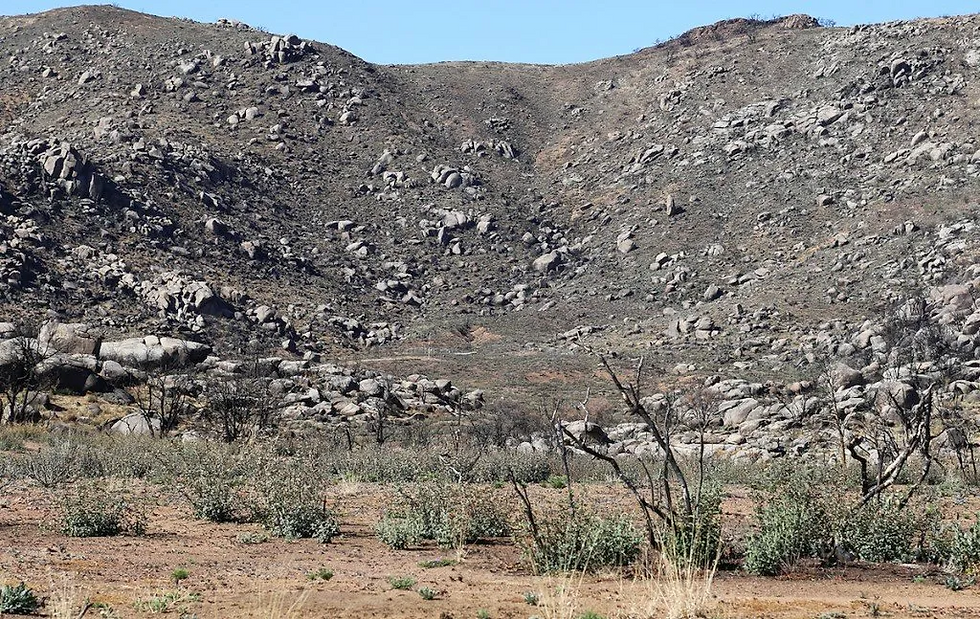
Figure 5g. YH Fire and GMHS fatality site Death Bowl Source: YHFR

Figure 5h. Edited YH Fire flag draped GMHS body bags Source: YHFR
The photo of fallen Ariz. firefighters stirs controversy. An image showing 19 body bags draped in American flags was posted on a Facebook tribute page. (FireRescue1, July 05, 2013). The flag-draped GMHS body bags are merely mentioned in this article, and no photos are revealed and shown in the following article, if interested in pursuing the controversial debate. When to Drape the Deceased. (Drill Master, 2016)
Figure 5i. Official: 'Radical' Fire Killed 19 FFs Source: AP, YouTube (2013)
Definitely consider viewing the Fig. 5i. Official: 'Radical' Fire Killed 19 Firefighters video - "An emergency official in Arizona says dangerous conditions and unpredictable weather caused the 'radical' behavior of a wildfire, resulting in the deaths of 19 elite firefighters on Sunday. The fire has destroyed about 200 homes. (July 1)" Then consider viewing the author's YH Fire/GMHS clarification comments: (RetiredHSSupt77, WF X)

Figure 5j. YH Fire Staff Ride stands 2-5 Source: YHFR, 2018
Consider now the YHFR Staff Ride PART ONE post titled: Do The Yarnell Hill Fire Staff Rides by Arizona State Forestry provide that specific perspective of strategy, technology, and leadership? After reviewing the 52-page Facilitator Guide, did you even take that route that day? (YHFR, 2018)
Yarnell Hill Fire Questions - The June 30, 2013, Yarnell Hill Fire and GMHS debacle is the biggest cover-up, lie, and whitewash in wildland fire history. The Federally (USFS) funded SAIT-SAIR first establishes a "conclusion" and then supports it with their alleged "facts." The SAIT-SAIR falsely claimed that they found "no indications of negligence, reckless action, policy, protocol, or procedure." So then, how could they do everything right and yet kill 19 Prescott FD GMHS in one fell swoop? It's impossible! The English Institute of Fire Engineers, InvestigativeMEDIA, and Yarnell Hill Fire Revelations website are valid and valuable sources. The IFE has a couple of video clips of a USFS Engine firing operation along a spur road, one of several. The GMHS were killed by one of them. They blatantly disregarded the tried-and-true Rules of Engagement and the Entrapment Avoidance principles. The SAIT blocked the ADOSH Investigators the whole way. SWCC canceled the original order, and the ASF or PFD ordered them with an email. The GMHS was supposed to be "unavailable" because they worked 28 days. What do young folks usually do if they're "unavailable"? Robert Caldwell was normally the Lookout. The alleged "lookout" was chosen because he was the most hungover of the bunch. The GMHS GPS units were kept in evidence by the YCSO for two years, then released without the memory cards. The GMHS videos were also very meticulously altered. Go to YouTube and search for all the amazingly informative IM WantsToKnowTheTruth videos for scores of evidence. It's okay to question the GMHS decisions and actions. We must honor them by seeking the truth, rather than speaking ill of the dead and lying. Ignore the Naysayers, Kool-Aid Drinkers, and Party Liners. The alleged Conspiracy Theory attack is a means to discredit you. In your heart of hearts, you KNOW there is something wrong about this YH Fire and GMHS debacle! So then, please steadfastly continue to honor these young men and seek, find, and then reveal the truth!
Yarnell Hill Fire, Five Years Later: Lessons Not Learned and Five Potential Hot Spots - Weather and fuel conditions are so helpful in predicting fire behavior that state officials now rank the dangers of Arizona communities online. (New Times, Holstege, 2018) "Yarnell. The name of the Arizona mountain town will be forever synonymous with the wildland blaze that killed more firefighters than any had in 80 years."
Consider now the worthy Wildland Fire Foundation 100 Fires Project (WLFF, accessed 2026). From the source: "This project, and a few old hotshot superintendents behind it, are building a timeline of 100 fires every wildland firefighter should know about. These fires tell the history of wildfire in this country; these fires shaped the wildland fire service; and finally, these fires claimed many lives... we want to honor those lives and carry those hard-earned lessons forward. With any such "timeline," there will need to be a set of criteria to decide which events to include. We realize that any timeline has a subjective element to it, and not everyone will agree with every event included or excluded. This is not a timeline of the "biggest fires" or even the "most important" fires. It is, however, a timeline of fires that meet one or more of these criteria: was historically significant; made a notable impact across the wildland fire service; caused three or more wildland firefighter fatalities by entrapment; or caused a civilian mass casualty event."
Please consider this germane, worthy article: ‘We have fire all around us, and we can’t get out’ - What happened when two experienced hikers got caught in the Bolt Creek Fire. (Mohr, High Country News, 2023)
The tragic tale of another deadly Arizona wildfire. It claimed the lives of six people, all from the Perryville prison crew: Sandra Bachman and five inmates: Joseph Chacon, Alex Contreras, James Denney, James Ellis, and Curtis Springfield. Never Forgotten - Storm King 14 Kathi Beck, Tamera Bickett, Scott Blecha, Levi Brinkley, Douglas Dunbar, Terri Hagen, Bonnie Holtby, Rob Johnson, Jon Kelso, Don Mackey, Roger Roth, Jim Thrash, Robert Browning, Jr., and Richard Tyler. Granite Mountain 19: Andrew Ashcraft, Robert Caldwell, Travis Carter, Dustin DeFord, Christopher MacKenzie, Eric Marsh, Grant McKee, Sean Misner, Scott Norris, Wade Parker, John Percin Jr., Anthony Rose, Jesse Steed, Joe Thurston, Travis Turbyfill, William Warneke, Clayton Whitted, Kevin Woyjeck, and Garret Zuppiger. (And may God richly bless you and your family, friends, and loved ones and all RiP!)
Now to answer the post title: How and Why Were the June 1990 Dude Fire, the July 1994 South Cyn. Fire, and 2013 YH Fire, Ultimately, Adversely, and Fatally Influenced by the Lack of LCES?
The responses are most likely out of chronological order. The three images shown in our Figure 1. Dude (1990), South Canyon (1994), Yarnell Hill (2013) Fires collage Sources: FB, NWCG, CFC, New Times, PICYRL, ResearchGate, USFS. And all the other germane, explanatory images ("A picture is worth a thousand words") throughout the YHFR post. ... The WFSTAR USA Burnovers (1933-2013) images, depicting the Blowup, Burnover, and Blow-up to Burnover times, with the historically catastrophic and fatal June 30, 2013, YH Fire being the most egregious! (Fig. 4.) ... The Zig Zag Hot Shot Crew Boss Paul Gleason's June 1990 Dude Fire Lookouts, Communications, Escape Routes, and Safety Zones (LCES) concept ... The three respective Staff Rides and the lessons learned from those three wildfires. ... The very serious and very deceptive, subtle safety issue regarding the nature of the "Lunch Spot." ... This author inquired about LCES and where the 1994 Lookout(s) were posted. The former Prineville HS, now South Canyon Staff Ride SME, commented something to the effect that the fuels were too dense and that LCES was somehow a moot point. Even though it was created in 1991, he somehow inexplicably believed it never applied to those on the 1994 South Canyon Fire. This author replied something to the effect of: 'we always found a way to establish a Lookout,' and that we learned from the R-5 Hot Shot Crews supervisors with radios because they always carried some manner of cutting tool, e.g., Billhooks (Fig. 4d.), Sandvick (Fig. 2c.), Swedish Brush Axe, etc., to access hard-to-get-to, valid, and worthwhile Lookout spots. ... the Wildland Fire Foundation 100 Fires Project (WLFF, accessed 2026) ... the various former SJ (Hipke, Erickson) statements ... all of the numerous linked scientific research papers dealing with human factors, pscychology, safety, etc., the extensive Never Again, 20 Years After the South Canyon Fire, MagicValley, that made the South Canyon and YH Fires connection with PFD [DW] and the GMHS visit in 2012 to the South Canyon Fire sites stating: "'We hiked Storm King Mountain with this (20-member hotshot) crew, and we all said, ‘This will never happen to us. ... The 19 deaths in [AZ] shocked firefighters and civilians alike. They occurred 19 years after South Canyon.'" And the alleged GMHS Marsh memorial sign statement on IM that Sonny is referring to ... especially critical to why the GMHS left their SZ at the worst possible time! Sonny Gilligan says (IM, Jan.25, 2014) I have a good question. Who wrote and put the information that is on the sign of the memorial? And finally, [he] says (Jan. 25, 2014) "If any of you come to Yarnell and read the memorial sign- you will see it says this if you want to be a hotshot: “you must take orders and carry them out at all times.” ... [RTS] says (IM, Jan.25, 2014), "Sonny, ... You posted this from the memorial sign ...: “you must take orders and carry them out at all times.”


Comments