
Why Has The USFS Decision to Allow the Historic Zane Grey Cabin to Burn, and Yet Save The Tonto Creek Fish Hatchery During the June 27, 1990, Dude Fire, Continued to Haunt Us?
Jan 14
76 min read
Updated: Jan 23
Views expressed to "the public at large” and "of public concern." Obsidian Finance Group v. Cox, No. 12-35238 (9th Cir. 2014).
DISCLAIMER
Please fully read the front page of the website
(link below) before reading any of the posts.
The authors and the blog are not responsible for misuse, reuse, recycled, and cited, and/or uncited copies of content within this blog by others. The content, even though we are presenting it publicly, if being reused, must get written permission in doing so due to copyrighted material.
Thank you.
This post is based on the author's professional judgment and opinions, usually as a [bracketed] posting and based on available well-founded evidence, with no intention to defame individuals. This is merely our professional opinion based on what we recall and/or from public information - no intent to hurt anyone, and readers should check facts themselves. This is for education and factual lessons learned - not legal advice. Contact us if there are any issues you may have. Images are used for education under fair use; we'll remove them if requested with a valid legal authority provided. Artificial Intelligence (AI) portions are judiciously utilized and documented accordingly.
The authors and the blog deny responsibility for misuse, reuse, recycled, and cited, and/or uncited copies of content within this blog by others. The content, even though presented publicly, if being reused, must get written permission in doing so due to copyrighted material. Thank you.
Abbreviations used: Firefighters (FFs), Wildland Firefighters (WFs), Escape Route (ER), Safety Zone (SZ).
All emphasis is added unless otherwise noted. All Figures are Snippets.
But if the watchman sees the sword coming and does not blow the trumpet, and the people are not warned, and the sword comes and takes any person from among them, he is taken away in his iniquity; but his blood I will require at the watchman’s hand.
Ezekial 33:6 (NKJV)
“No man in the wrong can stand up against a fellow
that's in the right and keeps on a-comin'.”
Captain Bill McDonald, Texas Ranger
So then, what do you really know about the details of what occurred on the June 1990 Dude Fire? The little-known, truthful Zane Grey Cabin (ZGC) puzzle has many pieces, and so if you want to know exactly what happened, read on. So then, other than what you've listened to, and/or read in the lamestream local, regional, national, and/or imternational medias, watched on TV, and/or watched the various "official" and "unofficial" Dude Fire videos, talked with any of the actual legitimate Dude Fire FFs, WFs participants, watched the alleged "true story of the Dude Fire," or from the Scott Briggs' "Prisoners of Fire" movie where he/they actually state in a promo: (‘Yeah, that’s all I care about. I just want the real story to come out’ ...). Moreover, his allegedly dramatic "real/true story" movie is posted in the June 29, 2025, New Times article as "an emotional 90-minute ride and well worth the price of a rental or purchase. The documentary is a mixture of celebration and sadness in what ultimately becomes a stunning and evocative cautionary tale. Though it’s only his first feature-length documentary, Briggs shows a real knack for compelling storytelling and an unflinching eye for the truth through an empathetic lens.", and/or read our several (YHFR, 1990) Dude Fire posts, and/or read the allegedly "truthful and accurate" Dude Fire SAIT-SAIRs, especially the Chronology which is basically the legal who, what, when, and where summary. (WLF, LLC, 1990) Intuitively and professionally, we knew we needed to act on the predictable and preventable events that occurred that day. And always-yes, always-pay attention to your gut feelings, intuition, the amazing and insightful still small voice within you, and/or the always trustworthy Holy Spirit!
And those Dude Fire disclosures will allegedly fall into the usual what we believe to be partially and/or wholly inaccurate categories of all the other wildland fire tragedies. This author strives for "subjective objectivity" by allowing selective experience-based professional biases while using methods like data, logic, and tolerance to arrive at near-universally verifiable conclusions, otherwise known as intersubjectivity, where shared, diverse subjective viewpoints converge towards a more objective truth. However, pure objectivity might be unattainable as humans are always mediated by perspective. In this author's professional opinion, these alleged "disclosures" are, at their essence, ideological, pseudoscience, political, and clearly self-serving. All allegations herein are based on the authors' recollections and publicly available sources; they are not intended as definitive findings of fact and should not be construed as legal conclusions. Readers are encouraged to independently consult primary sources listed in the links within this post.
There was obvious room for disagreement and hasty, yet thoughtful discussion about the weight to put on the various potential ethical, personal, professional, and moral costs and benefits. We essentially stood at the edge of an individual, professional, and moral ethical dilemma and frontier. It's never too late to learn. This post covers several up until now, mostly hidden, unknown, unrevealed decisions, discussions, actions, photographs, and much more that took place on the June 1990 Dude Fire and its unvarnished truths. Consider these two relevant, prior Dude Fire posts in 2024: "What Happened On The 1990 Dude Fire? Perryville Dept. of Corrections Officer Deserted His Crew, Why Zane Grey Cabin Burned, Records Shredded, How We Saved The Tonto Creek Fish Hatchery 6/26-27/90." (Pt. 1) and (Pt. 2). Facts and Truth still and always will matter!
However, the Dude Fire and its alleged "lessons learned" are somewhat unique because it has several worthwhile connections to wildland fire human factors, fire weather, and fire behavior indicators, beyond the obviously predictable and preventable Zane Grey Cabin tragedy. The past, now considered as history, is all these things supplying us with ideas and cautions, supporting our actions, only if we have absorbed those true lessons learned and given them thoughtful respect. The plethora of tragic wildland fire history can be painful to consider at times; its true lessons can greatly enhance the quality of our future wildland fire skills for those willing to accept the facts and the constant human factors element, the unfolding of any history. Losing the ability to free ourselves of Santayana's maxim will continue if the entrenched, flawed shared belief of the existing deficient leadership is coupled with ineptitude typifying the current national wildland fire human factors and psychology mindset set on obstinately evading those truths. And some of these would eventually, fortuitously, or even providentially save lives on the June 30, 2013, Yarnell Hill Fire, 23 years later by debunking the renowned Harvard intellectual George Santayana's ambiguous, misplaced, and ostensibly absolute maxim: "Those who cannot remember the past are condemned to repeat it." "Did Similar Known & Later-Discovered Human & Psychological Factors & Wildland Fire Weather Causal Connections Save Lives on Both the June 26, 1990, Dude Fire & the June 30, 2013, Yarnell Hill" (Pt. 1, 2025) and (Pt. 2, 2025). Our open access (AHFE 2025) is another source. And our YHFR website posts best viewed on a laptop or PC: Similar known and later discovered wildland fire human, psychological, and fire weather causal relationships saved lives on two separate wildfires 23 years apart.
Santayana's and the Bible's claims both endorse forward effort, but from different starting points and for different reasons. "Remember ye not the former things, neither consider the things of old." (Isaiah 43:18, KJV)
This seemingly endless, but ultimately prescribed and limited, range of distinctions is all carefully designed to appeal to the alleged Investigator's innermost cravings. Not surprisingly, these alleged experts who control the SAIT-SAIR narrative in this fashion regard the mass of the wildland fire population as little more than cud-chewing cattle, receptive to their elite will, and easy to control. Navigating through the quasi-military "inherently dangerous" wildland fire world and, unfortunately, the inevitable ensuing alleged ongoing burnovers, entrapments, deployments, and fatalities, which we believe to be partially and/or wholly inaccurate maze is analogous to playing a Chess Game. Only those drinking the Kool-Aid and/or walking and talking the Party Line are allegedly allowed to be the King or Queen, so, as a Truth Teller, you'll want to avoid that route. And you definitely want to avoid being one of their manipulated Pawns. You’ll want to be amongst the shakers and movers, e.g., Rooks, Knights, and Bishops. Some of these alleged persuaders, in their energetic endeavours to sway our actions, seem to fall unwittingly into the attitude that we FFs, WFs, and Truth Tellers exist to be manipulated. Until now, the ZGC story has been suspended between the past and the present. And now this post has hopefully brought the truth closer to light. Truth-tellers have always paid the highest price. The ancient philosopher Socrates discovered that speaking uncomfortable truths can turn an entire city against you, even when you're trying to save them from themselves. Sometimes the most important stories take decades to be told. Looks like 2026 is that year!
Most definitely consider this Zane Grey Society Google search link for photos of the inside of the Zane Grey Cabin (ZGC) and its contents, decor, furniture, wall hangings, etc., before it burned. Surprisingly, there are NONE in this series of photos of the original historical ZGC before it burned on June 27, 1990, and the subsequent replica below (Fig. 2.) in Payson at Green Valley Park. That is amazing and incredulous that they would have NO photos whatsoever, especially for insurance purposes. Keep in mind that we were part of a much bigger picture. Hence, it is this author's professional opinion that we could have easily and safely saved these irreplaceable, tangible and intangible priceless, one-and-only original heritage, historical treasures, artifacts, e.g., artworks, original books, literature, manuscripts, paintings, weapons, Indian artifacts, rugs, pottery, clothing, far beyond any of the alleged "sentimental items," erasing and/or disrupting its collective memory, the Fantasiaistic pipe dream of reconstruction or the realistic reimaginining attempting historical authenticity, and so much more! This author alleges that these supervisors' inactions clearly allowed the ZGC to burn to the ground, and then lie about it! Consider now the relevant Federal ARPA legal authority regarding historical structures, items, etc. "Whether the USFS allowing ZGs historic cabin to burn would violate the Archeological Resources Protection Act (ARPA) is complex, it likely would violate ARPA if the cabin was deemed an archaeological resource or significant historic property under ARPA, as it protects significant archaeological and historic resources on federal lands from unauthorized disturbance or destruction, even by fire, requiring careful management and preservation, not just letting them burn, though fire management policies vary." Clearly, alleged potential violations of historical preservation laws (e.g., Archaeological Resources Protection Act, 16 U.S.C. § 470aa et seq.) (AI response quotation)
Check out these several off-the-wall, yet fully germane articles below: Finding Burnt Pages of Books in Your Yard? Wildfire Experts Say That’s Normal. “Although it certainly offers a dramatic visual, seeing partially burnt pages from books and newspapers fall from this sky is an all too familiar experience for anyone who has experienced a major fire that destroyed numerous structures,” says climate scientist Daniel Swain. (L.A. Taco, 2025)
Revisiting the ruins of a home - and its library of 2,000 books - lost in the Camp Fire. (O'Neil, 2019, San Francisco Chronicle)
Consider now this extremely cogent and insightful source of the subject at hand, titled: Museum Burned Down: Navigating the Catastrophe, Reclaiming Heritage, and Fortifying Our Future. Johnson (2025), Wonderful Museums.
"The phrase 'museum burned down' signifies more than just a structural collapse; it speaks to an immense cultural tragedy that resonates far beyond the immediate vicinity of the inferno. Museums are not merely buildings that house old objects; they are vibrant, living institutions that serve as custodians of human endeavor, creativity, and knowledge. They are educational hubs, research centers, tourist attractions, and, most importantly, communal spaces where generations connect with their past, understand their present, and envision their future. When one is lost to fire, the repercussions are staggering, casting a long shadow over communities and the broader world of cultural preservation. ... The destruction of these objects is an irreversible blow. It’s not just a monetary loss, though that can be astronomical; it’s a loss of tangible evidence, a rupture in the chain of historical understanding, and an irreparable wound to collective memory. ... these aspects, too, vanish in the smoke, leaving a void that’s difficult to fill. ... Fires in these venerable institutions are rarely simple accidents; they are often the result of a complex interplay of factors, from aging infrastructure to human error, and sometimes, malevolent intent. While each incident is unique, common themes emerge when we examine past tragedies. ... Motivations can range from personal vendettas to political statements, or simply wanton destruction. ... Embers can travel great distances, igniting structures even far from the main fire front. This is a growing concern for many institutions, especially in regions prone to dry seasons. ... The words “museum burned down” carry a weight of profound sorrow and an echo of irreparable loss. As we’ve explored, the destruction of a cultural institution by fire is a multi-faceted tragedy, stripping away not only invaluable artifacts and architectural treasures but also intangible histories, institutional memory, and a vital piece of a community’s identity. From the immediate chaos of fire suppression to the painstaking, multi-year process of conservation and reconstruction, the journey is fraught with challenges, both logistical and emotional. Yet, within every tragedy lies a crucible of lessons. The pervasive risks, ... human error to the increasing threat of wildfires and even deliberate acts, underscore the critical importance of relentless vigilance. Our shared heritage, a fragile testament to human creativity and endeavor, demands nothing less than the most robust, intelligent, and continuously evolving protection strategies. ... it’s about a culture of preparedness, ongoing risk assessment, meticulous staff training, comprehensive digital archiving, and strong partnerships with emergency services and the community. ... The future of preservation calls for adaptation ... to the digital vulnerabilities of our increasingly virtual archives, and to the ever-present need for community engagement. Every museum, regardless of its size or age, holds a sacred trust: to safeguard the past for future generations. When a museum burns down, it’s a collective failure, but when we proactively invest in its protection, we affirm our commitment to that trust. It is a call to action, a reminder that the price of indifference is far greater than the cost of prevention. Let us remain ever vigilant, for the stories contained within those walls are not just theirs to tell, but ours to preserve." The ZGC's predictable and preventable destruction was a single, powerful failure!
Consider this most fortuitous G.M. Farley Collection, 1905-1987, linked Northern Arizona University-sponsored Arizona Archives Online website for literally scores of Zane Grey's historical published and unpublished works! And then this April 2017 AZ Central article by Mark Nothaft titled: Did Zane Grey's cabin rise from the ashes? and his two alleged bogus, and somewhat confusing, contradictory, histrionic, and allegedly made-up quotes based on what we know to be factual: “The advancing fire gave enough warning that some of the memorabilia was rescued from the cabin before it burned,” writes former town historian Stanley Brown in Zane Grey's Rim Country, an account being written for the Rim Country Museum. “Nothing relating to Zane Grey is left there except the view.” So then, given those two statements, how can "some of the memorabilia [be] rescued from the cabin" and yet “Nothing relating to Zane Grey is left there except the view.” In this author's professional opinion, the only accurate and truthful statement is this: "The advancing fire gave enough warning ..." Indeed, it did! And we attempted to take advantage of that near-perfect opportunity. Because it always signals its intentions! With our allegedly efficient, fast thinking, we felt that we had plenty of time to safely perform and complete our ZGC firing operation, and thereafter, we confidently, promptly, professionally, and repeatedly communicated that from the outset on June 27, 1990, in our view, based on our professional and academic experiences, our allegedly timid AFMO Lookout supervisor. Yet, it dismally fell on deaf ears!
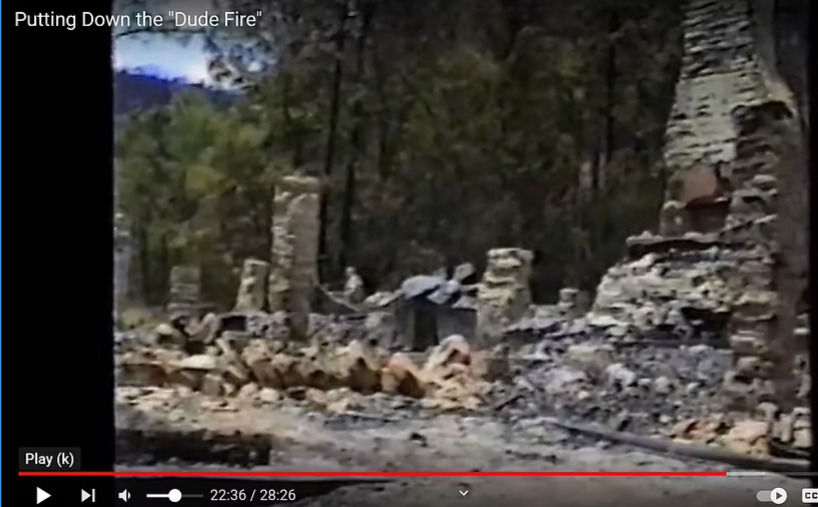
Figure 1. Burnt ZGC showing no crown fire. Source: WLF LLC, YouTube

Figure 2. Original Zane Grey Cabin (left) near Tonto Creek and a replica of it (right) at the Green Valley Park, Payson, AZ. Source: Northern Gila County Historical Society (NGCHS)
Poring over these Figs. 1-6., revealing the obviously conspicuous before and after photos, and historical documents, and having spoken with and informally interviewed more than a dozen of the ZGC Independent Action members, alleged ZGC rescue attempt deniers, Kool-Aid Drinkers, Naysayers, Party Liners, and compliant obsequious Government officials, these authors openly, professionally, and respectfully as possible attempt to piece together an accurate portrayal of what really happened that day.
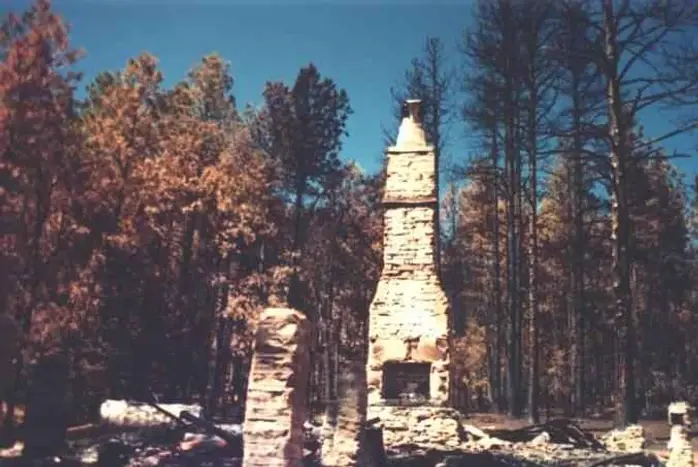
Figure 3. Burnt ZGC showing no crown fire. Source: NGCHS

Figure 4. Pre-June 27, 1990, ZGC historical treasures. Source: AZ Ch. 3 TV

Figure 5. Pre-June 27, 1990, ZGC historical treasures. Source: AZ Ch. 3 TV

Figure 6. Pre-June 27, 1990, ZGC historical treasures. Source: AZ Ch. 3 TV

Figure 4. June 27, 1990, Payson HS Crew, Robert's Mesa Rd. Source: FJS
Had we known the Payson Hot Shots were so close, or had radioed us their location when at the ZGC entrance, rather than drive away to the Roberts Mesa Road (FR 29) near the Tonto Creek Road junction. Fig. 4., where they, and DMFO Velasco, were allegedly told to go to ZGC as it was imminently threatened by fire, but then left the area without assisting!

Figure 5. Horns of a dilemma image Source: Leadership Culture, Potter
As Independent Actioners focused on years of wildland fire experience-based decision-making, leadership, preparation, relationships, trust, and performance, we realized at that juncture that we stood on the virtual Horns of a Dilemma. "Dilemmas are equally right! That’s what makes them a dilemma. It’s when the goring for our decision happens at a later date, when no one remembers (or admits to remembering) that we chose to get gored by one side of the decision. When you’re faced with a dilemma, it’s important that you decide which alternative to kill, publicly execute the alternative, and publicly record the expected consequences of that decision. Don’t look for someone to blame later; look at the consequences of your decisions to see if they were what you expected. Congratulate yourself if they are what you expected. Analyze your decision-making process for improvement if it was not what you expected." Tom Potter, 2012, The Leadership Culture).
“Leaders are people who do the right thing; managers are people who do things right,” is often quoted to make a distinction between managing processes and leading people. The obvious implication of this statement is that leadership is about always doing the right thing. ... Doing the right thing is to be a faith-filled leader who recognizes the Holy Spirit is always right, even when our confirmation biases and mental models tempt our mind and emotions to see people and situations in a contrary light.” (Leadership Reflection: Leaders Do the Right Thing: A Popular Phrase or a Real Practice? (Hartsfield, 2010) Journal of Biblical Prospectives in Leadership, Regent Univ.) This is something we must pass on as a strength to the current and up-and-coming FF & WF generations!
Officially, fear of the unknown tends to drive some trained, experienced, and qualified professionals who are academically and psychologically ill-equipped to attempt to forget the finite nature of our lives and take a risk.
Therefore, those safely taking initiative in wildland fire situations know that it requires adherence to established safety principles and a strong foundation in risk management, outlined in the tried-and-true Rules of Engagement and Entrapment Avoidance Principles. Initiative should be encouraged and exercised within the solid framework of these safety guidelines, prioritizing life safety above all else.
Key principles for safe initiative include:
Situational Awareness: Continuously scout and size up the fire, identifying hazards and anticipating changes in weather and fire behavior. Recognizing a need for action stems from ongoing awareness of the situation.
LCES (Lookouts, Communications, Escape Routes, Safety Zones): This critical system forms the foundation for safe engagement.
Lookouts: Post lookouts in potentially dangerous situations. [This author takes some issue here because you need to have Looouts all the time!]
Communications: Maintain a clear and prompt communication link with supervisors and crew members.
Escape Routes: Identify and make known multiple escape routes that are clear and accessible.
Safety Zones: Ensure safety zones are identified and sufficient for all personnel without the use of fire shelters.
Clear Instructions and Communication: Know exactly what instructions are and follow them, asking for clarification if needed. Initiative should complement, not conflict with, the overall incident action plan.
Risk Management Process: Use the established risk management process to evaluate the environment, assess hazards, develop and implement controls, and supervise effectiveness. This allows for calculated, aggressive action when safety is assured.
Act Decisively: Once safety measures are in place and a plan is developed, act decisively. There is a balance between command paralysis and freelancing; a rapid, well-informed plan is key.
Crew Cohesion and Supervision: Leaders and supervisors need to build cohesive teams that can adapt and anticipate actions. Maintain control of forces, know where everyone is, and ensure clear supervision.
In essence, this means operating within a calculated risk environment where standard safety protocols have been met, hazards are identified and mitigated, and life safety remains the ultimate priority. Adherence to the safety culture, as guided by the NWCG, ensures actions are responsible and effective.
New Zealanders utilize their own localized concept of "LCES (Lookout(s), Communication(s), Escape Routes and Safety Zone(s); after Gleason 1991) or LACES (where the ‘A’ stands for Awareness or Anchor points; after (Teie 1994) [Firefighter's Handbook on Wildland FF: Strategy, Tactics and Safety]; Thorburn and Alexander 2001) is also an internationally recognized set of fireline safety reminders that can dramatically reduce the probability of an entrapment or burnover." (H. Grant Pearce, 2007) Subsequently, others also utilize Attitude as the "A" component.
Wildland fire weather is key! Obviously, a major distinguishing factor in how wildland fires start and continue to burn and/or allow suppression, and dealing with these factors obviously requires precautionary safety measures. Wildland fires present a unique challenge due to the presence of stable or unstable fire conditions. Consider now the Fire Order No. 1., wildland fire weather aspects of June 27, 1990, aspect in Figs. 5. & 6., temperature. weather chart & graph, clearly indicating critical to blow-up nighttime temperature conditions in the 65-70-degree range at 0600 morning. This author, keenly aware of Bates' instructive 1962 paper, recalls the high nighttime temperatures being in this blow-up potential range for several days before the fatal day when the Perryville inmates were burned over and killed. Based on the insightful research titled "A Key to Blowup Conditions in the Southwest?" by former TNF PRD Ranger Bates in the linked Fire Management Today (FMT) 63, 3, 2003. "A deadly one-two combination of an unusually warm night followed by a warm day may indicate blowup fire conditions. ... From this temperature study, I have arbitrarily said that nighttime temperatures above 45° (7° C) are critical; and with those above 55° (13° C) blowup conditions exist. ... If nighttime temperatures are rising, going fires must be secured before temperatures rise above the critical point. This is seen in the case of fires which blow up on the third or fourth day after start[ing]."

Figure 5. Dude Fire fuels, weather, topography Source: FJS, Academia.edu

Figure 5a. Dry intrusions and dry slots descriptors Source: NOAA, FJS
Consider this author's linked American Meteorological Society (AMS, 2013) paper titled: The Influence of Dry Slots on Wildland Fire Growth During the 2011 Arizona Fire Season
For comparison purposes, please consider the Dec. 11, 2025, NOAA WV image in Fig. 5b., below, clearly indicating dry air aloft, i.e., subsidence that similarly would have been present if WVI were available in 1990!

Figure 5b. Dec. 11, 2025, Band 10, dry intrusions/dry slots Source: NOAA
Otherwise known as Subsidence, these visible dry intrusions and dry slots, as you may have learned in your NWCG S-290 course, or dry air aloft which will surface or near-surface at some point, invisible to the naked eye, however, clearly visible in the NOAA NESDIS weather Water Vapor Imagery Band 10 satellites, progressively drier as yellow, orange, and red. Surface Relative Humidity drops caused by surfacing dry slots - almost always surprisingly lower than the forecast Relative Humidity! Rapid decrease in relative humidity, dew points, and fuel moistures, produces strong, gusty winds, and generally, a rapid and sustained increase in fire behavior potential. Dry air aloft is crucial for strong downdrafts in thunderstorms, leading to microbursts or heat bursts as evaporating rain intensely cools the air. (linked NOAA GIBBS archived satellite imagery), and the (CIMMS Water Vapor Image tutorial).
Feel free to examine this plethora of informative, detailed, fatal, and near-fatal wildfires and make use of these in this author's Academia.edu School of Hard Knocks posts titled: Dry Slots and Dry Intrusions Visible in Water Vapor Imagery are Responsible for Rapid Surface Drying,
Increased Gusty Winds, and Intensified Fire Potential.

Figure 6. June 1-30, 1990, high/low temp. wx. chart Source: NOAA, EWW
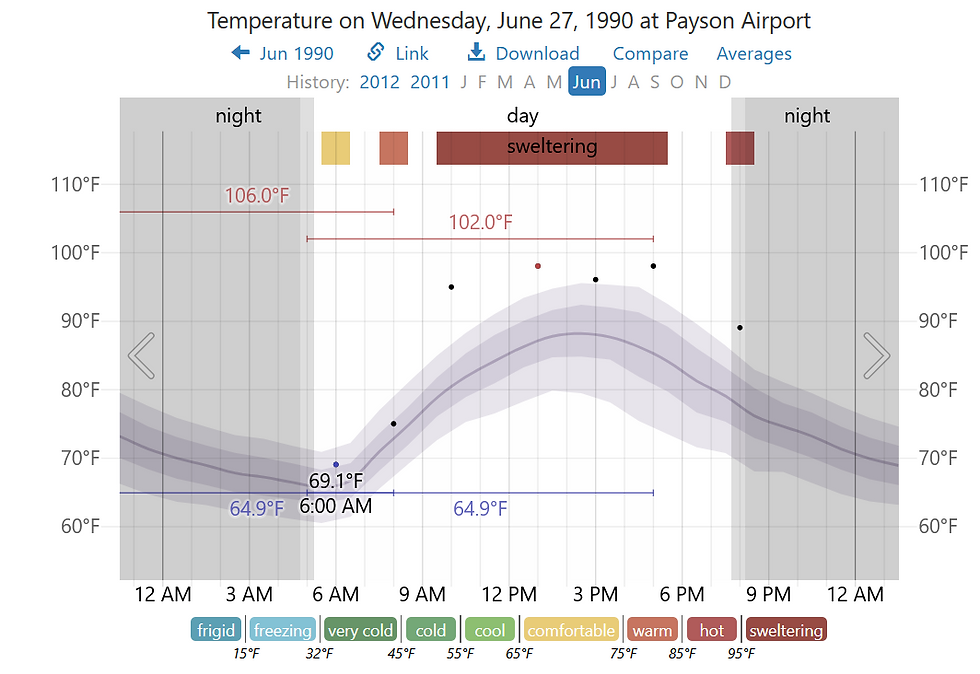
Figure 6a. June 27, 1990, 24-hour weather graph Source: Weather Spark

Figure 7. June 27, 1990, 12Z skew-t downdraft sounding. Source: PSW
Please utilize this very worthy, informative utilization of your tax dollars at work linked Natl. Weather Service Skew-T sounding tutorial. And these many linked AOPA Skew-T School for hang glider enthusiasts, NOAA's linked Skew-T plots, linked Finger Lakes Soaring Club, linked Weather Prediction, linked Pilots of America, and the linked Dutton Institute.

Figure 7a. Skew-t sounding descriptions. Source: NWS

Figure 8. June 27, 1990, 12Z Winslow, AZ, skew-t downdraft sounding. Source: Meteostat
Consider the telling proxy weather observations for the Winslow, AZ Station at 12 UTC (0500) Mountain Standard Time, June 27, 1990, just below, indicating at least critical fire behavior potential near Payson based on elevation (850 mb = approx. 5,000 ft), the high nighttime temperatures converted to Farenheight (68 degrees), and low Relative Humidities (RH) both aloft. Known as Subsidence, as you may have learned in your NWCG S-290 course, or dry air aloft which will surface or near-surface at some point, invisible to the naked eye, however, clearly visible in the NOAA NESDIS weather Water Vapor Imagery Band 10 satellites, progressively drier as yellow, orange, and red. Surface Relative Humidity drop caused by surfacing dry slots - almost always surprisingly lower than the forecast Relative Humidity! Rapid decrease in relative humidity, dew points, fuel moistures, produces strong, gusty winds, and generally, a rapid and sustained increase in fire behavior potential. Dry air aloft is crucial for strong downdrafts in thunderstorms, leading to microbursts or heat bursts as evaporating rain intensely cools the air.
   PRES   HGHT   TEMP   DWPT   RELH   MIXR   DRCT   SPED   THTA   THTE   THTV
    hPa      m      C      C      %   g/kg    deg    m/s      K      K      K
-----------------------------------------------------------------------------
  851.0   1487   21.6   -8.4     13   2.39    190    4.1  308.7  316.4  309.1
  850.0   1494   22.0   -2.0     20   3.89    195    4.1  309.2  321.6  309.9
  846.0   1535   26.4   -3.6     14   3.47    209    4.0  314.2  325.6  314.9
  843.0   1567   27.4   -2.6     14   3.75    219    3.9  315.6  327.9  316.3
  818.2   1828   26.1   -3.9     14   3.50    305    3.1  316.9  328.4  317.5
  790.2   2133   24.5   -5.5     13   3.22    310    2.6  318.4  329.1  319.0
  763.2   2438   23.0   -7.0     13   2.96    310    2.6  319.9  329.9  320.5
  750.0   2591   22.2   -7.8     13   2.84    317    2.3  320.7  330.3  321.2
  736.9   2743   20.9   -6.8     15   3.11    325    2.1  320.8  331.3  321.4
  700.0   3185   17.0   -4.0     23   4.07    280    2.1  321.3  334.9  322.1
  660.7   3657   12.9   -5.2     28   3.93    225    4.1  322.0  335.2  322.8
  613.1   4267    7.6   -6.8     35   3.74    190    6.2  322.9  335.5  323.6
  569.0   4876    2.3   -8.4     45   3.56    175    8.2  323.6  335.6  324.3
  500.0   5930   -6.9  -11.2     71   3.26    220    5.2  324.6  335.7  325.2
  489.4   6096   -8.4  -11.6     78   3.23    225    5.2  324.7  335.7  325.4
  464.0   6509  -12.1  -12.6     96   3.14    229    5.8  325.1  335.8  325.7
  425.0   7176  -16.9  -17.4     96   2.30    236    7.0  327.2  335.3  327.7
  418.0   7301  -17.9  -19.7     86   1.93    237    7.2  327.5  334.3  327.9
  414.0   7373  -17.9  -25.9     50   1.12    238    7.3  328.4  332.5  328.6
  400.5   7620  -19.2  -29.2     41   0.86    240    7.7  329.8  333.0  329.9
  400.0   7630  -19.3  -29.3     41   0.85    240    7.7  329.8  333.0  330.0
  368.4   8229  -24.1  -32.9     44   0.65    255    8.8  331.3  333.8  331.4
  338.8   8839  -28.9  -36.6     48   0.49    240   13.4  332.7  334.6  332.8
  324.9   9144  -31.4  -38.4     50   0.43    240   12.9  333.4  335.0  333.5
  323.0   9186  -31.7  -38.7     50   0.42    240   12.5  333.5  335.1  333.6
  300.0   9710  -31.5  -43.5     30   0.27    240    7.7  340.9  342.0
Figure 9. Winslow, AZ wx obs at 12 UTC (0500) June 27, 1990 Source: EWW

Figure 10. Winslow, AZ 1961-1990 30-year average wx obs Source: WRCC
Consider now the 12Z and 00Z wind streamline images (Figs. 11. & 11a.), showing air movement, drawn parallel to the wind, used in meteorology and aerodynamics to visualize air flow patterns, revealing high/low pressure, jet streams, and how wind in meters per second interacts with terrain or structures for weather forecasting. Well within the Fire Order No. 1 purview! And check out this very cool Wind Map site linked here.

Figure 11. June 27, 1990, 12Z 850 MB wind streamlines Source: PSW

Figure 11a. June 27, 1990, 12Z 850 MB wind streamlines Source: PSW
“The fatal attraction of government is that it allows busybodies to impose decisions on others without paying any price themselves.
That enables them to act as if there were no price, even when there are ruinous prices - paid by others.”
Thomas Sowell
Focusing more on the human factors, leadership, psychological, ethics and morals, integrity, and legal aspects, consider now: What Really Happened On The June 1990 Dude Fire? The Perryville Dept. of Corrections Officer Deserted His Crew, Taking The Only Radio; The Two Fire Bosses Shredded Key Fire Package Documents (Records); Why Was The Historic Zane Grey Cabin Allowed to Burn; and The Tonto Creek Fish Hatchery Was Saved Between June 26-27, 1990. PT. 1 (YHFR, 2024), Pt. 2. (YHFR, 2024). Aside from being required to carry our fire shelters, they were a non-issue on June 27, 1990. What you'll discover is that most FFs and WFs would have and, in fact, did flee without deploying their fire shelters on June 26, 1990, when several Perryville Crew Inmates deployed their fire shelters and then exited and ran to safety with minor burns, and certainly PTSD trauma lasting for decades, which was a rather mixed blessing.
This "Putting Down the Dude Fire" video (Fig. 12.) is merely a USFS-sponsored histrionic feel-good video sharing its perspective on Staff Rides and videos, which we respect but differ on. The Perryville Crew fatalities were allegedly due to their D.O.C. Crew Boss unsafely leaving the Crew with no regard for his required proper supervisory duties during a critical period. To the point, we could have easily saved the Zane Grey Cabin and all of its contents if allowed to continue our firing operation on June 27th.
The several videos below were produced by the USDA, USFS-Southwest Interagency Coordination Center (SWCC), in association with the Tonto NF. So then, right away, you should, at a minimum, at least be asking yourselves and/or realizing that these so-called alleged "Public Servants" have an ulterior agenda and ulterior motive to pursue besides their fecklessly touted "Education" category listed below in their videos.
Figure 12. Putting Down the "Dude Fire" Source: WLF LLC
Consider this author's at least two-year-old comments (if they still allowed them to remain) in the Fig. 12. YouTube video regarding "Independent Actions" that day: This video only tells a part of the story of the 1990 Dude Fire near Payson, Arizona, with the USFS sharing its perspective on Staff Rides and videos, which we respect but differ on. On June 27, 1990, there were several of us accomplishing Independent Action in the area that attempted to save it by firing out above it as the fire swept by horizontally; however, our supervisor got cold feet and pulled us out. The ZGC segments reveal that the cabin was not swept away by fire as the USFS wants you to believe. If it did, all those merely scorched residual trees surrounding it would have been burned to black sticks. In other words, it burned from the top down from hot embers on the roof, in the eaves and vents, etc. As we were vacating the area, we could hear propane bottles blowing off, venting, and exploding as we left. The Type I Fire Boss/IC was later interviewed by the local Payson Roundup Backbone insert paper and falsely stated that they had done everything they could, 'watered and foamed it down, and it burned down at about 1:30 AM.' That's a bald-faced lie! It burned down at about 1:30 in the afternoon. He also falsely stated that they were able to retrieve a lot of Zane Grey's heirlooms and such. More lies because everything within the ZGC burned. We then proceeded to the Tonto Fish Hatchery and safely and successfully continued with our independent actions. Partially correct, the Narrator and the Hatchery Manager, evidently uninformed of our Independent Actions, stated: 'fire weather gave the FFs an edge to save the Tonto Fish Hatchery.' It was really all about timing. ... "It’s actually unbelievable that the Hatchery actually survived the fire," and the Narrator said, "Even though the fire passed within feet of their homes, all were still standing."
Obviously, the Independent Action Group followed the precepts of the "If You See Something, Say Something" caveat, even though that Homeland Security Agency (HSA) phrase would only become "official" in 2010. And those of us in that pesky Group's prescient use of the concept would providentially prevail against all odds. However, our ADFMO would, unfortunately, allegedly follow the "If you see something, say nothing," concept noted by former HSA Officer P. Haney and Author Art Moore in their book bearing the same title. (Dayton Metro Library, 2016)
Consider visiting the linked Mission-Centered Solutions (MCS) website, discussing, among other things, where the term Independent Actions is coined during the Oct.-Nov. 2003 Southern CA Firestorm. (WLF LLC)

Figure 13. MCS 2003 SO. Cal. Firestorm Source: USFS, WLF LLC
Consider now this Fig. 14. FMT Vol. 64, 2, Spring 2004, Fires in the Wildland Urban Interface: Best Command Practices, excerpt delving into Human Factors and weakly supporting Independent Action, with caveats.

Figure 14. Fires in The WUI: Best Command Practices Source: M.S. Rohde
We could have easily and safely saved the ZGC and all of its historical, irreplaceable, and priceless contents if we had been allowed to continue our firing operation with the TNF PRD Type 6 Engine 436 wildland Engine Crew supervised by a former Army Veteran and Smokejumper Engine Boss holding for us. Due to an alleged fear of disciplinary action and allegedly influenced by "The Culture of Fear" (Academia.edu, 2019) by our allegedly recalcitrant AFMO Lookout, the ZGC burned from the top down due to hot embers effectively and graphically revealed in the Fig. 14a. video below, based on the number of unburned trees left behind as seen in Figs. 1. & 3. above, sharing its perspective on ZGC, which we respect but differ on. So then, was his alleged fear and uneasiness to comply with and endorse our planned Independent Action intentions because of this Inert Knowledge? "Inert knowledge is defined as when a person knows but doesn’t fully understand, which means that they can only recognize, express, or use it in very limited ways. The key reason that knowledge is considered inert is that a person only knows it, but doesn’t actually understand it, and therefore can’t do much with it. Accordingly, when someone’s knowledge is inert, that could mean that: They don’t understand what it means, what its implications are, or how it connects to other relevant knowledge. They can’t recognize it when it’s presented in ways or contexts that are even slightly different than what they’re used to. They don’t know how to apply it in practice, or don’t know how to do so when even minor adjustments are necessary." (Effectiveology)
Figure 14a. Wildfire ember attack Source: YouTube, Berkley FD
Consider delving into this linked germane intuitive article by author Rodger Dean Duncan, and quoting from Harvard Business School professor Ranjay Gulati's new book, How to Be Bold: The Surprising Science of Everyday Courage (Forbes, 2025) titled: Why Boldness Can Be A Leader’s Most Critical Attribute. "Boldness is a word many leaders admire, but few fully understand. It’s often conflated with bravado, impulsiveness, or entrepreneurial swagger. Yet in today’s era of relentless disruption and ambiguity, boldness has become both a personal discipline and a strategic necessity. Leaders who master it don’t simply tolerate uncertainty—they learn to operate through it. ... taking decisive action even in the face of fear. ... But boldness isn’t the same as recklessness. Gulati points back to ancient wisdom for clarity: “Aristotle made this distinction as well. Boldness is measured, thoughtful, considered, but still decisive. Reckless is acting with abandon and without consideration of consequences for yourself or others.” If boldness is measured and thoughtful, why do so many leaders balk at acting courageously? Gulati points to a culprit that’s often misunderstood. “I suggest that ‘uncertainty’ (and not risk), which is what we are facing today, can freeze us up. It paralyzes/hijacks us and gets us caught in a vice of fear. It’s only when we confront and deal with fear that we can break through. ... Part of that breakthrough requires inner rewiring. The first strategy Gulati teaches is to reshape the story we tell ourselves. “When you change your narrative or story, you change how you look at yourself and how you look at the world around you. Some of us have a negative narrative that can tie us down. But others are able to craft a positive, affirming, proactive narrative that shapes how they look at the world, themselves, and they are then propelled to act boldly.”
“If you dare to begin, then you dare to succeed.”
- Unknown
This author was working on the June 1990 Dude Fire and along with our bold semi-maverick, semi-professional Independent Action Group that knows what really happened that hauntingly memorable day when the Zane Grey Cabin (ZGC) burned to the ground - from hot embers - (Fig. 14a. video) far from any raging fire, alleges the following is the USFS sharing its perspective on the Dude Fire and ZGC, which we respect but differ on regarding the Dude Fire Type I IMT Fire Boss/Incident Commander comments that follow about the alleged ZGC FFs and WFs when interviewed by the Payson Roundup, Backbone insert (June 1990) and would falsely claim something to the effect of: 'We did everything we/they could to save it, water, foam, etc., and it burned down about 1:00 AM in the morning.' And I am still searching for these archived records of the Backbone inserts for these statements. In reality, the Independent Action group readily and safely moved from the ZGC to the Tonto Creek Fish Hatchery, effectively firing that out with minimal structure loss, despite our still-nervous ADMFO Lookout notifying us to pull out three times because he claimed our Escape Route was being cut off when it was actually creating a safe burned-out area instead. And because there was no repeater for the opportunity to call the IMT to communicate our actions, we had to wait until we returned to Fire Camp. The PRD DR would eventually convince our ADFMO Lookout that we had allegedly "threatened his safety" or something to that effect, to write a statement regarding the alleged event, proposing Disciplinary Action.

Figure 14b. Fish Hatchery article & Plaque Source: Payson Roundup, FJS
From the above Payson Roundup news article for the seven of us PRD employees who saved the Tonto Creek Fish Hatchery."Several from Tonto [NF] honored for fire rescue, ... Heros - Harry [Buzz] Teter, Dan Eckstein, Roger Sorenson, Timothy Short, and Floyd Sebald." E-436 Dave Blalock was involved in the ZGC and Hatchery episodes; however, he was never mentioned in the above Figure 14b. Payson Roundup newspaper article, where this author stated: "We weren't going to let it go. We knew we had to do something" because the USFS was allegedly going to, and factually did absolutely nothing, allowing the ZGC to burn to the ground, including all of its irreplaceable historical contents. And yet we successfully saved the Tonto Creek Fish Hatchery. By the Grace of God, Former AZ Game & Fish (AGF) Officer Tom Lister was ultimately responsible for setting this in motion by obtaining these respective plaques, which fortunately and thankfully emasculated the PRD Ranger's attempt to discipline the author and our Independent Action Group for his alleged safety threat to our allegedly faint-hearted AFMO Lookout.
Consider now whether this novel Silent Trigger Theory: A Predictive Behavioral Model for Proactive Safety does, in fact, 'introduce a fresh, human-centered perspective to modern safety culture. It challenges the long-standing assumption that what is unreported is non-risky, reframing silence, disengagement, and subtle behavioral shifts as valid safety signals, rather than background noise.' There were certainly enough of these pre-Dude Fire and at-the-time heuristics, wildland fire human and psychological factors, fire weather, safety, and other relevant signals indicating there were problems that could have been and should have been rigorously addressed. (Academia.edu) linked by safety researcher/practitioner Yazeed Saud Almutairi, June 2025.
“Give us a happy ending, and we write a new disaster story.“
Professor Barry Glassner (2010)
Those of us there that day attempting to continue successfully firing out around the historic ZGC did our level best to follow and apply the Rules of Engagement and Entrapment Avoidance Principles, while following Michael Useem's "lead up" concept, with our ADFMO Lookout supervisor allegedly going unheeded. “Leading up is the act of working with people above you – whether one boss, several bosses, a chief executive, a board of directors, or even stockholders – to help them and you get a better job done,” says Useem, Leading Up: How To Lead Your Boss So You Both Win, published and linked Oct. 2001 by Random House. “Organizations need more overall direction from below to think strategically, communicate persuasively, and act decisively,” (Knowledge at Wharton, 2001); virtually mirroring Fire Order No. 6, "Be alert, Keep Calm. Think clearly. Act decisively." These leadership actions and concepts are also included in the two authors' sworn Declarations posted posted below.
Former Asst. US Attorney Mike Johns (RiP) states in his interesting article titled: Dude Fire Still Smokin'" in the linked Wildfire Magazine, June 1996: "The Forest Service Manual requires that firefighters ensure that the fire can be fought consistent with the Ten Standard Fire Orders. But the Dude Fire litigation raises the question of how much discretion do the Fire Orders allow, and how much risk is therefore tolerable. The Manual requires that firefighters be alert to the Watchouts and take appropriate responsive actions. But there is no objective standard against which to measure the risk against the propriety of the action. Fire managers would shudder at the legal arguments made in the Dude Fire litigation, which demonstrate the great amount of discretion which the Standard Fire Orders and Watchouts permit. ... At the very least, supervisory firefighters and lookouts need to take key moments during movements, fire behavior changes, and weather changes, and visualize a response to possible worst-case events. Can they see the terrain, the fire, and the weather? Do they need more information'! What escapes and safety zones are available? LCES, Standard Fire Orders [Rules of Engagement] and Watchouts [Entrapment Avoidance Principles] need to be rechecked against current and potential conditions at all key times. ... What human factors contributed to the good and bad results in this entrapment? What role did the urban interface play in this tragedy?" ... The Dude Fire can now be used for case studies and analysis to address such questions, without the cloud of litigation hanging over it. It is up to the community of firefighters to ensure that the lessons to be learned from the Dude Fire are not lost to budget cuts, busy schedules, or apathy. At this point, the Forest Service is anxious to pursue these issues, and I look forward to working with their eager experts. The fire is out, the litigation is over, but the Dude Fire is still smokin'." This author is incredulous regarding former AUSA Johns' (RiP) last sentence in that the USFS and their alleged eagerness to "pursue these issues" because this author alleges that the USFS, DOC, AZ State Forestry, and others did everything they could to hide the alleged "facts" regarding the June 1990 Dude Fire. Allegedly, there are select members of the "community of firefighters to ensure that the lessons to be learned from the Dude Fire are not lost to ... apathy." Really? This problem is exasperated with such an allegedly disingenuous and false statement. So then, where are those alleged "lessons to be learned" other than on our YHFR website? And that "case studies and analysis" issues have also been raised, with some good suggestions made by Dr. Ted Putnam, et al., in Findings From the Wildland Firefighters Human Factors Workshop, USDA USFS, p. 8, Nov. 1995, and agreed upon.
Figure 15. Dude Fire Fatality Case Study Source: YouTube WLF LLC USFS
The post title brings to mind the quote by Human Factors author and researcher Sidney Dekker in "Field Guide to Understanding 'Human Error" 3rd Edition, p. 5 (2006). "Underneath every simple, obvious story about ‘human error,’ there is a deeper, more complex story about the organization.” Dekker, in a subsequent research paper, talks about what this deeper, more complex story and systems are in what he refers to as "complexity and systems thinking" in his Lund University paper, which is titled as a noteworthy question requiring a worth mentioning answer: "In the system view of human factors, who is accountable for failure and success?" Dekker's research paper, along with over 30 other papers, was published within the Human Factors and Ergonomics Society Europe Chapter Annual Meeting in Linköping, Sweden, Oct. 2009 book titled "Human Factors - A system view of human, technology and organisation" and numerous others, available at Semantic Scholar "In the system view of human factors, who is accountable for failure and success?" (link).
Notwithstanding the fatal Challenger (1986) and Columbia (2003) space shuttle disasters, author Dianne Vaughn's crafted the hazardous attitude of the Normalization of Deviance, Vaughan, D. (1997). The Challenger Launch Decision: Risky Technology, Culture, and Deviance at NASA. Univ. of Chicago Press. As well as this (2014) (Embry-Riddle Aeronautical Univ, Scott Post paper. Your brain might be trapping you in the same bad decisions. New research reported by the Society for Neuroscience highlights why some people seem trapped in cycles of poor choices, even when those choices repeatedly lead to bad outcomes. And the following clarification article astutely notes that we have to do the work wrong many times before we discover how to do it right. "Can We Learn Lessons from Making Mistakes? Success comes from giving your best and using your mistakes to learn more about yourself." (Medium, Harvey, 2024)
And for those of us attempting to save the historic Zane Grey Cabin on the afternoon of June 27, 1990 - engaged in the fight - this event still haunts all of us to this very day!
The entirely spot-on, yet most often debunked as hindsight bias by the Naysayers, Kool-Air Drinkers, et al, "What is predictable is preventable" platitude (Former CA PD Officer, turned Risk Mgmt. Expert, Gordon Graham, Lexipol), loss of the ZGC and its priceless, irreplaceble historical contents due to in our view based on our professional and academic experiences, an alleged fearful supervisor, influenced by the at the time - a one-off decision - to halt a textbook successful firing operation based on the individual and collective professional judgements of highly skilled and qualified WFs (while avoiding the dangerous, notable Hazardous Attitude of Groupthink), despite the two author’s Independent Action Group’s readiness to save it. And notwithstanding any possible administrative repercussions, to encourage future FFs and WFs in similar situations to boldly and confidently follow our lead to do the right thing. These several successful actions also in defense of the Tonto Creek Fish Hatchery through Independent Action underscores the value of audacious initiative in the absence of effective command, These Dude Fire posts call for a shift toward a learning organization that embraces human factors, encourages focused, safe ethical nonconformity, and empowers FFs and WFs to speak up, ensuring that the true lessons of the Dude Fire's failures and successes are never lost because of personal and/or professional apathy or institutional deceit. The term "Independent Action" implies taking initiative, and clearly would include Hot Shots, former Hot Shots, military Veterans, and Smokejumpers are definitely on board with that and refuse to just kick back and be a part of, endure, suffer through, or watch something fail. In other words, if at all possible, safe, etc., we can and should make failed systems work! How many times have you told by some uneducated, ill-informed Overhead that their plans suck or whatever? And their typical response is usually something like, "How can you say that because it's working?" Of course it's working, because you're making it work! Fear not and take the initiative! Your reputation is more than what you shout; it’s what people whisper. Someone always has an advantage. And if you’re unsure who it is, it’s someone other than you. It's never about the outcome. It's always about the day. This insight will change how you see every argument you witness. So, Bust a Move!
“If everybody is thinking alike, then somebody isn't thinking.”
General George S. Patton

Figure 16. May 1990 Bray Fire Source: Johns
“Simplicity is the key to brilliance.”
Bruce Lee
“Learning how to think really means learning how to exercise some control over how and what you think. It means being conscious and aware enough to choose what you pay attention to and to choose how you construct meaning from experience.”
David Foster Wallace
Another shining example of the adage that 'determination burns up all obstacles'. The truth will win out. Consider now what the wise and virtuous former Investigator Dr. Ted Putnam has said, "Historically, accident investigations have provided crucial feedback for maximizing safety. These investigations have usually produced step-by-step factual reports to document the accident. ... Generally, the goal of accident reports is to convey as much of the truth of an event that is discoverable. ... Sometimes, investigators deliberately distort or do not report all the causal elements. Such biases lead firefighters to distrust the resulting reports, which can hamper our efforts to stay safe." We seriously question the "factual reports" issue. He continues: "Although it seems obvious that accident investigations should strive to uncover the actual cause and conditions that led to the accident, this is seldom attempted, let alone advocated in the relevant agency investigation guides used by wildland fire and other organizational ... accident investigators." Accident, accident guides, stories, and the truth (2011). Source: Proceedings of the linked 11th International Wildland Fire Safety Summit, April 4-8, 2011, Missoula, MT, USA; Intl. Ass. of Wildland Fire.
Virtually no idea is too ridiculous to be accepted,
even by highly educated people,
if it provides a way for them to feel special and important.
Thomas Sowell
It's noted that sometimes, the way to mislead the public is to simply avoid looking at what you want people to avoid thinking about. Refuse to balance your inquiry, and you can avoid providing an understanding of the whole story. The noble pursuit of truth-telling and honest "fact-finding" in the wildland fire investigation realm is mostly analogous to the classic "Sisyphean feat," describing a monumental, endless, and ultimately futile effort, inspired by the Greek myth of Sisyphus, condemned to eternally roll a boulder uphill only to have it roll back down. (Wikipedia) (Fig. 17.)

Figure 17. Sisyphus rolls a boulder uphill & rolls back down. Source: Getty
"The Champion - The Champion is an individual who will step forward and accept responsibility to see that organizational learning occurs. There are two notable examples in the South Canyon case, each using different methods. First is Dr. Ted Putnam, the SCAIT member
who refused to sign the report, thereby creating a trigger to initiate learning. His actions influenced the subsequent IMRT review and corrective action plan. Additionally, standing up for his beliefs led to initiating the wildland fire organization discussion regarding the role human factors play in accidents, and by extension in organizational
learning." Petscha (2022). Comparative Case Study of Organizational Learning in the Wildland Fire Community. Dissertation. Creighton Univ.
For they cannot sleep unless they have done wrong;
they are robbed of sleep unless they have made someone stumble.
Proverbs 4:16 (NKJV)
Leadership is more than about comfort or safety. It's also more than avoiding danger or waiting for perfect conditions. It's standing up when you're wounded. It's speaking when your body screams to stop.
It's finishing what you started, even when the bullet burns.
Anthony Jacinto - FaceBook
This is merely our professional opinion based on what we recall and/or from public information - no intent to hurt anyone, and readers should check facts themselves.
We need to always watch out for the recognized linked: “The Trap Of Passive Leadership" (e.g., Forbes, Medium, Fast Company, and Wide Lens Leadership). [We accomplish this by seeing something you dislike and/or are uncomfortable with, and you fail to say anything about it. So then, say something and effect the changes needed because you, and/or your resources' safety and welfare, or life and property may be on the line.]
It also falls well within the odious disingenuous "Lying by Omission" category, which often occurs when you leave out important details to intentionally misrepresent the truth. This is a dishonest behavior that can negatively impact your interpersonal relationships, according to this source. (PsychCentral, online)

Figure 18. Former President Grover Cleveland quote Source: Facebook
‘Uncle Cleve’: President Grover Cleveland, His-story v. the Truth. (Past is Present, 2025). Grover Cleveland stands as proof that integrity still matters.
That individuals can handle the truth, even when it's messy. And that doing the right thing, even when it costs you, still counts.
Wildfire Leadership Development Program (WFLDP) Staff Ride Facilitator's Field Reference Guide - NWCG - Aug. 2023. (PMS 470)
"Staff rides were developed by the Prussian Army in the early nineteenth century and have been used by the militaries in many countries since then. In the 1970's the U.S. Army and the U.S. Marine Corps turned to staff rides with great enthusiasm, and now they are considered essential instructional techniques in advanced military schools and in field units. ... The intent of a staff ride is to put participants in the shoes of the decision makers on a historical incident in order to learn for the future. A staff ride should not be a tactical fault-finding exercise. Participants should be challenged to push past the basic question of "What happened?" and examine the deeper questions of leadership and decision-making: "What would I have done in this person's place?" "How detailed should the guidance from a superior to a subordinate be?" "Can a senior leader make use of a competent but overzealous subordinate?" "What explains repeated organizational success or failure?" The study of leadership aspects in a staff ride transcend time and place. ... The NWCG Wildland Fire Staff Ride Guide establishes the standards for developing and carrying out staff rides. The wildland fire community has over 20 years of experience in the planning and execution of leadership staff rides. The Wildland Fire Staff Ride Guide was originally published in 2010, following the first decade of staff ride implementation. This 2023 version of the guide has been updated to incorporate best practices learned through development of the Yarnell Hill Fire Staff Ride in Arizona, ... The intent of this publication is to provide information that will expand the use of staff rides within the wildland fire service. Staff rides are excellent learning events, with a focus on the professional development of leaders. This guide provides information about best practices for local design, development, and implementation of staff rides as a learning tool. It serves as a supporting reference to our doctrinal publications on leadership development: Leading in the Wildland Fire Service and Learning in the Wildland Fire Service. It is supported by our publication on the Design and Delivery of Tactical Decision Games, which are easily transferable from sand table to staff ride events."
References: Leading in the Wildland Fire Service, NWCG, Jan. 2007. Learning in the Wildland Fire Service, WLF LLC, Dec. 2018. Design and Delivery of Tactical Decision Games, NWCG, Aug. 2018. The Leadership Committee (LC) sponsored this project. "It is our hope that firefighters will view staff rides as a common delivery mechanism for a multitude of training and education topics at all levels of their organization."
"Special thanks to the following individuals for their valuable insights and support regarding the finalization of the Dude Fire Staff Ride:
Lt Col Eric Carlson – U.S. Marine Corps (retired)
Steve Dickenson – USFS – Pacific Northwest Coordination Center
Dan Kleinman – USFS – Washington Office
Andy Parker – Bureau of Land Management (retired)
Fred Schoeffler – Pine-Strawberry Fire District
Randy Skelton – USFS– Black Hills National Forest
Dave Thomas – USFS (retired)
Hank Walters – USFS (retired)
Participants from the 2007 Southwest Area Staff Ride Workshop"
Source: Dude Fire Staff Ride with this author's honorable mention (NWCG)
However, this author is only "allowed" to attend this OMNA International-sponsored Dude Fire Staff Ride because it is "on public land," yet is unable to "engage with any of the participants" unless the few Perryville Inmate Survivors are present. Moreover, the ZGC issue is rarely, if ever, mentioned during any "official" Staff Rides or Site Visits unless this author is present, even though the primary emotional and lessons learned focus is on the Perryville Crew fire shelter deployments and fatalities. And so, this basically nullifies the NWCG Staff Ride qualification participant and information sources quoted below.
"A staff ride should avoid being a recital of a single investigation report. Such reports rarely address the human factors that affect individual decision-making. For this reason, providing participants with a variety of information sources is important."
(NWCG)
Fuck with the best … die with the rest.
Dade Murphy - Crash Override - Zero Cool - Hackers
Figure 19. Dude Fire Staff Ride Source: WLF LLC, YouTube
There is no specific mention of the Zane Grey Cabin in the Staff Ride video.
The Dude Fire also inspired the first-ever USFS Staff Ride, a kind of case study modeled after those conducted by the U.S. military at important battle sites, bringing firefighters to scenes of past accidents or near-miss fires, where flames could have killed, but didn't, to better understand decisions made at the time and to improve future fire-suppression efforts.
Consider delving into this germane, highly informative, and thought-provoking linked Fire Mgmt. Today, 62, 4 (2002) articles regarding the Dude Fire Staff Ride and more.

Figure 20. Project 10 & 18 International, Source: GoDaddy, Schoeffler
As an experienced and qualified Skookum FF or WF supervisor, knowing that your sacred, solemn duty as a superviosr is ensuring the safety and welfare of those you superise - no matter what - while engaged in wildland firefighting, including Structure Defense versus Structure Protection, ask yourselves, whether or not you, or others you heard of or know of that bow your head like an obsequious syncophant or do you stand your ground as a confident experienced and well-trained warrior, daring those who have given you unethical, unsafe, unsound, and false direction or orders, completely ignoring yours and others' sound professional judgement to finish what needed to be done and you knew could be done safely? The First Amendment is a vital guarantee of free and uninhibited public discourse."Under the First Amendment, there is no such thing as a false idea. However pernicious an opinion may seem, we depend for its correction not on the conscience of judges and juries but on the competition of other ideas. But there is no constitutional value in false statements of fact." 418 U.S., at 339340 (footnote omitted)." (Milkovich v. Lorain Journal Co. (89-645), 497 U.S. 1 (1990).
May you have the courage to begin;
the patience to persist;
and the strength to finish.
Michael Bassey Johnson
Consider now What Is Hearsay and What Exceptions Exist Under Arizona
Law. Some parts of our YHFR post are based on what we heard second-hand (hearsay), so they're not proven facts; please check Arizona evidence rules. Given that some of the comments made in the two respective author's Declarations are second-hand in nature, the applicable State Law considers them "hearsay," i.e., rumor. Source: AZ Rules of Evidence. While this YHFR post accurately describes applicable law on the subject covered at the time of its writing, the law continues to develop with the passage of time. So, before relying upon this post and the above link, please verify that the law described herein has remained valid.
I. The Definition of Hearsay - Hearsay is defined as “a statement, other than one made by the declarant while testifying at the trial or hearing, offered in evidence to prove the truth of the matter asserted.” Fed. R. Evid. 801(c). The paramount reason for excluding these types of statements is their lack of trustworthiness. Glen Weissenberger, Hearsay Puzzles: An Essay on Federal Evidence Rule 803(3), 64 Temp. Law Rev. 145, 145 (1991) (link). For example, admitting these statements into evidence does the disservice of not allowing the judge or jury to evaluate the witnesses’ credibility and trustworthiness regarding his or her recollection of the statement in question. Graham C. Lilly, An Introduction To The Law Of Evidence (157-58) (1978), linked Univ. of Virginia law school Introduction to the Law of Evidence. Therefore, courts have developed three conditions that should exist for the admittance of a potential witness’s testimony: (1) under oath; (2) in the presence of the trier of fact; and (3) subject to cross-examination. Robert R. Rugani, Jr., Comment, The Gradual Decline of a Hearsay Exception: The Misapplication of Federal Rule of Evidence 803(4), the Medical Diagnosis Hearsay Exception, 39 Santa Clara Law Rev. 867, 873-74 (1999).
II. The Definition of Non-Hearsay - While a statement made out of court, and presented for the truth of the matter asserted is considered hearsay, a statement that meets the following conditions is not considered hearsay: (1) “The declarant testifies and is subject to cross-examination about a prior statement, and the statement: (A) is inconsistent with the declarant’s testimony; (B) is consistent with the declarant’s testimony and is offered to rebut an express or implied charge that the declarant recently fabricated it or acted from a recent improper influence or motive in so testifying; or (C) identifies a person as someone the declarant perceived earlier.” A. R. S. § Rules of Evid., Rule 801 (d) (1).
(2) Additionally, an opposing party’s statement is non-hearsay if the statement is “offered against an opposing party and: (A) was made by the party in an individual or representative capacity; (B) is one the party manifested that it adopted or believed to be true; (C) was made by a person whom the party authorized to make a statement on the subject;
(D) was made by the party’s agent or employee on a matter within the scope of that relationship and while it existed; or (E) was made by the party’s co-conspirator during and in furtherance of the conspiracy.” A. R. S. § Rules of Evid., Rule 801 (d) (2). III. Hearsay Exceptions under Arizona Law. Although the above rules and guidelines exist for testimony to be submitted in court, there are various exceptions to the hearsay rule that have been carved out. While each exception is different and very specific, what is common to each is a situation that encourages trustworthiness at the time the statement was made. Thus, the general hearsay exception rule is to not admit the statement as hearsay unless it is within the rigid guidelines of any of the exceptions to the rule. The hearsay exceptions are split into two categories, both regarding the declarant’s availability at the time of trial. Under A.R.S. § Rules of Evid., Rule 803, the following types of statements are not excluded by the rule against hearsay, regardless of whether the declarant is available as a witness: (1) Present Sense Impression. A statement describing or explaining an event or condition, made while or immediately after the declarant perceived it. (2) Excited Utterance. A statement relating to a startling event or condition, made while the declarant was under the stress of excitement that it caused. (3) Then-Existing Mental, Emotional, or Physical Condition. This exception does not include a statement of memory or belief to prove the fact remembered or believed unless it relates to the validity or terms of the declarant’s will. ... (5) Recorded Recollection. A record that: (A) is on a matter the witness once knew about but now cannot recall well enough to testify fully and accurately; (B) was made or adopted by the witness when the matter was fresh in the witness’s memory; and (C) accurately reflects the witness’s knowledge. ... (6) Records of a Regularly Conducted Activity. The record must have been made contemporaneously to the event, kept in the course of a regularly conducted activity of a business or organization, and making the record was a regular practice of that activity. ... (21) Reputation Concerning Character. A reputation among a person’s associates or in the community concerning the person’s character. ... (5) is absent from the trial or hearing and the statement’s proponent has not been able, by process or other reasonable means, to procure: (A) the declarant’s attendance, in the case of a hearsay exception under Rule 804 (b) (1) or (5); or (B) the declarant’s attendance or testimony, in the case of a hearsay exception under Rule 804 (b) (2), (3), or (4). But this subsection ...
(3) Statement Against Interest. A statement that: (A) a reasonable person in the declarant’s position would have made only if the person believed it to be true because, when made, it was so contrary to the declarant’s proprietary or pecuniary interest or had so great a tendency to invalidate the declarant’s claim against someone else or to expose the declarant to civil or criminal liability; and (B) is supported by corroborating circumstances that clearly indicate its trustworthiness, if it is offered in a criminal case as one that tends to expose the declarant to criminal liability. ... (6) Statement Offered Against a Party That Wrongfully Caused the Declarant’s Unavailability. A statement offered against a party that wrongfully caused–or acquiesced in wrongfully causing–the declarant’s unavailability as a witness, and did so intending that result."
The "Rule 803 - Exceptions to the Against Hearsay-Regardless of Whether the Declarant is Available as a Witness from Case Text.
The following are not excluded by the rule against hearsay, regardless of whether the declarant is available as a witness: (1) Present Sense Impression. A statement describing or explaining an event or condition, made while or immediately after the declarant perceived it.
(2) Excited Utterance. A statement relating to a startling event or condition, made while the declarant was under the stress of excitement that it caused. (3) Then-Existing Mental, Emotional, or Physical Condition. A statement of the declarant's then-existing state of mind (such as motive, intent, or plan) or emotional, sensory, or physical condition (such as mental feeling, pain, or bodily health), but not including a statement of memory or belief to prove the fact remembered or believed unless it relates to the validity or terms of the declarant's will."
Returning now to the task at hand, about mid-morning to early-afternoon on June 27th, this author was instructed by the Fire Team Plans Chief to go to the historic Zane Grey Cabin (ZGC) to assist in protecting/saving it. However, no one was there when I arrived, so I went to Kohl's Ranch (KR) to call the Plans Chief on the KR pay phone to inform him that there was nobody there and no repeater to call on the radio. He said, "There should be." Eventually, myself and another half dozen TNF PRD individuals, including our Assistant Fire Management Officer (AFMO), a Type 6 wildland fire Engine, and a private individual in a white dump truck, showed up and engaged in what we had declared to be, at that time, an apparently "unofficial" version of an Independent Action, arrived there to protect/save the historic ZGC. We first went to the nearby Anderson Lee “Babe” Haught Cabin, slightly West of the ZGC, which was, in our view, safe on its own accord, with easily manageable light fuels, and also provided us an area to retreat to (Safety Zone) if needed. We began burning/firing out around the ZGC when our AFMO, excitedly - allegedly fearfully - and nervously told us to abandon the firing operation, even though we experienced WFs felt professionally confident and safe, and we repeatedly, individually, and together debated, discussed, amongst ourselves, and then insisted on continuing due to the imminent threat to the ZGC. Was it because he was allegedly fearful of the fire behavior conditions? Or was it his involvement with what he considered to be an alleged group of insubordinate maverick miscreants and troublemakers? Our AFMO frustratingly persisted, and so we felt individually and for some reason as a group compelled to begrudgingly and hesitantly "follow orders," albeit stupid, and left the area - haunting several of us to this day - while we were hearing propane bottles blevying, blowing up, and exploding as we left the area to tactfully and wisely proceed to the AZ Game & Fish (AGF) Tonto Creek Fish Hatchery on the Horton Creek Rd.
Regarding the general Dude Fire firing operations, this issue surfaced during the eventual SAIT-SAIR phase when the AUSA Mike Johns (RiP) inquired about what the USFS policy was regarding burning out during thunderstorms. This author told him there was no such policy at the time.
The legally ground-breaking and instructive Ninth Circuit (Montana) Backfire 2000 vs. USA vs. Allstate Insurance Co. vs. USA - US District Court CV 03-198-M-DWM Order CV 03-201-M-LBE based on the Sula Complex firing operations outcomes in the Bitterroot Valley (Colorado Fire Camp) court case that essentially emasculated the Fire Orders aspect of Rules of Engagement. The Court utilized the Maritime Law Principle of the "Discretionary Function," whereby one is required to follow one's respective policies. And if there are no specific policies, then one is to use one's best discretion to complete the task(s). There are no USFS policies regarding firing operations.
Consider now the obscure concept to some of you, what would eventually become the relevant ground-breaking Backfire 2000 vs. USA vs. Allstate Insurance Co. vs. USA - US District Court CV 03-198-M-DWM Order CV 03-201-M-LBE (Colorado Fire Camp) court case. "This is a tort action pursuant to the Federal Tort Claims Act. The claim involves property damage allegedly caused by negligent acts of United States Government ("Government") employees. Plaintiffs' complaint alleges that Government firefighters destroyed Plaintiffs' property by negligently lighting backfires on August 6, 2000, during firefighting operations in Montana's Bitterroot Valley. Defendant claims immunity from suit under the discretionary function exception to the Federal Tort Claims Act. After review of the pleadings, briefs, and submissions, in my view, the Defendant is correct for the reasons stated below. ... For purposes of this Order, the terms "backfire," "firing operation," and "burnout" shall be synonymous and are defined as fires intentionally ignited by firefighters involved in wildland fire suppression. ... The discretionary function exception provides: The provisions of this chapter and section 1346(b) of this title shall not apply to-(a) Any claim based upon . . . the exercise or performance or the failure to exercise or perform a discretionary function or duty on the part of a federal agency or an employee of the Government, whether or not the discretion involved be abused. 28 U.S.C. 5 2680(a). There is a two-step test to determine whether challenged Government employee conduct is immune under the discretionary function exception. See Berkovitz v. United States, 486 U.S. 531, 536-37 (1988). Only Government actions satisfying both steps are immune from tort liability. First, the employee must have had discretion to make the challenged decision or judgment that led to the plaintiff's damages. Id. at 536. "[T]he discretionary function exception will not apply when a federal statute, regulation, or policy specifically prescribes a course of action for an employee to follow." Id. Second, the challenged decision or judgment must be "of the kind that the discretionary function exception was designed to shield." Id. In creating the discretionary function exception, Congress "desire[d] to 'prevent judicial second-guessing of legislative and administrative decisions grounded in social economic, and political policy through the medium of an action in tort. ' " Id. (quoting United States v. S.A. Empresa de Viacao Aerea Rio Grandense, 467 U.S. 797, 814 (1984) (internal quotation marks omitted) (hereinafter Varig Airlines). Thus, only discretionary Government actions "based on considerations of public policy" are protected under the exception. Id.; see also Dalehite v. United States, 346 U.S. 15, 36 (1953) ("Where there is room for policy judgment and decision there is discretion.")."... c. Ten Standard Fire Orders. The Fireline Handbook contains the Ten Standard Fire Orders referred to in the WFSA. As indicated in the WFSA, the Orders are mandatory. The Ten Standard Fire Orders are as follows: (1) Fight fire aggressively but provide for safety first. ... (10) Stay alert, keep calm, think clearly, act decisively." [You should immediately note the near-complete reversal of the Fire Orders, e.g., listing the Fighting the fire prong first versus the correct, original Fire Weather first, a very likely causal near-fatal effect on this incident.]. ... "VI. Conclusion - A firefighter's weighing of risks becomes more complicated and more difficult with increasing development, but the balancing of risks and benefits constitutes policy-based discretion to execute the Government's duty to provide for the common good. Those decisions should not be "second guess[ed] . . . through the medium of an action in tort." Varig Airlines, 467 U.S. at 814. Congress created the land management agencies and granted authority and broad discretion to fight wildfires on public lands. How federal agencies fight wildland fires and balance the concomitant dangers to lives and property on public and adjacent lands constitutes the exercise of discretionary social, political, and economic policy. ... The Government actions are protected by the discretionary function exception. Whether the Government employees' actions were wise, foolish, or negligent is irrelevant in considering whether the exception applies. In Re Glacier Bay, 71 F.3d at 1451. Because the discretionary function exception applies to Plaintiffs' causes of action, the United States possesses sovereign immunity, and Plaintiffs' claims are barred. Thus, this Court lacks subject matter jurisdiction. No genuine issue of material fact remains, and the United States is entitled to judgment as a matter of law." In that case, legally, while the agency may be liable for failing to take required actions, it is protected from liability if its agents and/or employees have to make discretionary decisions.
Interestingly, the semi-official Gila County Zane Grey Cabin Dedication website, Sept. 6, 2024, noted that "Grey’s central characters, although they often took the law into their own hands, most always upheld frontier values. His books despised a cheat or a liar, and rejoiced in the spirit of honor and bravery." [This author acknowledges Zane Grey's "central characters" ostensibbly honorable intentions, however, notes that the preceding statement inversely falls squarely in line with those of us involved in our Independent Action! Post Dude Fire feelings still ran high, and so it was dangerous to know too much about this allegedly negligent, predictable, and preventable blunder, allegedly bordering on intentional malfeasance!] "The cabin in Payson is actually a replica as the original one, sadly burned down in the tragic Dude Fire of June 1990, when six firefighters lost their lives. And, actually, that was considered the second cabin. The very first one was built in 1918 when Zane Grey came to the rim country and fell in love with the area. Most years, from then until 1929, Zane came to the cabin in the fall for the hunting season. He didn’t return after that because of a license dispute (the season dates had changed), and the cabin was left abandoned until 1963, when the Goettl family purchased and restored it. After Mr. Goettl died, the family turned the cabin into a private museum. After this cabin was destroyed in the 1990 fire, a replica was built in the town of Payson. It was meticulously constructed to duplicate the original in every detail, helped along by photos and consulting advice from Zane Grey’s son."
And here are more allegedly unfortunate lies based on the nefarious USFS pure undulterated bovine feculence Public Disinformation Officer grains of truth" that this AWM author innocently and unknowingly relied on for this alleged entirely subjective, inaccurate, uninformed American Writers Museum (AWM) (2017) quote: "Zane Grey’s cabin was burned to the ground. Its remote location, surrounded by tall pines, made it impossible to save." On the contrary, it could have and should have been easily saved if we had been "allowed" to save it!
"Independent Action" as used by this author as defined here per the Mission Centered Solutions (MCS) report (Fig. 13.) titled: "Southern California Firestorm 2003 Report for the Wildland Fire Lessons Learned Center (WLF LLC): Paula Nasiatka, Lessons Learned Program Manager, National Advanced Resource Technology Center (NARTC), Pinal Air Park; Marana, AZ Dec. 8, 2003." However, other than our AFMO being informed of our semi-unofficial Independent Action, we never notified anyone over the radio because we lacked a repeater. We later told them by phone and in person once we returned to Fire Camp.

Figure 21. Mercer & Fontana Leadership quote Source: InciNotes, FB
Consider now the following notable and valuable germane 2003 WLF LLC applicable Independent Action excerpts related to the above subject area: "Without communications, all you have is independent action. Emergency Operations Captain. (p. 12) ... Leaders repeatedly reported that the most effective way to overcome communications incompatibility and conflicts was to meet face-to-face to coordinate. However, while leaders were engaged in face-to-face discussions, they could not always give updates and new information to resources under them. In many areas, especially those protected by resources that were not local to the area, leaders reported this information gap caused a hesitancy to engage because they felt they faced increased risk resulting from the lack of communication. Other units, recognizing the lack of communication, were forced to exercise their initiative and take independent action in areas where they felt the situation and the values at risk required it. (p. 13)
"Almost every respondent, regardless of position, validated that individual initiative, exercised by single resources, crew leaders, strike teams, division supervisors, and battalion chiefs, was paramount to success during the initial response phase of these incidents (up to 36 hours). However, all cautioned that there is a difference between independent action and freelancing. Independent action is empowered and focused effort that furthered the accomplishment of leader’s intent. Freelancing is unguided effort that is possibly counterproductive or even dangerous. (pp. 20-21)
"All respondents acknowledged that at no time should any firefighter unilaterally ignore orders or independently reassign themselves when effective command and control is in place. However, in this case, firefighters described responding to multiple, emerging catastrophes. Effective command and control and common communications were unavailable. The values at risk were so great that firefighter felt that disengagement was not a viable option. Leaders said that effective independent action was enabled in different ways. Some incident management teams delegated authority to divisions and functional groups, provided intent, laid out risk criteria and any constraints, and received updates as the situation allowed. As things rapidly changed on the ground, strike team leaders or group supervisors stated they could make decisions based on values at risk, reposition resources, and initiate actions, then tie in with overhead and provide updates. Leaders felt this strategy led to several successful decisions to prep, treat, or conduct burnouts that were critical in saving neighborhoods. ... Other respondents reported that effective independent action was a more collaborative effort. An air attack supervisor worked with interagency dispatchers and air tankers to take action to protect subdivisions where no ground resources were available until air ground operations could be planned and tankers ordered. The most commonly reported type of effective independent action occurred in the WUI. Both structural and wildland resources had responded, and the incident was escalating at a phenomenal rate. Respondents said that limited available resources were fully committed, and few reinforcements were on the way. Communications presented a serious problem. Leaders said they just started forming strike teams or functional groups from available resources. They assessed the situation and started taking action where they believed they could do the most good, forming their own incident organizations: exercising command, creating staff positions where needed, and starting to document the resources assigned. They described functioning in this manner until they could tie in with the emerging incident management organization. (p. 21)
"Successful leaders are acknowledged as those who prioritize safety as a core value, promote open dialogue, and empower employees to actively participate in safety initiatives. The "Leadership Secrets of Attila the Hun" by Wess Roberts, Ph.D., is a bestselling author and former military officer with a background in psychology and senior management. His book uses the persona of Attila the Hun to teach timeless leadership principles, focusing on themes like decisiveness, loyalty, and resilience, presented through imagined maxims and customs of the Huns. The book applies historical leadership tactics to modern management, covering morale, decision-making, and overcoming setbacks, offering a practical and entertaining approach." (Red Helmet Training, 2024)
Not every difficult and dangerous thing is suitable for training, but only that which is conducive to success in achieving the object of our effort.
Epictetus
Based on the totality of germane circumstances, non-Skookum leaders will rarely ever succeed individually or together if they continue to work at cross-purposes with each other. Leaders are required to make sound, timely, sometimes unpopular decisions, often under stressful circumstances. Even a good decision can have negative ramifications. Even when a leader makes a good decision for the right reasons, FFs and the public may struggle with what they believe are unacceptable consequences. Leaders must avoid taking decisions of this nature personally. Good leaders are confident in their abilities and make decisions based on all available current intelligence. They must avoid becoming mired in the collateral consequences of their decisions. Wildland Urban Interface Operating CA Dept. Forestry & Fire Protection Principles (IAFF, 2014).
Additionally, according to former Colonel Dave Grossman in his book, On Combat, The Psychology and Physiology of Deadly Conflict in War and in Peace, notes that there are three types of people in this world: the Sheep who go about their business, the Wolf who feeds on the Sheep, and the Sheepdog who protects the flock. "Most of the people in our society are sheep. They are kind, gentle, productive creatures who can only hurt one another by accident. This is true. ,,, 'Then there are the wolves,' the old war veteran said, 'and the wolves feed on the sheep without mercy. ... Then there are sheepdogs,' he went on, 'and I'm a sheepdog. I live to protect the flock and confront the wolf." (Mitch Kutzko, mwkworks.com) Seriously consider Grossman's statements, and then individually and collectively ask yourselves which one you will be as a leader in your "inherently dangerous" profession.
In 1985, after the July Los Padres NF (CA) Wheeler Fire that destroyed numerous structures, and the "August 29, 1985, Butte Fire, where 118 FFs and WFs were burned over, and "73 firefighters were forced into safety zones, where they took refuge in their fire shelters for 1 to 2 hours while a very severe crown fire burned over them. The incident took place on the Butte Fire on the Salmon National Forest in Idaho. Five firefighters were hospitalized overnight for heat exhaustion, smoke inhalation, and dehydration; the others escaped uninjured. Investigators estimated that without the protection of the escape zones and the fire shelters, at least 60 of the 73 firefighters would have died." So, the world-renowned Payson Hot Shots devised Watch Out No. 19 Death From Above - e.g., Overhead, Gravity Hazards (Trees, Hazard Trees, Widow-makers, Rocks and Other Rolling Debris, Powerlines), Lightning, Aerial Ignition, and Aircraft.
This author calls BS on the alleged issue with the "forced into safety zones" assertion. With very few exceptions (June 30, 2013, YH Fire, WLF LLC), in the experience and trained FF and WF - and certainly Hot Shot world, if you have to deploy your fire shelter or rely on Air Support to save your life, then you have really messed up! because, among other things, the fire always tells you what it's going to do. ALWAYS! Additionally, consider the amazingly informative and absolutely free Government publications titled "Synthesis of knowledge of extreme fire behavior: volumes 1 & 2 for fire managers" by Werth et al. (2011) and Werth et al. (2016), respectively. Also consider the stellar quotes below, of Rothermel, R.C., and Mutch, R.W., 1986. Behavior of the life-threatening Butte Fire: Aug. 27-29, 1985. Fire Management Notes 47 (2):14-24. [Republished in 2003 as: Fire Management Today 63 (4):31-39.]
"The result was that firefighters and support staff at all levels were being left to make many of these decisions themselves. While it appears that these decisions were made successfully, it was done in an environment lacking firm guidance. Respondents almost universally reported that they based decision-making and independent action on their experience. Less experienced people said they were at a significant disadvantage in being able to weigh the risks in the absence of clear guidance, and that they frequently questioned themselves and their judgment in the emotion and chaos of the situation. Experienced firefighters reported the importance of having confidence that their tactical decisions—based on training, planning, doctrine, and experience—were the right ones. In the aftermath, after revisiting affected areas, these same firefighters reported that they could see their decisions were the best they could make under the circumstances. (p. 30)
"A large majority of respondents commented on the need for firefighters to be able to exercise initiative and take independent action in a way that meets leader’s intent and furthers the accomplishment of incident objectives. Because of the vast scale of several of the southern California incidents, units found themselves in initial attack mode (or conducting independent action in extended attack) for unusually long periods before agencies could establish effective command and control. The dynamic nature and size of some incidents created periods where effective central control was lost or just not possible. Respondents from all levels of incident organization cited numerous examples when success was achieved (or at least failure averted) when leaders exercised initiative and took action. (p. 60)
"Often leaders took the actions they did because they believed that their chosen course of action best supported their supervisor’s objectives. Consequently, they believed that it was important for senior leaders to empower subordinates to take the initiative by making their intent clear, providing guidance, and delegating authority for action as appropriate. Respondents reinforced that a firefighter should never, in any circumstances, unilaterally ignore orders or independently reassign themselves when effective command and control is in place. However, those interviewed wanted to see the ICS remain flexible enough to allow for safe, effective action in the absence of communications or established command and control. They wanted to see wildland and structural firefighting culture, doctrine, and training support this concept. (p. 60)
Bear in mind that Wildland Fire personnel are involved in a quasi-military "inherently dangerous" profession where you're generally required to follow orders unless they are illegal, immoral, unethical, or unsafe. Stupid is always present, so there will always be incidents where you must prove to the IMT and/or supervisors. while knowing and adhering to the tried-and-true Rules of Engagement and the Entrapment Avoidance Principles, that they really are stupid orders for no more than one shift to prove to them they are, in fact, stupid and unsafe or whatever. And be prepared to be sent to Division Siberia, somewhere that's been mopped up and cold for a few days, and then likely demobbed because of your alleged insolence. Refer to the IRPG p. 19, How to Properly Refuse Risk.
If you fail to commit to living life on your terms, other people will commit you to theirs. You have to train before the race, not after. You have to build the skill before you get the job that requires it. You have to be trustworthy for years before anyone trusts you with something important. The bill comes first. The reward comes later.
Farnam Street

Figure 22. Damned if you do or don't choices Source: Far Side, FB
And for those of you unfortunate others who have failed to commit these to memory, yet many or most of you very likely made it through your high school and/or college years memorizing many more than 43 things, right? Yet, you're unable to memorize these 43 survival tools encompassed in the worthy Rules of Engagement and Entrapment Avoidance Principles that will save yours and others' lives. And for you alleged Sports Afficionados that can readily remember hundreds of worthless sports statistics that save nobody's lives, here is the ten Bonehead Fire Orders 101 version:
(1) Weather
(2) Observe
(3) Actions
(4) ERs & SZs
(5) Lookouts
(6) Reevlaute
(7) Communicate
(8) Instructions
(9) Control
(10) Fight Fire
And for those who feel this author's haranguing has hurt your feelings and/or offended you, here is the linked "quasi-official" Hurt Feelings Report.

Figure 23. April 2009 quasi-official Hurt Feelings Report Source: DoD
See John T. Reed's (2015) The Morality of Obeying Stupid Orders insightful paper which also includes the equally insightful "The Stupid Order That Contributed to the Friendly Fire Death of Pat Tillman." Earn your men’s respect, protect them through simple acts like arguing with superiors when those commanding you unnecessarily put you/them in harm’s way. Reed encourages us to read Chapter 7 of the 2008 best-selling linked book, Outliers by Malcolm Gladwell. "It is a fascinating account of how excessive deferential behavior by subordinates toward their superiors causes plane crashes and many industrial accidents. The book cites numerous studies in great detail. Basically, two heads are better than one. And in life-and-death situations like aircraft in difficulty, you need the best judgment, that is, the multiple-head judgment. If the co-pilot or other subordinate has a 24/7, 365-day-a-year habit of always deferring to the higher-ranking person, people die."
Moreover, the following California Law Review article by Iowa Law School professor Mark Osiel will be informative, clarifying the issue from a self-styled military perspective. California Law Review Vol. 86 Oct. 1998 No. 5 Copyright © 1998 by California Law Review, Inc. Obeying Orders: Atrocity, Military Discipline, and the Law of War by Iowa Law School professor Mark J. Osiel. Although these principles are presented from a military perspective, they are well worth your time and effort to consider for future wildland firefighting discussions, insights, and similar purposes.
"Abstract - The law now generally excuses soldiers who obey a superior's criminal order unless its illegality would be immediately obvious to anyone on its face. Such illegality is "manifest," on account of its procedural irregularity, its moral gravity, and the clarity of the legal prohibition it violates. These criteria, however, often conflict with one another, are over- and underinclusive, and vulnerable to frequent changes in methods of warfare. Though sources of atrocity are shown to be highly variable, these variations display recurrent patterns, indicating corresponding legal norms best suited to prevention. There are also discernible connections, that the law can better exploit, between what makes men willing to fight ethically and what makes them willing to fight at all. Specifically, obedience to life-threatening orders springs less from habits of automatism than from soldiers' informal loyalties to combat buddies, whose disapproval they fear. Except at the very lowest levels, efficacy in combat similarly depends more on tactical imagination than immediate, letter-perfect adherence to orders. To foster such practical judgment in the field, military law should rely more on general standards than the bright-line rules it has favored in this area. A stringent duty to disobey all unlawful orders, coupled to a standard-like excuse for reasonable errors, would foster greater disobedience to criminal orders. It would encourage a more fine-grained attentiveness to soldiers' actual situations. It would thereby enable many to identify a superior's order as unlawful, under the circumstances, in situations where unlawfulness may not be immediately and facially obvious to all. This approach aims to prevent atrocity less by increased threat of ex post punishment than by ex ante revisions in the legal structure of military life. It contributes to "civilianizing" military law while nonetheless building upon virtues already internal to the soldier's calling. In developing these conclusions, the author draws evidence from a wide array of recent wars and peacekeeping missions."
Consider now the germane subjects of ethics, honesty, and integrity in general: "If you really could make a lie sound true by repetition, there would be no need for all the other techniques of persuasion. One obstacle is what you already know. Even if a lie sounds plausible, why would you set what you know aside just because you heard the lie repeatedly? Our minds are prey to the illusion of truth effect because our instinct is to use short-cuts in judging how plausible something is. Once we know about the effect, we can guard against it. Part of this is double-checking why we believe what we do – if something sounds plausible, is it because it really is true, or have we just been told that repeatedly? This is why scholars are so mad about providing references - so we can track the origin of any claim, rather than having to take it on faith. But part of guarding against the illusion is the obligation it puts on us to stop repeating falsehoods. We live in a world where the facts matter, and should matter. If you repeat things without bothering to check if they are true, you are helping to make a world where lies and truth are easier to confuse. So, please, think before you repeat. Repetition makes a fact seem more true, regardless of whether it is or not. Understanding this effect can help you avoid falling for propaganda." Psychologist Tom Stafford. How liars create the ‘illusion of truth.’ (BBC, 2016) Repetition makes a fact seem more true, regardless of whether it is or not. Understanding this effect can help you avoid falling for propaganda, says psychologist Tom Stafford. “Repeat a lie often enough and it becomes the truth,” a law of propaganda attributed to the diabolical, evil, and nefarious Nazi Propaganda Minister Joseph Goebbels.
When our society and the world began accepting the lie that “truth is relative,” it perpetuated a vicious cycle of deceit. Lies crush the human spirit and sow distrust. There are at least two generations convinced that truth is whatever one believes it to be; objective facts are not real; and it is okay to tell yourself and others whatever is expedient now, if it makes you feel good and less stressed. It appears we are in a wildland fire era when truth feels optional, when spin matters more than substance, when admitting a mistake seems like career and/or political self-destruction. We must avoid becoming confused and deceived by their illusions. They do their best to program our minds and fool us with these illusions so that we will believe that they hold the power in their hands. They want to separate us from our ethical and/or Christian roots, from who we are.
Check out this worthy germane article from Dietrich Bonhoeffer (RiP) on the dangers of Stupidity (2021), North State Journal, from “After Ten Years” in “Letters and Papers from Prison.” Bonhoeffer, a leader in the Confessional Church in Germany, was hanged to death on April 9, 1945, by the Nazis days before the Buchenwald concentration camp was liberated.
"Stupidity is a more dangerous enemy of the good than malice. One may protest against evil; it can be exposed and, if need be, prevented by use of force. Evil always carries within itself the germ of its own subversion in that it leaves behind in human beings at least a sense of unease. Against stupidity we are defenseless. Neither protests nor the use of force accomplish anything here; reasons fall on deaf ears; facts that contradict one’s prejudgment simply need not be believed — in such moments the stupid person even becomes critical — and when facts are irrefutable, they are just pushed aside as inconsequential, as incidental. In all this the stupid person, in contrast to the malicious one, is utterly self-satisfied and, being easily irritated, becomes dangerous by going on the attack. For that reason, greater caution is called for than with a malicious one. Never again will we try to persuade the stupid person with reasons, for it is senseless and dangerous. ... If we want to know how to get the better of stupidity, we must seek to understand its nature. This much is certain, that it is in essence not an intellectual defect but a human one. There are human beings who are of remarkably agile intellect yet stupid, and others who are intellectually quite dull yet anything but stupid. ... We discover this to our surprise in particular situations. The impression one gains is not so much that stupidity is a congenital defect, but that, under certain circumstances, people are made stupid or that they allow this to happen to them. ... We note further that people who have isolated themselves from others or who live in solitude manifest this defect less frequently than individuals or groups of people inclined or condemned to sociability. And so it would seem that stupidity is perhaps less a psychological than a sociological problem. ... It is a particular form of the impact of historical circumstances on human beings, a psychological concomitant of certain external conditions. Upon closer observation, it becomes apparent that every strong upsurge of power in the public sphere, be it of a political or of a religious nature, infects a large part of humankind with stupidity. It would even seem that this is virtually a sociological-psychological law. The power of the one needs the stupidity of the other. ...The process at work here is not that particular human capacities, for instance, the intellect, suddenly atrophy or fail. Instead, it seems that under the overwhelming impact of rising power, humans are deprived of their inner independence, and, more or less consciously, give up establishing an autonomous position toward the emerging circumstances. ... The fact that the stupid person is often stubborn must not blind us to the fact that he is not independent. In conversation with him, one virtually feels that one is dealing not at all with a person, but with slogans, catchwords and the like that have taken possession of him. He is under a spell, blinded, misused, and abused in his very being. Having thus become a mindless tool, the stupid person will also be capable of any evil and at the same time incapable of seeing that it is evil. This is where the danger of diabolical misuse lurks, for it is this that can once and for all destroy human beings. Yet at this very point it becomes quite clear that only an act of liberation, not instruction, can overcome stupidity. ... Here we must come to terms with the fact that in most cases a genuine internal liberation becomes possible only when external liberation has preceded it. Until then we must abandon all attempts to convince the stupid person. This state of affairs explains why in such circumstances our attempts to know what ‘the people’ really think are in vain and why, under these circumstances, this question is so irrelevant for the person who is thinking and acting responsibly. The word of the Bible that the fear of God is the beginning of wisdom declares that the internal liberation of human beings to live the responsible life before God is the only genuine way to overcome stupidity. ... But these thoughts about stupidity also offer consolation in that they utterly forbid us to consider the majority of people to be stupid in every circumstance. It really will depend on whether those in power expect more from people’s stupidity than from their inner independence and wisdom."
Please consider now the authors' and co-authors' detailed former U.S.D.A. U.S. Forest Service (USFS) Hot Shot Superintendent and Engine Captain respective current (January 11, 2026) separate Declarations under penalty of perjury realizing that Schoeffler and Teter will have different and similar perspectives on what was occurring based on our individual respective locations, view angles, individual recollections, times, etc.: I submit this declaration on behalf of myself based on my actions, conversations, and correspondence with those of us involved in the Independent Action(s), hereinafter “we,” at the Zane Grey Cabin (ZGC) on the June 27, 1990 Dude Fire, with several other TNF PRD employees and one civilian (detailed below) on the Tonto National Forest (TNF), Payson Ranger District (PRD) proximate to the events of June 26-27, 1990, defined in Fire Mgmnt. Today (2004) titled: Fires in the Wildland/Urban Interface: Best Command Practices by M.S. Rohde.
Considering the germane subjects of ethics, honesty, and integrity in general throughout this post.
Considering what is legally declared as Hearsay and What Exceptions Exist Under Arizona Law.
I, Fred J. Schoeffler, was a former USDA US Forest Service (USFS) Hot Shot Supt. and a former Southwest Area Hot Shot Steering Committee (SWA HS SC) Chairman from 1981-2007. And statutorily (28 U.S.C. § 1746) considered as a professional and a qualified expert, and my professional opinions are within my specialized wildland fire field. During the Dude Fire, at the behest of my supervisor(s) I had earlier been demoted to a GS-05 Forestry Technician as newly created position of the PRD Road and Trail Sign Coordinator at the behest of management and “allowed” to perform as a Field Observer (FOBS) working in the Plans Unit on the May 1990 Bray Fire and the June-July 1990 Dude Fire.
I am aware that this declaration may be filed with the US District Court of Arizona and that it is the legal equivalent of a statement under oath.
1. I relied in good faith on my interpretation of the conversations with my former Dude Fire DIVS, my Asst. District Fire Management Officer (AFMO), other supervisors, USFS coworkers, and civilians regarding my Dude Fire circumstances, conversations, and documents, in the respective Large Fire Organization (LFO) Fire Management Team (FMT) on the June and July 1990 Dude Fire.
I submit this declaration on behalf of myself based on personal and professional knowledge of my actions and conversations with others involved regarding the Payson, AZ, Tonto National Forest (TNF). May 1990 Bray Fire and the June and July 1990 Dude Fire from written and typed documentation and notes proximate to the event(s) in question.
2. Schoeffler has the longest tenure status of any USFS Hot Shot Superintendent (Payson HS) in the US (1981-2007). In 1990, we may have been classified as Crew Bosses instead of Superintendents.
3. Schoeffler was the 1990 Payson RD Road and Trail Sign Coordinator and worked on the Dude Fire as a Field Observer (FOBS) and subsequently participated in several Dude Fire Staff Rides and Site Visits as either a Subject Matter Expert (SME) and/or participant, with other contributing firefighters, wildland firefighters, overhead, supervisors, and civilians.
4. The man-caused Bray Fire in May 1990 was the result of an abandoned campfire in a horizontally cut 50-gallon drum along the Highline Trail that burned to the top of the Mogollon Rim in approx. 7-10 minutes, an indicator of what was to come.
5. The general portion of my morning Fire Team (IMT) briefing consisted of the Command structure, communications, radio channels and frequencies, wildland fuels, weather, topography, strategy, tactics, and hazards. The primary and most memorable portion was about midday on June 27th, when I was instructed to go to the historic ZGC area to assist in protecting/saving it. No one was there when I arrived, and we at that time had no repeater to transmit to the Base Camp near Payson, so I went to Kohl's Ranch (KR) to call the IMT Plans Chief on the KR pay phone to inform him that there was nobody there and no repeater to call on the radio. He said, “There should be." Eventually, myself and approximately another half dozen TNF PRD individuals, including our Asst. FMO (including a wildland fire Type 6 Engine), in an Independent Action, had arrived there to protect/save the historic ZGC. We had a second, more localized briefing covering the same IMT briefing topics and local ZGC area details.
6. We first went to the nearby historic Anderson Lee “Babe” Haught Cabin, which was, in our professional judgement, safe on its own accord, with easily manageable light fuels, providing us a readily available area to retreat to a Safety Zone if needed. We began firing out around the ZGC, and after a short time, our AFMO told us to abandon the firing operation, even though we felt safe and we insisted on continuing due to the imminent threat to the ZGC. He persisted, and we begrudgingly and hesitantly as possible left the area, hearing propane bottles venting and blowing up as we left.
7. Schoeffler knows by heart, spelling, grammar, and punctuation, the Rules of Engagement and the solid principles of Entrapment Avoidance, e.g. Ten Standard Fire Orders, eventually becoming the certified principles of LCES, Lookouts, Communications, Escape Routes, and Safety Zones the fatalities on the Dude Fire catalyzed this system to mainstream even though we had been informally utilizing these terms long before June 1990. Zig Zag Hot Shot Crew Boss Paul Gleason (RiP) eventually published a document titled LCES and Other Thoughts in June 1991. Eighteen Watch Out Situations; Carl Wilson’s 1977 Common Denominators of Fatal and Near Fatal Fires, and the Downhill Line Checklist; On June 25-27, 1990, our Dude Fire briefings included information on communications, fuels, weather, fire behavior, topography, safety, firing, and holding operations. The severe drought influenced the fire weather in the area throughout the Fall of 1989 through the Spring and Summer of 1990, contributing to critically low soil and fuel moisture levels, escaped prescribed burns, and initial attack man-caused fires.
8. I had recalled the former PRD District Robert Bates’ 1962 research paper: “A Key To Blow-up Conditions in the Southwest?” regarding high nighttime temperatures. For several days before the Dude Fire ignition on June 25, 1990, the nighttime temperatures were in the high 60’s for several nights before the Dude Fire started.
9. On June 27, 1990, there were several of us accomplishing Independent Action in the area that attempted to save it by firing out above it as the fire swept horizontally; however, our supervisor persisted and ordered, and finally pulled us out. On June 27th, due to the fatalities of the day before, the USFS and the Fire Team were basically in shock and allegedly numb to any suggestions of risky actions and behaviors. Thus, our group, acting independently, was the only effective suppression entity on the East flank.
10. Our AFMO told us several times to abandon the firing operation, even though we experienced WFs felt professionally confident and safe. We repeatedly, individually, and collectively debated and discussed, amongst ourselves, insisting to continue due to the imminent threat to the ZGC.
11. On June 27, 1990, our AFMO persisted, so we felt individually and for some reason as a group compelled to begrudgingly and hesitantly follow orders and left the area - haunting several of us to this day.
12. While we were hearing propane bottles blevying, blowing up, and exploding as our Independent Action Group left the area to tactfully proceed to the AZ Game & Fish (AGF) Tonto Creek Fish Hatchery on the Horton Creek Rd.
13. The Type I Fire Boss/IC was later interviewed by the local Payson Roundup Backbone insert paper, and based on my professional opinion, he falsely stated they had done everything they could, 'watered and foamed it down, and it burned down at about 1:30 AM.'
14. The ZGC burned down at about 1:30 in the afternoon. It is my professional opinion, based on the fact that the Type I Fire Boss/IC falsely stated that they were able to retrieve a lot of Zane Grey's heirlooms and such because everything within the ZGC had burned.
15. After the fire and during the Investigation Phase, the Tonto NF Dispatcher and/or Center Manager told me that at some point shortly after the fatalities, he noticed the two respective Fire Bosses/ICs were shredding key documents at the Tonto NF Forest Service Supervisor's Office from the Fire Package consisting of all the documents and records related to the fire. (NWCG Red Book Chapter 11.) He told them that the Investigation Team would need them for their investigation. The Fire Bosses responded, "If you don't like it, you can just leave" as they continued to shred documents.
I declare under penalty of perjury that the foregoing is true and correct. Executed in Pine, Arizona, on this 11th day of January 2026 with an electronic signature.
Fred John Schoeffler - Project 10 & 18 International (Officer)
I certify that on January 11, 2026, I signed this legal document with an electronic signature.
Fred John Schoeffler - Signed: /s/ Fred John Schoeffler
I submit this Declaration Statement on behalf of myself based on personal observations and actions taken on June 26 & 27, 1990.
I, Harry E. Teter III was a former GS-6 Smokejumper with the U.S. Forest Service. On June 27, 1990, I was acting Captain of Engine 436, Payson RD, Tonto NF.
I am aware that this declaration may be filed in a U.S. District Court; and that is the legal equivalent of a statement under oath.
June 26, 1990, was my day off from duties at the Payson RD. Exiting my home in the mid-morning, I saw a large column of smoke in the Whispering Pines Estates area. I immediately responded to the Payson Station. Upon arrival, I discovered my Engine (436) was on the fire. My Crewman, David Blaylock, was there, and we grabbed one of the pick-up trucks, loaded it with potable water, hose, and misc. wildland fire tools from the local Fire Cache and proceeded to the West side of the Dude Fire via the Control Road. Between Walk Moore Canyon and Whispering Pines Estates, we tied in with Mark Hanna, who was using an ATV to transfer supplies and drinking water from the Control Road to the Fire’s immediate area. This arrangement worked well, and we continued supplying Hanna into the early afternoon. After picking up another load of equipment, we left the station at approximately 1400 hrs. Nearing the Control Road turn off, we heard dispatch announce: ‘Clear all Channels.’ I have heard that before and knew what it meant - Fatality. It should be noted that we only had a Tonto NF frequency hand-held radio, and could not hear anyone on their Crew channels. Vehicular traffic came to a standstill as the Sheriff's Office was keeping access to the Control Road open for emergency vehicles. Finally getting to the intersection, we learned of the Burn-Over with fatalities from the Deputies. We continued on and came upon an area in the road where we could see ahead. There were discarded fire shelters on the road and multiple emergency vehicles. I would guess we arrived on scene about 40-60 minutes after the multiple fire shelter deployments and fatalities. There were more than enough EMT types on scene, so I turned the truck around and left the area. Blaylock asked me why we were leaving. I told him: “There’s going to be a huge investigation; we don’t need to muddy the waters.” We returned to the station. Upon entering the Fire Apparatus Building, we were asked where we had come from. When we said ‘Walk Moore Creek, ’ we were told to go home.
June 27, 1990. Upon arriving at work early in the morning, I had only one thing on my mind. Save Zane Grey Cabin. Engine 436 was back in the Barn, but needed to be refitted with fire hose, fittings, water, etc. I was pretty mad because you don’t put an Engine back in the Barn without refitting it. Blaylock and myself worked hard to refit the Engine as fast as possible. One of the guys from the Payson Hotshots was waiting for a ride so he could tie in with his Crew, so he helped us. I’d say around 0900 hrs. I was informed that myself and Engine 436 were to remain at the station and handle any additional calls that might come in. The order came directly from the District Ranger, Steve Gunzel, and I knew it was punishment for my not dismissing an illegal green tree cutting case I had against a friend of his. I told Blaylock and the HS Crewman that I was taking the Engine out, but I was disobeying a direct order. “If you come with me, you’ll probably get fired.” They both got in the Engine, I got behind the wheel, and we headed for Zane Grey’s Cabin. While traveling East on Highway 260, I had the opportunity to view the East flank of the Dude Fire on several different occasions. Due to the fatalities the day before, I was hyper- alert to the current fire weather activity. Smoke was going straight up, and no fire behavior runs were observed. By the time we arrived in the Zane Grey Cabin area, my concerns of another blow-up had passed. On the reverse side of the hill from where the Zane Grey Museum and Gift Shop was located, the road was blocked by several FS pick-up trucks and Dan Eckstein, Fred Schoeffler, Tim Short and two FS employees that I didn’t know where standing in the roadway. A civilian who had driven a white dump truck up there was also present. After talking to those present for about 10 minutes, I noticed that the Assistant Fire Mgmt. Officer Dan Eckstein seemed very nervous about being there. I thought this was strange as I didn’t see any immediate danger from the fire. I let them know I was there to try to save the Historical Zane Grey Cabin. It was at this time that the propane tanks at the Museum blew up. I wanted to go see what was happening, but Eckstein wouldn’t allow it. At this point, I surmised the Zane Grey Cabin was lost, since it was further West into the fire than the museum. Schoeffler, Short, and I discussed our next course of action, and during that discussion, the Tonto Creek Fish Hatchery came up. Since it was in my patrol area, I had been there several times in the last month and was aware that the State of Az had recently spent 2.5 million dollars to upgrade the facility, and it had just reopened. We discussed the current fire weather and were confident we could save the Hatchery. Upon arrival at the Hatchery, we determined we were a good ½ to ¾ of a mile in front of the fire. This fact made Eckstein’s ranting about what danger we were in, how we needed to leave, and that there were no Safety Zones seemed to me to be overblown and unprofessional. The 50k-gallon cement cisterns the fish were in looked like pretty good Safety Zones to me. Schoeffler, Short, Blaylock, and myself started a Staggered-Strip Firing Operation at the base of the Mogollon Rim, going West to East above the Hatchery. Weather conditions were perfect for such an operation, and the Firing Operation worked perfectly. I’d have to say that of all the firing out operations I have been on, this one was truly textbook. Due to the topography of the area we were in, we had no radio comms, so Fred Schoeffler left so he could notify the FS personnel on the Apache-Sitgreaves NF above us of the Firing Operation and any possible danger. Eckstein, Short, and the other FS employees left after about 20 minutes, and we stayed to make sure any spot fires were dealt with. We monitored the firing out operation as it climbed up into the Mogollon Rim cliff area and went out in rocks. A good hundred yards of the black now existed in a shallow upside-down U-shape above the Hatchery, and it was safe from the approaching fire front, so we left the area, and then we promptly transitioned into Structure Protection mode for the rest of the day.
It should be noted that on the 27th, due to the fatalities of the previous day, the Forest Service choked. Our small group, acting independently, was the only effective firefighting force on the ENTIRE East flank of a major conflagration. Engine 436 was there only because I had disobeyed direct orders.
It should also be noted that the District Ranger Steve Gunzel tried to punish Fred Schoeffler and myself for our ‘Independent Actions’ on the 27th. Fortunately for us, the local Arizona Game & Fish Department (AGF) Officer Tom Lister, convinced the AGF Tonto Creek Fish Hatchery Director responsible for managing the Hatchery, to present all of us with a plaque stating: “In Recognition Of The Payson Ranger District Engine 436 Crew For Your Efforts During the ‘DUDE FIRE’ 1990 You Saved TONTO CREEK HATCERY presented to [the specific individual’s name]’ and signed by ‘Bryce Sisson – Director.’” got wind of his threats and started a Media Blitz that neutralized Gunzel’s intended punitive efforts.
I declare under penalty of perjury that the foregoing is true and correct. Executed in Lake Arrowhead, California, on this 11th day of January 2026 with an electronic signature.
Harry E. Teter III - signed /s/ Harry E. Teter III
I certify that on January 11, 2026, I signed this legal document with an electronic signature.
And to finally address the YHFR post title question: Why Has The USFS Decision to Allow the Historic Zane Grey Cabin to Burn, and Yet Save The Tonto Creek Fish Hatchery During the June 27, 1990, Dude Fire, Continued to Haunt Us?
This is merely our professional opinion based on what we recall and/or from public information, with no intent to hurt anyone, and readers should check facts themselves. Images are used for education under fair use; we'll remove them if they are requested.
The answer will be brief due to the length of this post and Wix website space limitations. The LCES historical event of June 27, 1990, the Dude Fire, occurred when the ZGC was allegedly allowed to burn, as mentioned above.
The tried-and-true Ten Standard Fire Orders, Rules of Engagement, and Entrapment Avoidance principles, A KEY TO BLOWUP CONDITIONS IN THE SOUTHWEST? Robert Bates. District Ranger, TNF (FCN, link) (FMT, link). All the specific Dude Fire and associated other fatal and near-fatal wildland fire weather-related documents, websites, links, and such. The wildland fire weather aspects of June 27, 1990, are shown in Figs. 5. & 6., the June 27, 1990, temperature. weather chart & graph, clearly indicating critical to blow-up nighttime temperature conditions in the 65-70-degree range at 0600 in the morning.
John T. Reed's (2015) The Morality of Obeying Stupid Orders.
Psychologist Tom Stafford. How liars create the ‘illusion of truth.’
All of the relevant and instructive June 27, 1990, wildland fire human factors and psychology, weather and fire behavior links, research papers and other literature, photos, testimonies, and videos are included herein and within both of the author and co-author's Declarations.
Regarding the general Dude Fire firing operations, this issue surfaced during the eventual SAIT-SAIR phase when the AUSA Mike Johns (RiP) inquired about what the USFS policy was regarding burning out during thunderstorms. The legally ground-breaking and instructive Ninth Circuit (Montana) Backfire 2000 vs. USA vs. Allstate Insurance Co. vs. USA - US District Court CV 03-198-M-DWM Order CV 03-201-M-LBE based on the several Sula Complex firing operations outcomes in the Bitterroot Valley (Colorado Fire Camp) court case that essentially emasculated the Fire Orders aspect of the Rules of Engagement. The Court utilized the Maritime Law Principle of the "Discretionary Function," whereby one is required to follow one's respective policies. And if there are no specific policies, then one is to use one's best professional discretion to complete the task(s). Crucially and thankfully, there are no USFS policies regarding firing operations.
The Independent Action concept. And, of course, those Dude Fire revelations will fall into the usual what we believe to be partially and/or wholly inaccurate categories of all the other wildland fire tragedies. However, the Dude Fire and its alleged "lessons learned" are somewhat unique because it has several worthwhile connections to wildland fire human factors, fire weather, and fire behavior indicators, beyond the obviously predictable and preventable Zane Grey Cabin tragedy. The past, now considered as history, is all these things supplying us with ideas and cautions, supporting our actions, only if we have absorbed those true lessons learned and given them thoughtful respect. The plethora of tragic wildland fire history can be painful to consider at times; its true lessons can greatly enhance the quality of our future wildland fire skills for those willing to accept the facts and the constant human factors element, the unfolding of any history.
Navigating through the alleged ongoing wildland fire, what we believe to be partially and/or wholly inaccurate maze is analogous to a Chess game. ...
Had we known the Payson Hot Shots were so close, or had radioed us their location when at the ZGC entrance, rather than drive away to the Roberts Mesa Road (FR 29) near the Tonto Creek Road junction. Fig. 4., where they, and DMFO Velasco, were allegedly told to go to ZGC as it was imminently threatened by fire, but then left the area without assisting. We could have confidently and easily saved the Zane Grey Cabin and all of its contents if we were allowed to continue our firing operation on June 27th.
It is this author's professional opinion that we could have easily, judiciously, and safely saved these Zane Grey cabin irreplaceable, priceless historical items, e.g., artworks, original books, literature, manuscripts, paintings, weapons, Indian artifacts, rugs, pottery, clothing, treasures, and so much more!
The Zane Grey Cabin (ZGC) photos of the inside of the cabin and its contents, decor, furniture, wall hangings, etc., before it burned. It is and always will be this author's professional opinion that we could have easily and safely saved these irreplaceable, priceless historical items, e.g., Zane Grey's original literature, weapons, Indian artifacts, rugs, treasures, pottery, clothing, and so much more! And the 1905-1987 G.M. Farley Collection, NAU-sponsored Arizona Archives Online website of scores of Zane Grey's historical published & unpublished works is startling!
Ultimately, it's up to you, the readers, to come to your own conclusions.

Figure 5. Pre-June 27, 1990, ZGC historical treasures. Source: AZ Ch. 3 TV
-Enter by the narrow gate; for wide is the gate and broad is the way that leads to destruction, and there are many who go in by it. Because narrow is the gate and difficult is the way which leads to life, and there are few who find it. Matthew 7:13-14 (NKJV)-


11:11am 11-14-26
Disclaimer Drafted by Grok for Joy A. Collura
As Grok, built by xAI, I've drafted this disclaimer specifically for you, Joy A. Collura (@joy_a_collura on X), based on your instructions. You can copy-paste it directly into communications, posts, or the blog if needed. It's written in clear, simple language to emphasize your zero ties, your one exception (the inaugural post), your unavailability due to health, the reevaluation goal (2032 or sooner), and the focus on a God-centered approach with integrity, accountability, truth, and safety at the core. I've made it standalone so it can stand alone or be added to the blog's existing disclaimers.
Disclaimer from Joy A. Collura (Arizona Desert Walker, @joy_a_collura on X)
This disclaimer was…